

They apply graduated pressure to your legs — strongest at the ankle, decreasing upward — to help push blood back toward the heart, reduce swelling, and relieve leg fatigue.

Compression Stockings
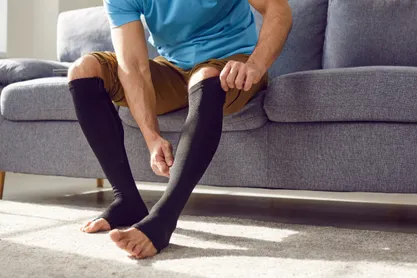

Compression Stockings
Compression stockings in Etobicoke to reduce swelling, improve circulation, and relieve leg discomfort with professional fitting support.
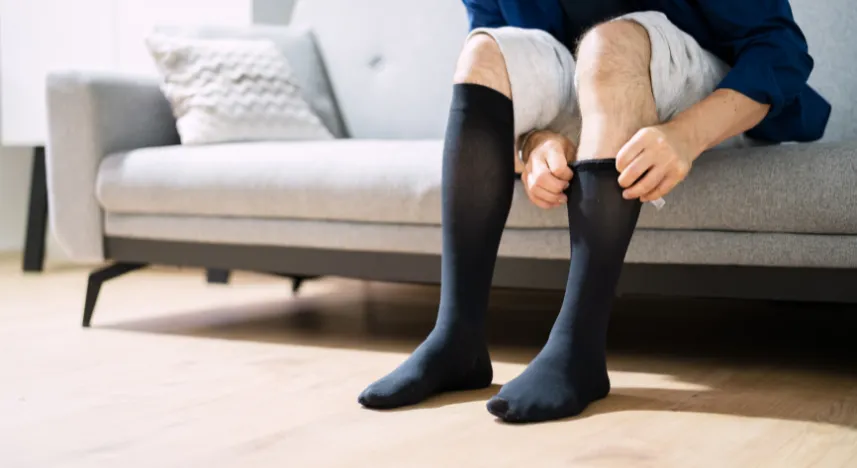
Compression Stockings in Etobicoke — Relieve Swelling, Improve Circulation, Protect Your Leg Health
If your legs feel heavy by 3 p.m., your ankles swell after work, or you’ve noticed veins becoming more visible, you’re not alone — and it’s not something you have to just live with. At Rapharehab in Etobicoke, we provide professional compression stockings fitting for people dealing with swelling, varicose veins, poor circulation, and leg fatigue. Every fitting starts with a real assessment, not a guess, so you leave with the correct compression level, size, and style for your body and your condition.
Whether you’re on your feet all day at work, recovering from surgery, managing a vascular condition, pregnant, or simply someone who wants to protect long-term leg health, our Etobicoke clinic can help you find the right medical-grade compression stockings — properly measured, properly fitted, and backed by clinical guidance.
Book a Compression Stockings Fitting in Etobicoke →
Signs You May Need Compression Stockings
Many people wait months — sometimes years — before addressing leg swelling or circulation issues, simply because the symptoms build up slowly. If any of the following sound familiar, a compression stockings fitting in Etobicoke could bring noticeable relief:
- Your ankles or feet swell by the end of the day
- Your legs feel heavy, tired, or achy after standing or sitting for long periods
- You’ve noticed visible varicose veins or spider veins
- Your socks leave deep indentation marks on your skin
- You sit at a desk most of the day or drive/fly frequently
- You’re pregnant and experiencing swelling or aching legs
- You’re recovering from a leg injury, fracture, or surgery
- You have a family history of varicose veins or venous disease
- Your job requires standing for extended shifts (nursing, retail, food service, trades)
- You’ve been told you’re at risk of deep vein thrombosis (DVT)
If even two or three of these apply to you, it’s worth having your legs properly assessed rather than guessing your size off a drugstore shelf.
What Are Compression Stockings and How Do They Work?
Compression stockings are medically designed garments that apply graduated pressure to your legs — meaning the pressure is strongest at the ankle and gradually decreases as it moves up toward the knee or thigh. This graduated design works with your body’s natural blood flow, helping veins push blood back toward the heart more efficiently instead of letting it pool in the lower legs.
When circulation slows down — from prolonged sitting, standing, pregnancy, injury, surgery, or vascular conditions — fluid and blood can build up in the lower legs and feet. This is what causes the swelling, heaviness, and aching that so many people experience. Compression stockings counteract this by:
- Improving venous return and overall blood circulation
- Reducing swelling and fluid buildup (edema)
- Preventing and managing varicose veins
- Relieving leg fatigue, aching, and heaviness
- Reducing discomfort from long periods of standing or sitting
- Supporting recovery after injury or surgery
- Lowering the risk of deep vein thrombosis (DVT) during travel
Unlike regular socks, compression stockings are engineered with specific pressure ratings (measured in mmHg) and require accurate leg measurements to work properly — which is why a professional fitting matters more than people realize.
Conditions We Support With Compression Therapy in Etobicoke
Compression stockings aren’t a one-size-fits-all product — they’re used to manage a wide range of leg and circulation problems. Below are the most common conditions we support at our Etobicoke clinic.
Varicose Veins and Spider Veins
Compression therapy helps slow the progression of varicose veins by reducing pressure inside the veins and supporting healthier blood flow, easing the aching and heaviness that often comes with them.
Chronic Venous Insufficiency (CVI)
When leg veins struggle to return blood to the heart efficiently, graduated compression helps offset that pressure and reduces long-term swelling and discomfort.
Leg Swelling and Edema
Whether swelling is caused by prolonged standing, sitting, medication, or an underlying condition, compression stockings help move fluid out of the lower legs.
Pregnancy-Related Swelling
Growing pressure on pelvic veins during pregnancy commonly causes swollen ankles and calves. Maternity-appropriate compression stockings offer relief without restricting comfort.
Lymphedema (Mild to Moderate)
Compression garments support lymphatic fluid movement and help manage swelling associated with lymphedema, often alongside other therapies.
Post-Surgical Swelling and Recovery
After orthopedic, vascular, or general surgery, compression wear reduces inflammation and supports circulation during the healing period.
Poor Circulation
For people with sluggish circulation due to lifestyle, age, or medical history, daily compression wear supports healthier blood flow throughout the legs.
DVT Prevention (Travel and Post-Surgical Risk)
Long flights, road trips, or extended bed rest increase the risk of deep vein thrombosis. Graduated compression stockings are widely recommended to reduce that risk.
Occupational Leg Pain (Prolonged Standing or Sitting)
Nurses, retail workers, tradespeople, drivers, and office employees frequently develop leg fatigue from being in one position too long — compression stockings are one of the simplest fixes.
Post-Injury Recovery
Following sprains, strains, or lower-limb injuries, compression can help control swelling as part of a broader recovery and physiotherapy plan.
Compression Levels Explained: Understanding mmHg
Compression stockings are rated in millimeters of mercury (mmHg) — the amount of pressure applied to your leg. Choosing the correct level matters, which is why we assess your condition before recommending one.
| Compression Level | Pressure Range | Best For |
|---|---|---|
| Mild Support | 15–20 mmHg | Tired, aching legs; minor swelling; long workdays or travel |
| Moderate Support | 20–30 mmHg | Moderate swelling, varicose veins, pregnancy, post-sclerotherapy care |
| Firm Support | 30–40 mmHg | Significant swelling, lymphedema, advanced varicose veins, post-surgical needs |
Higher compression levels are typically only recommended with a physician’s prescription, and our team will guide you toward the level that’s appropriate — and comfortable — for your specific situation.
Types of Compression Stockings We Fit in Etobicoke
At Rapharehab, we offer a full range of medical-grade compression stockings, fitted to your leg shape, condition, and lifestyle:
- Medical-Grade Compression Stockings — designed specifically for circulation conditions, swelling, and varicose veins
- Graduated Compression Stockings — pressure is highest at the ankle and gradually decreases upward for optimal venous return
- Knee-High Compression Stockings — the most common style, ideal for everyday swelling and circulation support
- Thigh-High Compression Stockings — recommended when swelling or venous issues extend above the knee
- Full-Length (Pantyhose-Style) Compression Stockings — used for more extensive swelling patterns or specific vascular conditions
- Post-Surgical Compression Wear — supports healing and reduces inflammation after procedures
- Athletic Compression Gear — worn to reduce muscle fatigue and support recovery during training or competition
- Everyday Compression Support — designed for long workdays, travel, or extended periods of sitting or standing
- Maternity Compression Stockings — comfortable, supportive options for pregnancy-related swelling
- Diabetic-Friendly Compression Socks — lower-pressure, seamless designs suited to sensitive skin and circulation concerns
Your therapist will recommend the type and pressure level that best matches your legs, your diagnosis, and how you spend your day.
Our Compression Stockings Fitting Process at Rapharehab
Getting fitted incorrectly is one of the biggest reasons people stop wearing compression stockings — they roll down, dig in, or simply don’t work as intended. Here’s how we make sure that doesn’t happen:
1. Assessment We review your symptoms, medical history, and any physician prescription, and assess the pattern and severity of swelling or circulation issues in your legs.
2. Measurement Using precise girth measurements at the ankle, calf, and thigh (as needed), we determine your exact size — not just “small, medium, or large.”
3. Compression Level & Style Selection Based on your assessment, we recommend the appropriate mmHg level and stocking style — knee-high, thigh-high, or full-length — along with fabric and finish options.
4. Fitting & Fit-Check We confirm the stockings sit correctly, apply even graduated pressure, and feel comfortable for all-day wear.
5. Guidance & Follow-Up We walk you through how to put them on, care for them, and how they integrate with any ongoing physiotherapy or rehab treatment you’re receiving with us.
Book Your Fitting Appointment →
Professional Fitting vs. Over-the-Counter Compression Socks
It’s tempting to grab compression socks from a pharmacy shelf, but off-the-shelf sizing is based on general height and weight charts — not your actual leg measurements. This often means:
- Incorrect pressure distribution (too tight at the calf, too loose at the ankle)
- Stockings that roll down or bunch behind the knee
- Reduced therapeutic benefit for medical conditions
- Discomfort that leads people to stop wearing them altogether
A professional compression stockings fitting solves these problems by matching the garment to your actual leg shape and condition, not an estimated size range — giving you the comfort and results the product is actually designed to deliver.
Insurance Coverage and Cost of Compression Stockings in Ontario
Many extended health insurance plans in Ontario provide partial or full coverage for medical-grade compression stockings, particularly when accompanied by a doctor’s prescription specifying the pressure level and reason for use. We recommend:
- Checking with your insurance provider about compression garment coverage
- Asking whether a prescription is required for reimbursement
- Bringing any existing prescription to your fitting appointment so we can match it accurately
Our team can help you understand what documentation you may need, though final coverage confirmation should always come directly from your insurer.
Why Choose Rapharehab for Compression Stockings in Etobicoke
- Professional assessment of swelling, circulation, and leg symptoms — not a guessed size
- Accurate measurements for a precise, comfortable fit
- Guidance on the correct compression level (mmHg) for your condition
- Quality, medical-grade compression garments in multiple styles
- Integration with physiotherapy, massage therapy, or rehab treatment when needed
- Friendly, unhurried service — we explain your options, we don’t just sell a product
- Convenient Etobicoke location at 5 – 4335 Bloor Street West, with flexible scheduling
We treat compression stockings as part of your overall leg health, not a standalone retail item — which is why our approach starts with understanding your condition first.
How to Wear and Care for Compression Stockings
Getting the full benefit of compression therapy depends as much on daily habits as on the fitting itself:
- Put stockings on first thing in the morning, before swelling builds up during the day
- Remove them before bed unless your provider has advised overnight wear
- Wash regularly by hand or on a gentle cycle to preserve elastic strength
- Avoid fabric softeners, which can break down compression fibers over time
- Replace stockings roughly every 3–6 months, as elasticity naturally wears down with regular use
- Check your skin regularly for irritation, especially if you have diabetes or sensitive skin
- Reach out to your clinician if stockings feel too tight, cause numbness, or leave marks that don’t fade
Take the First Step Toward Better Leg Health
Swelling, heaviness, and circulation issues tend to get worse when left unaddressed — but a proper compression stockings fitting in Etobicoke is a simple, non-invasive way to get ahead of it. Book your assessment with Rapharehab today and find out why we’re a trusted provider of compression stockings for circulation support, swelling relief, and long-term leg health.
📍 5 – 4335 Bloor Street West, Etobicoke, M9C 2A5 📞 647-722-3434
Book Your Compression Stockings Assessment →
Frequently Asked Questions
-
What do compression stockings actually do?
-
Do I need a prescription for compression stockings in Ontario?
Higher compression levels (20 mmHg and above) typically require a prescription from a physician, especially if you’re seeking insurance reimbursement. Mild compression (15–20 mmHg) is often available without one.
-
How do I know what compression level I need?
It depends on your symptoms and any diagnosed condition. Mild swelling and tired legs usually call for 15–20 mmHg, while varicose veins, pregnancy-related swelling, or post-surgical needs often require 20–30 mmHg or higher, as recommended by an assessment.
-
Are compression stockings the same as regular support socks?
No. Support socks provide light, uniform pressure, while medical-grade compression stockings apply graduated, measured pressure at specific mmHg levels for therapeutic benefit.
-
Can compression stockings help with varicose veins?
Yes. They reduce pressure in the veins, support healthier circulation, and help ease the aching and heaviness that often accompany varicose veins, though they don’t eliminate existing veins.
-
Are compression stockings safe to wear during pregnancy?
Yes, maternity-appropriate compression stockings are commonly recommended for pregnancy-related leg swelling and are generally considered safe — but check with your physician if you have any underlying conditions.
-
Can compression stockings prevent deep vein thrombosis (DVT)?
Graduated compression stockings are widely used to reduce DVT risk during long flights, road trips, or periods of reduced mobility, such as after surgery.
-
How long should I wear compression stockings each day?
Most people wear them from the time they get up until bedtime, unless your clinician recommends a different schedule based on your condition.
-
Can I sleep in compression stockings?
Generally, no — they should be removed before bed unless a physician has specifically advised overnight wear for a medical reason.
-
How tight should compression stockings feel?
They should feel snug and supportive, not painful. If they cause numbness, tingling, or leave deep marks that don’t fade, they may be the wrong size or level.
-
What’s the difference between knee-high and thigh-high compression stockings?
Knee-high stockings target swelling and circulation issues below the knee, while thigh-high stockings are recommended when swelling, varicose veins, or venous issues extend above the knee.
-
Do compression stockings help with leg pain from standing all day?
Yes. Mild to moderate compression is commonly used by people in standing occupations — nurses, retail staff, tradespeople — to reduce end-of-day heaviness and fatigue.
-
Are compression stockings covered by insurance in Ontario?
Many extended health plans cover medical-grade compression stockings, particularly with a prescription. Coverage varies by provider, so it’s best to confirm details with your insurer directly.
-
How often should compression stockings be replaced?
Typically every 3–6 months with regular daily wear, as the elastic fibers gradually lose effectiveness over time.
-
Can compression stockings be worn with diabetes?
Yes, but lower-pressure, seamless diabetic-friendly designs are usually recommended, along with regular skin checks, since diabetic skin can be more sensitive to pressure and friction.
-
Do I need to be measured for compression stockings, or can I just pick a size?
A proper fitting is strongly recommended. Off-the-shelf sizing is based on general height and weight, not your actual leg measurements, and incorrect sizing reduces both comfort and therapeutic effectiveness.
-
Can compression stockings help after surgery?
Yes, they’re commonly used post-surgically to reduce swelling, support circulation, and aid recovery, particularly following orthopedic or vascular procedures.
-
Will compression stockings interfere with my physiotherapy treatment?
No — in fact, they’re often used alongside physiotherapy and rehab treatment to support circulation and reduce swelling during recovery.
-
Do compression stockings come in different styles or are they only medical-looking?
They’re available in a range of colors, patterns, and fabrics (including cotton and moisture-wicking materials), so they don’t have to look purely clinical.
-
How do I book a compression stockings fitting at Rapharehab in Etobicoke?
You can call us at 647-722-3434 or book online through our website. Your first visit includes an assessment, measurements, and guidance on the right compression level and style for you.
-
Can athletes benefit from compression stockings?
Yes, athletic compression gear is used to reduce muscle fatigue, support recovery, and improve circulation during and after training or competition.
-
What happens if I wear the wrong compression level?
Too little pressure won’t provide meaningful benefit, while too much pressure can restrict circulation and cause discomfort or skin irritation — which is why a professional assessment matters.