

Shockwave therapy is used to treat chronic tendon and soft-tissue injuries such as plantar fasciitis, tennis elbow, Achilles tendonitis, rotator cuff pain, and calcific shoulder tendonitis, especially cases that haven’t responded to rest or standard physiotherapy.
Shockwave Therapy

Shockwave Therapy
Shockwave therapy in Etobicoke to relieve chronic pain, repair soft tissue, and accelerate healing with non-invasive treatment.
Shockwave Therapy in Etobicoke
Target Pain • Accelerate Healing • Restore Function — Without Surgery or Downtime
If you’ve been living with heel pain that won’t quit, a stubborn case of tennis elbow, or shoulder pain that hasn’t improved after weeks of rest, you already know how frustrating chronic pain can be. It doesn’t just hurt — it changes how you move, how you sleep, and what you can do in a day.
Shockwave therapy in Etobicoke at Rapharehab is a non-invasive, drug-free treatment that uses high-energy acoustic (sound) waves to jump-start your body’s own healing response in damaged tendons, ligaments, and soft tissue. It’s especially effective for chronic conditions that have lasted three months or longer and haven’t responded to rest, stretching, or standard physiotherapy alone.
Our registered physiotherapists combine shockwave therapy with hands-on manual therapy and targeted exercise so you’re not just masking pain — you’re actually resolving what’s causing it.
Book Your Shockwave Therapy Assessment — Etobicoke’s trusted clinic for fast, evidence-based pain relief.
What Is Shockwave Therapy?
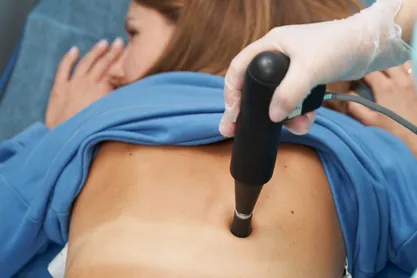
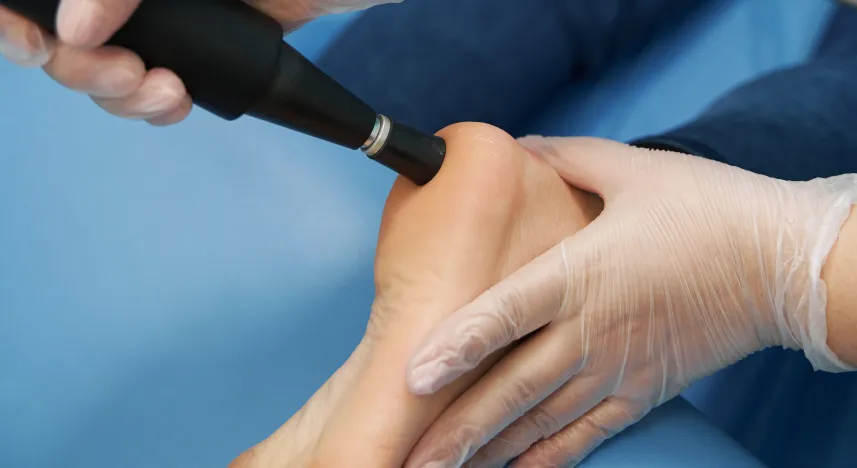
Shockwave therapy — also called Extracorporeal Shockwave Therapy (ESWT) — delivers controlled pulses of acoustic energy directly into injured tissue through a handheld applicator pressed against the skin. Those pulses aren’t an electric shock; they’re a rapid sequence of pressure waves that travel into the tendon, ligament, or muscle and trigger a controlled healing response.
Here’s what actually happens inside the tissue during treatment:
- Micro-circulation increases, bringing more oxygen and nutrients to the injured area
- Scar tissue and calcific deposits begin to break down, especially in long-standing tendon injuries
- The body’s natural repair cells are stimulated, encouraging new collagen and tissue regeneration
- Nerve sensitivity is reduced, which is part of why many patients feel less pain almost immediately after a session
- Chronic low-grade inflammation is reset, restarting a healing process that had stalled
In short, shockwave therapy doesn’t numb the pain — it addresses the underlying tissue damage that’s causing it. That’s why it’s become a first-line recommendation for chronic tendon and soft tissue conditions across sports medicine and physiotherapy.
Types of Shockwave Therapy We Use at Rapharehab
Not every injury responds the same way to the same wave. At Rapharehab, treatment is matched to your specific condition:
- Radial Shockwave Therapy (RSWT): Disperses energy across a wider, shallower area — ideal for larger muscle groups, trigger points, and superficial soft tissue injuries.
- Focused Shockwave Therapy (FSWT): Concentrates energy at a precise depth — better suited to deeper tendon injuries and calcific deposits close to bone.
- Trigger Point Shockwave: Targets stubborn muscle knots that manual therapy alone hasn’t been able to release.
- Tendon & Ligament-Specific Application: Calibrated for chronically injured, thickened, or degenerated tendon tissue.
- Combined Rehab Protocol: Shockwave is paired with physiotherapy, manual therapy, and exercise prescription in the same visit for faster, longer-lasting results.
Your physiotherapist will assess your condition first and choose the wave type, depth, and intensity that fits — shockwave is never a one-size-fits-all treatment here.
Conditions Shockwave Therapy Treats in Etobicoke
Shockwave therapy is most effective on chronic tendon and soft-tissue conditions — particularly ones that have lasted 3 months or more and haven’t fully responded to rest or standard treatment. Below are the conditions we see and treat most often.
Plantar Fasciitis (Heel Pain)
That sharp, stabbing pain in your heel with your first steps in the morning is the classic sign of plantar fasciitis. Shockwave therapy for plantar fasciitis is one of the best-researched applications of this treatment, with studies showing significant pain reduction in roughly 70–80% of patients after a full course of sessions — particularly for cases that haven’t improved with orthotics or stretching alone.
Achilles Tendonitis / Tendinopathy
Pain and stiffness at the back of the heel, especially after activity, often points to Achilles tendinopathy. Shockwave therapy stimulates collagen remodeling in the tendon, helping it rebuild strength rather than just calming symptoms temporarily.
Tennis Elbow & Golfer’s Elbow (Lateral / Medial Epicondylitis)
Repetitive strain at the elbow tendon attachment causes pain that radiates down the forearm and weakens your grip. These are notoriously slow-healing injuries, and shockwave therapy is frequently recommended when rest, bracing, and standard physiotherapy haven’t fully resolved symptoms.
Rotator Cuff Injuries & Calcific Shoulder Tendonitis
Shoulder pain that limits reaching overhead or sleeping on that side may involve rotator cuff irritation or calcium buildup within the tendon. Shockwave therapy helps break down calcific deposits and reduce the inflammation driving the pain.
Patellar Tendonitis (Jumper’s Knee)
Common in runners, jumpers, and anyone with repetitive knee loading, this condition causes pain just below the kneecap. Shockwave therapy is a well-established option for tendon injuries that resist typical rest-and-strengthen protocols.
Hip, Glute & IT Band Pain
Chronic lateral hip pain (often gluteal tendinopathy) and IT band tightness respond well to shockwave, especially when paired with targeted strengthening.
Shin Splints
Persistent shin pain from running or repetitive impact can be treated with shockwave to reduce inflammation along the tibia and support tissue recovery.
Chronic Muscle Trigger Points & Tightness
Deep muscle knots that don’t release with massage or stretching often respond to trigger-point shockwave application, which mechanically disrupts the tight muscle band.
Scar Tissue & Soft Tissue Adhesions
Post-surgical or post-injury scar tissue can restrict movement and cause ongoing discomfort. Shockwave helps soften and remodel this tissue.
Muscle Strains & Sports Injuries
Athletes recovering from strains that have plateaued in healing often use shockwave to restart tissue repair and return to activity faster.
A general rule: if your pain has lasted 3 months or longer, hasn’t fully responded to rest, stretching, or basic physiotherapy, and is centered around a tendon or specific soft-tissue point — shockwave therapy is worth discussing with your physiotherapist.
How Shockwave Therapy Works, Step by Step
Understanding what actually happens during a visit takes the mystery out of it.
- Assessment. Your physiotherapist examines the injured area, reviews your history, and confirms shockwave is the right fit for your condition — not every type of pain responds to this treatment, so this step matters.
- Positioning and gel application. A conductive gel is applied to the treatment area to help the acoustic waves transmit efficiently through the skin.
- Wave delivery. The physiotherapist applies the handheld applicator and delivers a set number of pulses (typically 1,500–2,500) at a calibrated intensity. This part of the session lasts roughly 5–10 minutes.
- Intensity adjustment. Some mild discomfort during delivery is normal — your therapist adjusts the pressure and frequency to keep it tolerable while still effective.
- Follow-up care. Many sessions are paired with manual therapy, stretching, or targeted exercise immediately afterward to reinforce the healing response.
- Home guidance. You’ll get simple instructions for the next 24–48 hours (light activity is fine; avoid intense loading of the treated area).
A full session, including assessment and follow-up therapy, typically runs 20–30 minutes. Most people are back to normal daily activities immediately.
Benefits of Shockwave Therapy at Rapharehab
- Noticeable pain reduction, often within the first few sessions
- Non-invasive and drug-free — no surgery, no injections, no medication dependence
- Short sessions with zero downtime — walk in, walk out, resume your day
- Accelerated tissue healing by restarting a stalled repair process
- Breaks down chronic scar tissue and calcific deposits
- Improved mobility and function for movements that pain has been limiting
- Long-term results rather than temporary symptom relief
- A safe alternative when rest, medication, or previous physiotherapy hasn’t worked
Most patients begin to notice meaningful improvement within 3 to 6 sessions, spaced roughly one week apart, though this varies based on how long the condition has been present and how your tissue responds.
Is Shockwave Therapy Right for You?
Shockwave therapy is generally a strong option if:
- Your pain has lasted 3 months or longer
- You’ve already tried rest, stretching, orthotics, or basic physiotherapy without full relief
- Your pain is centered around a tendon, ligament, or specific soft-tissue point
- You want to avoid injections or surgery if possible
- You’re an athlete or active person looking to return to activity faster
When Shockwave Therapy Isn’t Recommended
For safety, shockwave therapy is typically not suitable if you:
- Have a blood clotting disorder or are on blood-thinning medication
- Are pregnant
- Have an active infection or tumor at the treatment site
- Are a child with open growth plates near the treatment area
- Have a pacemaker near the treatment zone (case-by-case assessment required)
Your physiotherapist will confirm your diagnosis and screen for these factors before recommending treatment — shockwave is never applied without a proper assessment first.
Shockwave Therapy Cost & Insurance Coverage in Etobicoke
One of the most common questions we get is whether shockwave therapy is covered by insurance in Ontario. Here’s the short version:
- Shockwave therapy is not covered by OHIP.
- It is commonly covered under extended health benefits plans that include physiotherapy or chiropractic care — since it’s always delivered by a registered physiotherapist as part of your treatment.
- We offer direct billing to most major Ontario insurance providers, so you’re not paying out of pocket and waiting on reimbursement.
- Motor vehicle accident (MVA) and WSIB claims are welcome, and our team can help verify your coverage before your first session.
- Because shockwave is always delivered within a physiotherapy visit at Rapharehab (not as a standalone technician service), it typically qualifies more easily for insurance claims than stand-alone shockwave-only clinics.
If you’re unsure what your plan covers, contact us — we can check your benefits and walk you through the numbers before you commit to a treatment plan.
Why Choose Rapharehab for Shockwave Therapy in Etobicoke?
- Registered physiotherapists experienced specifically in shockwave protocols — not technician-only sessions
- Accurate diagnosis first. We confirm your condition actually responds to shockwave before recommending it — no unnecessary upselling
- Combined care approach — shockwave is integrated with manual therapy and exercise rehab in the same visit for faster, more complete recovery
- Advanced, calibrated equipment for both radial and focused shockwave delivery
- Direct billing to major Ontario insurers, plus support for MVA and WSIB claims
- Convenient Etobicoke location at 5 – 4335 Bloor Street West, easy to reach and easy to schedule
- Clear guidance on long-term injury prevention, not just short-term pain relief
We combine proven technology with hands-on clinical expertise, so your treatment plan is built around your actual condition — not a generic protocol.
Start Your Recovery Today
If chronic pain or a stubborn tendon injury is limiting how you move, work, or train, shockwave therapy at Rapharehab can help restore comfort, mobility, and strength — without surgery or long recovery time.
Book Your Shockwave Therapy Session in Etobicoke
📍 5 – 4335 Bloor Street West, Etobicoke, ON M9C 2A5 📞 647-722-3434
Frequently Asked Questions
-
What is shockwave therapy used for?
-
Does shockwave therapy hurt?
Most patients feel a moderate, tolerable level of discomfort during the pulses, similar to a deep tapping or pressure sensation. Your physiotherapist adjusts the intensity based on what you can comfortably handle. Any soreness afterward usually fades within 24–48 hours.
-
How many sessions of shockwave therapy do I need?
Most patients need 3 to 6 sessions, spaced about one week apart. The exact number depends on how long you’ve had the condition, its severity, and how your tissue responds to treatment.
-
Is shockwave therapy covered by insurance in Ontario?
Yes, in most cases. It’s not covered by OHIP, but it’s typically eligible under extended health plans that include physiotherapy or chiropractic coverage. We offer direct billing to simplify the process.
-
How long does a shockwave therapy session take?
The wave delivery itself takes about 5–10 minutes. With assessment and any follow-up manual therapy or exercise, a full visit typically runs 20–30 minutes.
-
Can I go back to work or normal activity after treatment?
Yes. Shockwave therapy has no downtime — most patients resume normal daily activities immediately. You may be advised to avoid intense loading of the treated area for a day or two.
-
Is shockwave therapy better than cortisone injections?
They work differently. Cortisone reduces inflammation quickly but doesn’t repair tissue and can weaken tendons with repeated use. Shockwave therapy stimulates the tissue’s own healing and repair process, offering more durable, longer-term results for chronic tendon conditions. Your physiotherapist can help you decide which fits your situation.
-
What conditions respond best to shockwave therapy?
Chronic conditions lasting 3 months or longer that are centered on a tendon or specific soft-tissue point — plantar fasciitis, tennis elbow, golfer’s elbow, Achilles tendinopathy, patellar tendonitis, and calcific shoulder tendonitis are among the best-supported by research.
-
Who performs shockwave therapy at Rapharehab?
Treatment is always delivered by a registered physiotherapist who has assessed your condition first, not by an unsupervised technician.
-
Is shockwave therapy safe?
Yes. It’s a clinically proven, widely used treatment in sports medicine and physiotherapy with no major reported complications. The main side effect is temporary mild soreness or redness at the treatment site.
-
Who should avoid shockwave therapy?
People with blood clotting disorders, those on blood thinners, pregnant patients, anyone with an active infection or tumor at the treatment site, and children with open growth plates near the area should avoid it. A pacemaker requires case-by-case evaluation.
-
How soon will I feel results from shockwave therapy?
Some patients notice reduced pain within the first one or two sessions, but meaningful, lasting improvement is more typically seen after 3 to 6 sessions as the tissue heals.
-
What’s the difference between radial and focused shockwave therapy?
Radial shockwave spreads energy across a broader, shallower area — good for larger muscles and trigger points. Focused shockwave concentrates energy at a precise depth — better for deeper tendon injuries or calcific deposits closer to bone.
-
Can shockwave therapy help with plantar fasciitis specifically?
Yes — it’s one of the most studied uses of shockwave therapy, with a large majority of patients reporting significant pain reduction after a full treatment course, especially when other methods like orthotics and stretching haven’t fully resolved symptoms.
-
Do I need a doctor’s referral for shockwave therapy?
Generally no, though some insurance plans may require one for reimbursement purposes. We recommend checking with your specific provider, and our team can help confirm what documentation you’ll need.
-
Will shockwave therapy work if physiotherapy hasn’t helped?
Often, yes. Shockwave therapy is frequently recommended specifically for cases where standard physiotherapy alone hasn’t fully resolved chronic tendon pain, since it targets tissue-level healing in a different way.
-
What should I do before my shockwave therapy appointment?
Wear comfortable clothing that allows easy access to the treatment area, bring any relevant imaging or diagnostic reports, and list any medications, allergies, or sensitivities to share with your physiotherapist.
-
How much does shockwave therapy cost in Etobicoke?
Pricing varies by clinic and treatment plan. At Rapharehab, cost depends on your assessment and the number of sessions recommended. We offer direct billing to most major insurers, so contact us for a specific quote based on your coverage.
-
Can shockwave therapy be combined with other treatments?
Yes, and it’s often more effective that way. At Rapharehab, shockwave sessions are typically paired with manual therapy and exercise rehabilitation in the same visit to support faster, more complete recovery.
-
Is shockwave therapy effective for athletes and sports injuries?
Yes. It’s widely used in sports medicine to treat overuse injuries, tendon strain, and chronic muscle tightness, helping athletes return to training and competition faster than rest alone.
-
What does shockwave therapy feel like during treatment?
You’ll feel a rhythmic tapping or pulsing pressure at the treatment site. Intensity is adjustable, and most patients tolerate it well, especially as sessions progress and the area becomes less sensitive.
-
How is shockwave therapy different from ultrasound therapy?
Ultrasound uses continuous sound waves primarily to warm tissue and reduce inflammation. Shockwave therapy uses distinct high-energy pulses to mechanically stimulate healing, break down scar tissue, and address the structural cause of chronic tendon pain — making it more effective for long-standing, treatment-resistant injuries.