

MVA rehabilitation stands for motor vehicle accident rehabilitation — a structured physiotherapy and treatment program designed specifically to address injuries caused by car accidents, such as whiplash, back pain, and soft tissue trauma.

MVA Rehabilitation in Etobicoke


MVA Rehabilitation in Etobicoke
Motor vehicle accident rehabilitation in Etobicoke to relieve pain, restore mobility, and support safe, guided recovery after car accidents.
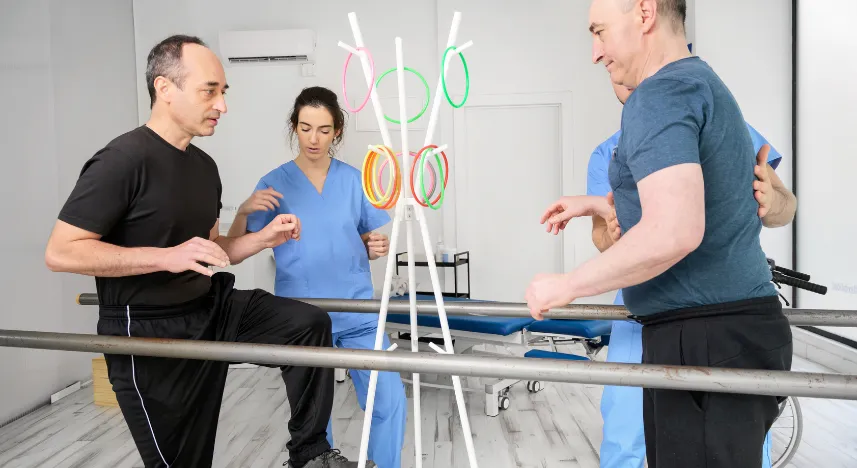
Motor Vehicle Accident Rehabilitation in Etobicoke
Recover Safely. Reduce Pain. Restore Full Function — With a Team That Understands Car Accident Injuries.
A car accident can change everything in a matter of seconds. One moment you’re driving down Bloor Street West or merging onto the Gardiner, and the next you’re dealing with pain, stiffness, and uncertainty about what comes next. If you’re searching for motor vehicle accident rehabilitation in Etobicoke, you’re likely dealing with whiplash, back pain, sore joints, or lingering discomfort that hasn’t improved on its own — and you want to know it’s being taken seriously by people who do this every day.
At Rapharehab, our Etobicoke clinic provides comprehensive MVA rehabilitation that combines physiotherapy, manual therapy, and structured recovery planning to help you heal properly the first time — not just manage symptoms temporarily. Whether your accident happened yesterday or several months ago, our goal is the same: get you back to feeling like yourself again, safely and completely.
Why Car Accident Injuries Deserve Fast, Focused Attention
Motor vehicle accidents put sudden, unnatural force through your neck, spine, joints, and soft tissue — even in what looks like a “minor” fender bender. The tricky part is that injuries don’t always show up right away.
Some of the challenges people face after a collision include:
- Neck and back pain that feels manageable at first, then worsens over the following days
- Headaches, dizziness, or brain fog that weren’t noticed during the initial adrenaline rush
- Stiffness and reduced range of motion that makes work, driving, or sleep difficult
- Confusion about insurance paperwork and whether treatment is actually covered
- Fear that the pain will become permanent or keep coming back
- Not knowing which clinic to trust with something this important
If any of this sounds familiar, you’re not alone — and you’re not overreacting. Delayed-onset symptoms are extremely common after a crash, and starting rehabilitation early is one of the most effective ways to prevent short-term pain from becoming a long-term problem.
What Is Motor Vehicle Accident (MVA) Rehabilitation?
Motor vehicle accident rehabilitation is a structured, multidisciplinary treatment approach specifically designed to address the physical and functional injuries caused by car accidents — from minor whiplash to more complex soft-tissue and joint trauma. Unlike a generic physiotherapy visit, MVA rehab is built around the unique injury patterns of collisions: sudden impact, rapid deceleration, seatbelt restraint forces, and the whole-body strain of bracing for impact.
A proper MVA rehabilitation program is designed to:
- Reduce pain and inflammation at the source, not just the symptoms
- Restore mobility, flexibility, and normal joint movement
- Rebuild strength and neuromuscular control that impact can disrupt
- Support recovery of the neck, back, shoulders, hips, and knees
- Address both visible injuries and hidden soft-tissue trauma
- Prevent acute pain from progressing into chronic pain
- Correct posture and movement compensations that develop after injury
- Educate you on safe daily activity, driving, and return-to-work timelines
The objective isn’t just “less pain” — it’s a full, confident return to the life you had before the accident.
Common Car Accident Injuries We Treat in Etobicoke
Every collision is different, and so is every injury. Below are the most common conditions we see in our Etobicoke MVA rehabilitation program.
Whiplash and Neck Injuries
Whiplash is one of the most frequent car accident injuries, caused by the rapid back-and-forth motion of the neck on impact. It can cause neck pain, stiffness, headaches, and reduced range of motion — often worsening over the 24–72 hours following the crash rather than improving.
Back and Spinal Pain
Sudden impact places enormous stress on the spine, leading to muscle strain, disc irritation, or nerve compression in the lower and upper back. Left untreated, spinal injuries are one of the leading causes of chronic post-accident pain.
Soft Tissue Injuries and Muscle Strains
Sprains, strains, and torn or overstretched muscles and ligaments are extremely common, even in low-speed collisions. Soft tissue injuries can be harder to detect on imaging but are just as painful and disruptive as visible trauma.
Shoulder, Hip, and Knee Injuries
Bracing against the steering wheel, dashboard, or seatbelt can injure the shoulders, hips, and knees. These joint injuries often require targeted manual therapy and progressive strengthening to fully recover.
Nerve Irritation and Radiating Pain
Compressed or irritated nerves in the neck or lower back can cause pain, numbness, or tingling that radiates down the arms or legs — a sign that shouldn’t be ignored.
Concussion-Related Symptoms
Even without a direct head impact, the rapid motion of a collision can cause mild concussion symptoms such as headaches, dizziness, light sensitivity, or difficulty concentrating.
Joint Stiffness and Reduced Mobility
Swelling and guarding after an accident often lead to stiffness that limits everyday movement — bending, reaching, twisting, or simply getting comfortable.
Headaches from Impact or Tension
Post-accident headaches can stem from whiplash, muscle tension in the neck and shoulders, or mild concussion — and often respond well to targeted physiotherapy.
Postural Imbalance and Stress-Related Muscle Tension
Guarding an injury changes how you move and stand, which can create secondary pain patterns and generalized muscle tension long after the initial injury has started healing.
The key takeaway: early treatment is one of the strongest predictors of a full recovery. Waiting for pain to “go away on its own” is one of the most common reasons minor injuries turn into chronic ones.
Our MVA Rehabilitation Techniques and Treatment Process
No two car accidents — or two recoveries — look the same. That’s why every treatment plan at Rapharehab is built around your specific injuries, symptoms, and recovery goals.
Step 1: Comprehensive Assessment
Your MVA rehabilitation begins with a thorough physiotherapy assessment, including a detailed history of the accident, a review of your symptoms, and physical testing of strength, range of motion, and function. This helps us build an accurate, individualized recovery plan from day one.
Step 2: Personalized Treatment Plan
Based on your assessment, your program may include a combination of:
- Physiotherapy and Manual Therapy — hands-on techniques to relieve pain, restore mobility, and improve joint and muscle function
- Soft Tissue Release and Myofascial Therapy — releases muscle tightness caused by impact trauma
- Exercise Therapy and Strength Training — rebuilds stability, strength, and safe functional movement
- Postural and Movement Retraining — corrects compensation patterns and reduces reinjury risk
- Laser Therapy and Electrotherapy Modalities — reduces inflammation and accelerates tissue healing
- Whiplash Management Programs — targets neck pain, headaches, and restricted mobility
- Fascial Stretch Therapy — improves flexibility and reduces post-injury tightness
- Gait and Balance Training — restores coordination and confidence in movement
- Concussion Management — addresses dizziness, headaches, and cognitive symptoms when present
- Return-to-Activity Planning — a structured, graded path back to work, driving, and everyday routines
Step 3: Progress Monitoring and Adjustment
Recovery isn’t linear, and neither is your treatment plan. We reassess regularly, adjusting techniques and intensity as your pain decreases and your function improves — so you’re always working at the right level for where you’re at.
Step 4: Safe Return to Daily Life
The final phase of MVA rehabilitation focuses on confidently returning to work, driving, exercise, and the activities that matter to you — with strategies in place to prevent re-injury.
Does Insurance Cover Physiotherapy After a Car Accident in Ontario?
This is one of the most common questions we hear — and understandably so. In Ontario, car accident rehabilitation is covered under the Statutory Accident Benefits Schedule (SABS), a no-fault system that applies regardless of who caused the collision.
What this means for you:
- Medical, rehabilitation, and attendant care benefits are mandatory on every Ontario auto insurance policy — physiotherapy after a car accident is a standard, protected benefit, not an optional extra.
- You generally do not need a doctor’s referral to begin physiotherapy after a car accident, though prompt medical documentation strengthens your claim.
- Minor injuries such as sprains, strains, and whiplash typically fall under the Minor Injury Guideline (MIG), with combined benefits available for treatment.
- More significant, non-catastrophic injuries can access higher combined medical, rehabilitation, and attendant care benefits.
- As of July 1, 2026, Ontario’s auto insurance rules changed so that your auto insurer becomes the “first payer” for eligible medical and rehabilitation expenses — meaning your car insurance now pays before your workplace or private health benefits, helping preserve those benefits for other needs.
- You’ll typically need to notify your insurer soon after the accident and submit an OCF-1 application to begin your claim — our team can help you understand what paperwork is involved.
We know insurance paperwork is one of the most stressful parts of recovering from a car accident. Our team is experienced in working directly with Ontario auto insurers and can help make the process as smooth as possible so you can focus on getting better, not filling out forms.
This information is provided for general guidance only and is not legal or insurance advice. Coverage details vary by policy — please confirm specifics with your insurance provider or broker.
Benefits of Motor Vehicle Accident Rehabilitation at Rapharehab
- Faster, safer recovery from car accident injuries
- Reduced pain, stiffness, and inflammation
- Restored mobility and strength throughout the neck, back, and joints
- Improved posture and movement mechanics
- Lower risk of long-term or chronic complications
- Structured support for a safe return to work and daily routines
- Integration of multiple therapeutic techniques under one roof
- Personalized, goal-based treatment plans built around your injuries
- Guidance through the insurance claims process
Why Choose Rapharehab for MVA Rehabilitation in Etobicoke?
Recovering from a car accident is stressful enough without wondering if you’re getting the right care. Here’s what you can expect at Rapharehab:
- Experienced physiotherapists who specialize in motor vehicle accident recovery and understand the unique injury patterns of collisions
- Comprehensive assessments for accurate diagnosis from your very first visit
- Tailored rehab programs that address your specific injuries — not a one-size-fits-all template
- Integrated care, combining manual therapy, exercise therapy, and modalities under one treatment plan
- Patient-focused environment where you’re treated with care, respect, and clear communication
- Convenient Etobicoke location at 5 – 4335 Bloor Street West, with flexible appointment scheduling
- Support navigating insurance, so paperwork doesn’t become another source of stress
We work closely with each patient to ensure a smooth, effective, and fully guided rehabilitation journey — from your first assessment to your last appointment.
When Should You Start Rehabilitation After a Car Accident?
As soon as possible — ideally within the first few days, even if your symptoms feel mild. Here’s why timing matters:
- Some injuries (like whiplash and soft tissue trauma) don’t fully present until 24–72 hours after the accident
- Early treatment helps prevent scar tissue, compensation patterns, and chronic pain from developing
- Ontario insurance timelines often require prompt notification and documentation
- Addressing pain and stiffness early generally leads to a faster, more complete recovery
If you’ve been in an accident — recently or months ago — and you’re still dealing with pain, stiffness, headaches, or reduced mobility, it’s not too late to start. Rehabilitation can still help you recover, even from older injuries that were never properly treated.
Start Your Post-Accident Recovery Today
If you’ve been injured in a car accident, early, properly guided rehabilitation is essential for a safe, comfortable, and complete recovery. You don’t have to navigate pain, uncertainty, and insurance paperwork on your own.
Book your appointment today and discover why Rapharehab is a trusted provider of motor vehicle accident rehabilitation in Etobicoke — helping patients heal fully and get back to the life they had before the accident.
📍 5 – 4335 Bloor Street West, Etobicoke, ON M9C 2A5 📞 647-722-3434
Frequently Asked Questions
-
What is MVA rehabilitation?
-
How soon should I start physiotherapy after a car accident?
As early as possible, ideally within the first few days, even if you feel only mild discomfort. Many injuries, especially whiplash, worsen over the following 24–72 hours.
-
Do I need a doctor’s referral to start physiotherapy after a car accident in Ontario?
Generally, no. You can typically begin physiotherapy without a physician’s referral, although early medical documentation of your injuries is helpful for your insurance claim.
-
Does insurance cover physiotherapy after a car accident in Ontario?
Yes. Medical, rehabilitation, and attendant care benefits are mandatory under Ontario’s Statutory Accident Benefits Schedule (SABS), regardless of who caused the accident.
-
What is the Minor Injury Guideline (MIG)?
The MIG is a category under Ontario’s auto insurance system that provides expedited access to treatment for common injuries like sprains, strains, and whiplash, with defined coverage limits for treatment.
-
What happened to Ontario car insurance rules in 2026?
As of July 1, 2026, medical, rehabilitation, and attendant care benefits remain mandatory on every policy, and your auto insurer now becomes the “first payer” for eligible treatment costs — meaning it pays before your workplace or private health benefits.
-
What if I feel fine after my accident — do I still need rehab?
It’s worth getting assessed even if you feel okay. Adrenaline can mask pain immediately after a collision, and some injuries take days to fully present.
-
What is whiplash, and how is it treated?
Whiplash is a neck injury caused by rapid back-and-forth motion during a collision. It’s treated with a combination of manual therapy, targeted exercises, postural retraining, and gradual mobility work.
-
Can physiotherapy help with headaches after a car accident?
Yes. Post-accident headaches often stem from neck tension, whiplash, or mild concussion, and typically respond well to targeted physiotherapy and manual therapy.
-
What if my pain didn’t start until a few days after the accident?
This is very common. Delayed-onset pain doesn’t mean your injury is less serious — it still deserves a proper assessment and treatment plan.
-
How long does MVA rehabilitation usually take?
Recovery timelines vary based on injury severity, but many patients see meaningful improvement within several weeks of consistent treatment. Your physiotherapist will give you a personalized estimate after your assessment.
-
What happens during the first physiotherapy appointment after a car accident?
Your first visit includes a detailed history of the accident, a discussion of your symptoms, and physical testing of strength, mobility, and function to build your personalized treatment plan.
-
Can I still get treatment if my accident happened months ago?
Yes. Even older, untreated injuries can benefit from physiotherapy and rehabilitation — it’s not too late to start.
-
What types of injuries does MVA rehabilitation treat?
Common injuries include whiplash, back and spinal pain, soft tissue injuries, shoulder/hip/knee injuries, nerve irritation, headaches, and mild concussion symptoms.
-
Is manual therapy safe after a car accident?
Yes, when performed by a licensed physiotherapist based on a proper assessment. Manual therapy is a core, evidence-based technique for reducing pain and restoring mobility after collision injuries.
-
Will I need surgery for my car accident injuries?
Most soft tissue and musculoskeletal injuries from car accidents do not require surgery and respond well to conservative physiotherapy-based treatment.
-
What is the OCF-1 form, and why does it matter?
The OCF-1 is the application form used to start your Statutory Accident Benefits claim in Ontario. Submitting it promptly helps ensure your treatment is covered without delay.
-
Can physiotherapy help with concussion symptoms after an accident?
Yes. Physiotherapists trained in concussion management can help address dizziness, headaches, light sensitivity, and balance issues that sometimes follow a collision.
-
What should I bring to my first MVA rehabilitation appointment?
Bring any medical documentation, insurance information, and details about your accident and symptoms. Our team can also guide you through what’s needed.
-
Is Rapharehab located conveniently for Etobicoke residents?
Yes. Our clinic is located at 5 – 4335 Bloor Street West, Etobicoke, easily accessible for patients throughout Etobicoke and West Toronto.
-
Can physiotherapy help prevent chronic pain after a car accident?
Yes. Early, consistent treatment is one of the most effective ways to prevent acute injuries from developing into long-term, chronic pain conditions.
-
Does Rapharehab help with insurance paperwork for car accident claims?
Yes. Our team has experience working with Ontario auto insurers and can help guide you through the documentation process alongside your treatment.