

There’s no minimum age. We treat infants as young as a few weeks old (commonly for torticollis or plagiocephaly) right through to teenagers recovering from sports injuries or surgery.
Kids Physiotherapy

Kids Physiotherapy
Kids physiotherapy in Etobicoke supporting motor development, injury recovery, strength, balance, and mobility. Safe, fun, and child-friendly physiotherapy at Rapharehab.
Kids Physiotherapy in Etobicoke
Helping Children Move Confidently, Grow Stronger, and Reach Every Milestone
If your child is walking on their toes, avoiding sports because of pain, missing developmental milestones, or recovering from an injury, you don’t have to just “wait and see.” Kids physiotherapy in Etobicoke at Rapharehab gives parents a clear, supportive path forward — with real answers, a real plan, and a team that knows how to make therapy feel like play.
We work with infants, toddlers, school-age children, and teens across Etobicoke, helping them build strength, coordination, and confidence through evidence-based, child-friendly pediatric physiotherapy.
📞 Book a Pediatric Physiotherapy Assessment — 5-4335 Bloor Street West, Etobicoke, ON M9C 2A5
Is Your Child Facing One of These Problems?
Parents usually come to us because they’ve noticed something isn’t quite right — even if they can’t put a name to it yet. You might recognize your child in one of these situations:
- Your toddler is walking on their toes or their feet turn in or out noticeably.
- Your baby always turns their head to one side (possible torticollis) or has a flat spot on their skull.
- Your child seems clumsier than other kids their age — tripping, falling, or avoiding the playground.
- Milestones like rolling, crawling, sitting, or walking are coming later than expected.
- Your school-age child complains of heel or knee pain after soccer or basketball practice.
- Your teenager has rounded shoulders or back pain from hours of screen time and heavy backpacks.
- Your child was diagnosed with cerebral palsy, Down syndrome, or a sensory-motor condition and needs ongoing movement support.
- Your child broke a bone, sprained an ankle, or had surgery and needs guided recovery to get back to normal activity safely.
- Your pediatrician or teacher mentioned “low muscle tone” or poor coordination during a check-up.
If any of this sounds familiar, it’s not something to brush off — and it’s also not something to panic about. It’s exactly what pediatric physiotherapy is built to address, and the earlier it’s addressed, the easier progress usually is.
What Is Kids Physiotherapy?
Kids physiotherapy (also called pediatric physiotherapy or paediatric physical therapy) is a specialized branch of physiotherapy focused on infants, children, and teenagers whose movement, strength, balance, or coordination is affected by injury, illness, or developmental differences.
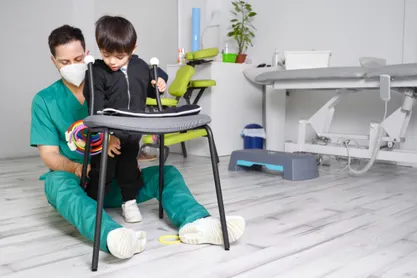
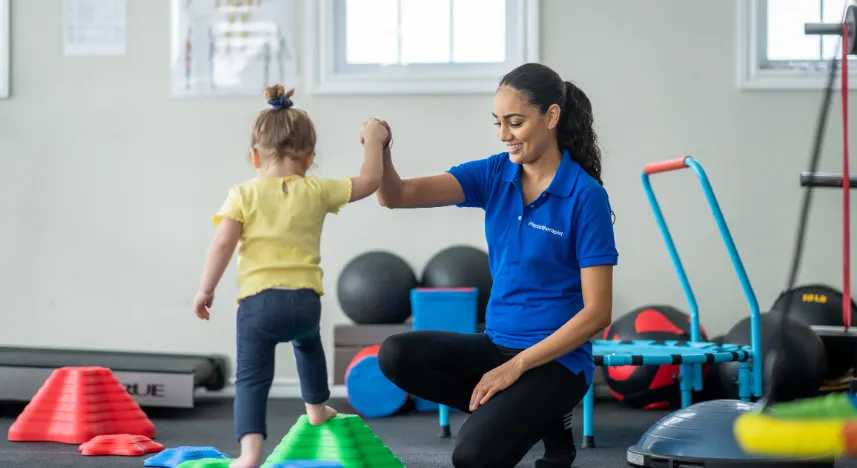
Unlike adult physiotherapy, pediatric physiotherapy is built around how children actually learn — through play, repetition, encouragement, and games rather than clinical instruction. A children’s physiotherapist blends hands-on treatment techniques with movement-based activities that keep young patients engaged while still targeting the right muscles, joints, and motor patterns.
At Rapharehab, our approach to kids physiotherapy in Etobicoke centers on three goals:
- Assess — Understand exactly where your child’s movement, strength, or development differs from what’s expected for their age.
- Treat — Apply hands-on techniques and guided exercise to correct the underlying issue, not just the symptom.
- Support — Equip parents with simple home strategies so progress continues outside the clinic.
Who Kids Physiotherapy Is For
Pediatric physiotherapy isn’t only for children with a diagnosed condition. It’s appropriate for:
- Infants (0–12 months): tummy time struggles, torticollis, plagiocephaly (flat head), delayed rolling.
- Toddlers (1–3 years): delayed walking, toe walking, frequent falling, low muscle tone.
- School-age children (4–12 years): posture, coordination, growth pain, sports readiness.
- Teens (13–17 years): sports injuries, scoliosis-related posture changes, post-surgical rehab.
Common Conditions We Treat in Children
Our pediatric physiotherapists in Etobicoke regularly work with children facing:
Developmental & Neuromuscular Concerns
- Developmental delays (rolling, crawling, sitting, walking later than typical)
- Low muscle tone (hypotonia) or muscle tightness
- Cerebral palsy (mild to moderate presentations)
- Autism spectrum-related motor or sensory challenges
- Torticollis and plagiocephaly in infants
Movement & Gait Concerns
- Toe walking or an abnormal walking pattern
- Flat feet or foot alignment issues
- Poor balance, frequent tripping, or coordination difficulty
- In-toeing or out-toeing gait patterns
Posture & Growth-Related Pain
- Scoliosis and postural asymmetry
- Growing pains such as Sever’s disease and Osgood-Schlatter disease
- Screen-time and backpack-related postural strain
Injury & Recovery
- Sports injuries — sprains, strains, and fractures
- Post-fracture or post-surgical rehabilitation
- Recovery following a fall or accident
If your child’s situation isn’t listed above, it doesn’t mean we can’t help — pediatric movement concerns vary widely, and an assessment is the best way to find clarity.
Our Approach: Kids Physiotherapy Techniques We Use
Every child is different, so a one-size-fits-all program doesn’t work. Our pediatric physiotherapists build a plan around your child’s age, condition, personality, and goals, drawing from techniques including:
- Play-Based Strength & Coordination Training — Strength work disguised as games, so your child builds muscle without realizing they’re “doing physio.”
- Balance & Motor Skills Development — Structured activities that improve stability, body awareness, and control for everyday movement.
- Gait & Walking Training — Correcting toe walking, in-toeing, or unsteady walking patterns using guided repetition and cueing.
- Stretching & Mobility Exercises — Improving flexibility in tight muscles and joints, especially important during growth spurts.
- Posture Correction Programs — Addressing strain from backpacks, screens, and desks with targeted postural retraining.
- Sports Injury Rehabilitation — Structured return-to-play programs so young athletes heal fully before going back to the field or court.
- Neuromuscular Re-Education — Retraining the brain-body connection for smoother, more coordinated movement.
- Family Education & Home Programs — Simple, practical home exercises so parents can reinforce progress between sessions.
What a Typical Kids Physiotherapy Session Looks Like
- Warm welcome and settling-in time — we let your child get comfortable with the space and therapist before starting.
- Movement assessment or check-in — tracking progress against previous sessions and goals.
- Play-based treatment activities — targeted exercises delivered through games, obstacle courses, or interactive movement.
- Parent debrief — a quick summary of progress and simple exercises to continue at home.
Benefits of Pediatric Physiotherapy for Your Child
Starting kids physiotherapy early — rather than waiting to “see if it resolves on its own” — tends to produce better, faster outcomes. Benefits parents typically notice include:
- Improved strength, posture, and overall movement quality
- Faster, more complete recovery from childhood injuries
- Better balance and coordination during play and sports
- Greater confidence and independence in daily activities
- Reduced risk of long-term movement or postural issues
- Stronger participation in school, gym class, and recreational sports
- Clear, judgment-free guidance for parents navigating a new diagnosis or delay
Early intervention matters. A child’s nervous system and motor patterns are still developing, which means the window for correcting movement issues is often wider — and the results more lasting — the sooner treatment begins.
Why Choose Rapharehab for Kids Physiotherapy in Etobicoke?
Parents trust Rapharehab with their child’s care because we combine clinical expertise with a genuinely child-first environment:
- Experienced pediatric physiotherapists trained specifically in child development and movement disorders
- A friendly, patient, low-pressure clinic environment designed to put anxious kids at ease
- Fun, engaging sessions that don’t feel like “treatment” to your child
- Personalized treatment plans built around your child’s age, diagnosis, and goals — not a generic template
- Evidence-based techniques grounded in current pediatric physiotherapy research
- Transparent communication with parents at every stage, so you always know the plan and the progress
- Practical home programs that extend results beyond the clinic
- A convenient Etobicoke location at 5-4335 Bloor Street West, with flexible scheduling for busy families
We also work alongside our broader physiotherapy, exercise therapy, and rehabilitation teams, so if your child needs additional support — from orthotics to sports injury management — it’s available under one roof.
Frequently Asked Questions
-
What age can a child start physiotherapy?
-
How do I know if my child needs physiotherapy?
Common signs include delayed milestones, toe walking, frequent falling, poor posture, ongoing pain after activity, or a diagnosis from your pediatrician involving muscle tone or coordination. When in doubt, a physiotherapy assessment can give clarity either way.
-
Is kids physiotherapy painful?
No. Pediatric physiotherapy is designed to be comfortable and play-based. Therapists work within your child’s tolerance and adjust activities to keep sessions positive.
-
Do I need a doctor’s referral for pediatric physiotherapy in Etobicoke?
In most cases, a referral isn’t required to book an initial assessment, though some extended health insurance plans may request one for reimbursement. Check with your provider or ask our team directly.
-
How long does a typical course of pediatric physiotherapy take?
This varies by condition. Some issues, like mild toe walking, may resolve in a handful of sessions. Developmental or neurological conditions typically involve a longer-term, phased plan reviewed regularly.
-
What is toe walking, and does it need treatment?
Toe walking is when a child consistently walks on the balls of their feet rather than flat-footed. Occasional toe walking in toddlers can be normal, but persistent toe walking past age 2–3 often benefits from physiotherapy to address tight calf muscles and gait patterns.
-
What is torticollis, and can physiotherapy fix it?
Torticollis is tightness in the neck muscles that causes an infant to consistently tilt or turn their head to one side. Physiotherapy — including stretching, positioning, and strengthening — is the standard first-line treatment and is highly effective when started early.
-
My child has flat feet. Is that a problem?
Flat feet are common in young children and often resolve naturally. However, if flat feet are causing pain, frequent tripping, or affect activity levels, a physiotherapy assessment can determine whether targeted exercises or orthotics would help.
-
Can physiotherapy help with developmental delays?
Yes. Physiotherapy is one of the most effective, evidence-based tools for supporting children with delayed rolling, crawling, sitting, standing, or walking, helping them build the strength and coordination needed to reach each milestone.
-
Do you treat children with cerebral palsy?
Yes. Our pediatric physiotherapists work with children with mild to moderate cerebral palsy on strength, mobility, posture, and functional movement, tailored to each child’s specific presentation.
-
Do you work with autistic children who have motor or sensory challenges?
Yes. We support children with autism spectrum-related motor delays or sensory processing challenges using individualized, sensory-aware approaches.
-
What is neuromuscular re-education, and why would my child need it?
It’s a set of techniques that help retrain the connection between the brain and muscles, improving coordination, balance, and movement efficiency — useful for children with coordination difficulties, injuries, or neurological conditions.
-
Can physiotherapy help my child’s posture?
Yes. Posture correction programs address strain caused by screen time, heavy backpacks, and rapid growth, helping reduce discomfort and prevent long-term postural habits from setting in.
-
What are growing pains, and does physiotherapy help?
Conditions like Sever’s disease (heel pain) and Osgood-Schlatter disease (knee pain) are common growth-related overuse injuries in active children. Physiotherapy — including stretching, load management, and activity modification — can significantly reduce pain and recovery time.
-
My child got injured playing sports. When should we start physiotherapy?
Generally, the sooner the better, once any acute swelling has been assessed. Early guided rehabilitation reduces the risk of re-injury and helps kids return to sport safely and with more confidence.
-
Will my child need physiotherapy after a fracture or surgery?
Often, yes. Post-fracture and post-surgical physiotherapy helps restore strength, range of motion, and normal movement patterns, and reduces the risk of long-term stiffness or compensation habits.
-
How is pediatric physiotherapy different from adult physiotherapy?
Pediatric physiotherapy accounts for a child’s stage of development, attention span, and learning style. Sessions are play-based and interactive rather than purely instructional, and treatment goals are tied to age-appropriate milestones.
-
Will I be involved in my child’s therapy sessions?
Yes, parents are welcome and encouraged to be part of sessions, especially for younger children. We also provide simple home programs so you can reinforce progress between visits.
-
How often will my child need physiotherapy sessions?
Frequency depends on the condition — anywhere from once weekly to a few times a month. Your physiotherapist will recommend a schedule based on your child’s assessment and goals, and adjust it as progress is made.
-
Does insurance cover kids physiotherapy in Etobicoke?
Many extended health plans include physiotherapy coverage for dependents. Coverage amounts vary by provider and plan, so we recommend checking your policy or asking our front desk team, who can help clarify direct billing options.
-
What should I bring to my child’s first physiotherapy appointment?
Comfortable clothing your child can move freely in, any relevant medical reports or referrals, and a list of questions or concerns you’d like to discuss.
-
Where is Rapharehab’s kids physiotherapy clinic located?
We’re located at 5-4335 Bloor Street West, Etobicoke, ON M9C 2A5 — easily accessible for families across Etobicoke and the surrounding GTA.