

Amputee rehabilitation is a physiotherapy program that helps people recover strength, adapt to a prosthetic, and regain functional movement after limb loss, through a structured, progressive treatment plan.
Amputee Rehabilitation
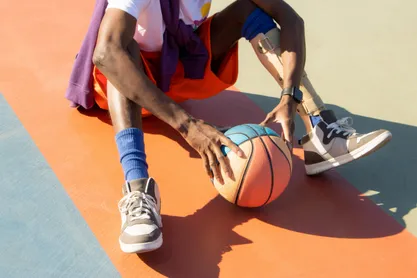

Amputee Rehabilitation
Amputee rehabilitation in Etobicoke to improve mobility, build strength, and support confident, independent living with personalized therapy.
Amputee Rehabilitation Clinic in Etobicoke
Rebuild Mobility. Master Your Prosthetic. Reclaim Independence.
Losing a limb changes everything about how you move through your day — and no two recoveries look the same. At Rapharehab’s amputee rehabilitation clinic in Etobicoke, we work with people at every stage of limb loss: from the first days after surgery, through prosthetic fitting, to walking, working, and living with full confidence again.
Our physiotherapists design a step-by-step amputee rehabilitation program built around your amputation level, your healing progress, and the goals that matter to you — whether that’s climbing stairs safely, returning to work, playing with your kids, or simply walking to the mailbox without fear of falling.
Are You Facing These Challenges After Limb Loss?
If you or a loved one has recently undergone an amputation, you may be dealing with:
- Difficulty balancing or standing without support
- Pain, tingling, or “phantom” sensations where the limb used to be
- Swelling or soreness in the residual limb that makes a prosthetic uncomfortable
- Fear of falling when walking, turning, or navigating stairs
- Muscle weakness from time spent in bed or a wheelchair during recovery
- Uncertainty about how to use, adjust, or care for a new prosthetic limb
- Loss of confidence in daily tasks you once did without thinking
- Not knowing where to start, or which exercises are actually safe
These challenges are common — and they are treatable. Amputee rehabilitation physiotherapy is specifically designed to work through each of them, in the right order, at the right pace for your body.
What Is Amputee Rehabilitation?
Amputee rehabilitation is a structured physiotherapy program that helps individuals recover strength, adjust to a prosthetic device, and relearn functional movement after the loss of a limb. It is not a single treatment but a progressive process — moving from wound healing and early strengthening, through pre-prosthetic conditioning, to full prosthetic training and long-term independence.
A well-designed amputee rehabilitation plan focuses on:
- Improving balance and postural stability
- Strengthening the core, hips, and remaining limb muscles
- Re-training a natural, efficient walking pattern (gait)
- Reducing phantom limb pain and residual limb sensitivity
- Improving comfort and fit when using a prosthetic
- Restoring independence in daily activities — dressing, cooking, driving, working
- Correcting compensatory movement patterns that can cause secondary injuries
- Building endurance and confidence for real-world mobility
Because recovery timelines and physical needs vary so much from person to person, therapy at Rapharehab is tailored to your amputation level, your stage of healing, and your lifestyle — not a generic template.
Levels & Types of Amputation We Treat
Every amputation level presents its own biomechanical challenges. Our physiotherapists have experience supporting:
Lower-Limb Amputations
- Below-knee amputation (BKA) physiotherapy — focuses on knee control, residual limb shaping, and gait mechanics unique to a preserved knee joint
- Above-knee amputation (AKA) rehabilitation — emphasizes hip strength, pelvic control, and balance, since the knee joint is also lost
- Foot or toe (partial foot) amputations
- Hip disarticulation
Upper-Limb Amputations
- Partial hand, wrist, elbow, or shoulder-level amputations
- Adapting to myoelectric or body-powered prosthetics
- Retraining fine motor tasks and bilateral hand function
Cause of Amputation
- Traumatic amputations (workplace or motor vehicle accidents)
- Medical or vascular-related amputations (diabetes, peripheral vascular disease)
- Post-surgical amputation recovery (oncology, infection, complications)
If your amputation resulted from a motor vehicle accident, our team also coordinates care with our Motor Vehicle Accident Rehabilitation program and can assist with insurance-related documentation.
Our Amputee Rehabilitation Process: Sub-Pillars of Treatment
Recovery happens in stages. Below is how a typical amputee rehabilitation program progresses at Rapharehab — each stage builds on the one before it.
1. Pre-Prosthetic Training
Before a prosthetic is even fitted, your body needs to be prepared. Pre-prosthetic training focuses on:
- Managing swelling in the residual limb through positioning and wrapping techniques
- Maintaining joint range of motion near the amputation site
- Early strengthening of the core, hips, and remaining limbs
- Desensitizing the residual limb so it can tolerate contact and pressure
2. Prosthetic Training & Gait Re-Education
Once a prosthetic is fitted, gait training after amputation teaches your body how to walk safely and efficiently again:
- Weight-shifting and stance control on the prosthetic side
- Walking on flat ground, uneven terrain, ramps, and stairs
- Turning, stopping, and starting without loss of balance
- Fine-tuning your walking pattern to reduce strain on the back, hips, and remaining leg
3. Strength & Stability Training
Targeted strengthening of the core, hips, trunk, and limbs gives your body the support it needs to control a prosthetic and prevent compensatory injuries elsewhere in the body.
4. Balance & Coordination Exercises
Balance training for amputees rebuilds the confidence needed to move through daily environments — grocery stores, transit stairs, uneven sidewalks — without fear of falling.
5. Functional Mobility Training
Practice for real daily tasks: standing from a chair, reaching, lifting, transferring in and out of a car, and navigating your home safely.
6. Phantom Limb Pain Management
Phantom limb pain treatment may include mirror therapy, desensitization techniques, manual therapy, and modalities designed to calm the nervous system’s response to limb loss.
7. Endurance & Cardiovascular Conditioning
Walking with a prosthetic requires significantly more energy than typical walking. We help build the stamina needed for work, errands, and an active lifestyle.
8. Wheelchair Skills Training (Where Applicable)
For patients not yet ready for prosthetic use, or who use a wheelchair as part of their mobility plan, we provide training to improve safety, efficiency, and independence.
How Long Does Amputee Rehabilitation Take?
Recovery timelines vary based on amputation level, overall health, and how quickly wound healing progresses, but a general pattern looks like this:
| Recovery Stage | Typical Focus | Approximate Timing* |
|---|---|---|
| Early Post-Surgical | Wound healing, swelling control, gentle mobility | Weeks 1–4 |
| Pre-Prosthetic | Strength, desensitization, conditioning | Weeks 3–8 |
| Prosthetic Fitting & Early Training | Weight-bearing, basic gait | Weeks 6–12 |
| Advanced Gait & Functional Training | Stairs, uneven terrain, endurance | Months 3–6 |
| Long-Term Maintenance | Ongoing strength, prosthetic adjustments | Ongoing |
*Every recovery is individual — your physiotherapist will map out realistic milestones during your first assessment.
Benefits of Amputee Rehabilitation at Rapharehab
A structured amputee rehabilitation program delivers benefits that extend well beyond walking ability:
- Improved mobility and a safer, more natural walking pattern
- Stronger muscles supporting long-term prosthetic use
- Reduced risk of falls and secondary injury
- Better posture and reduced strain on the back and remaining joints
- Less phantom limb pain and residual limb discomfort
- Greater independence at home, at work, and in the community
- Improved cardiovascular endurance for daily life
- Renewed confidence and emotional well-being
We treat both the physical and emotional sides of recovery — because adjusting to limb loss is as much a mental journey as a physical one.
Why Choose Rapharehab for Amputee Rehabilitation in Etobicoke?
When you’re searching for an “amputee physiotherapist near me,” here’s what sets our Etobicoke clinic apart:
- Experienced physiotherapists who understand the specific demands of amputee rehabilitation and prosthetic training
- Personalized assessment that considers your amputation level, healing stage, and daily-life goals — not a one-size-fits-all plan
- Collaboration with prosthetists to help ensure your device fits and functions the way it should
- Education for fall prevention and safe activity performance, so progress continues outside the clinic
- Insurance and motor vehicle accident (MVA) claim support, including documentation for extended health and accident benefits
- A respectful, motivating environment for patients adjusting to significant life change
- Convenient Etobicoke location at 5 – 4335 Bloor Street West, easy to reach for ongoing appointments
What to Expect at Your First Amputee Rehabilitation Visit
- Detailed assessment — your amputation history, healing stage, strength, balance, and mobility goals are reviewed
- Goal-setting conversation — what does independence look like for you? Returning to work? Walking without a cane? Playing sports again?
- Individualized treatment plan — a clear stage-by-stage roadmap, including estimated milestones
- Hands-on treatment begins — your first session may include strengthening, mobility work, or manual therapy, depending on your current stage
Insurance & Payment for Amputee Rehabilitation
Many extended health insurance plans cover physiotherapy for amputee rehabilitation, and we also work with motor vehicle accident (MVA) claims and workplace injury claims. Our team can help verify your coverage and manage documentation so you can focus on recovery. See our Payment and Insurance page for full details.
Start Your Amputee Rehabilitation Journey Today
Whether you are newly amputated, preparing for a prosthetic, or working to improve mobility years after your amputation, it’s never too early — or too late — to start structured rehabilitation. Our Etobicoke physiotherapy team is here to guide every stage of your recovery, from your first steps in the clinic to walking confidently in the world outside it.
Book your amputee rehabilitation assessment at Rapharehab, Etobicoke, today and take the next step toward mobility, strength, and independence.
 5 – 4335 Bloor Street West, Etobicoke, M9C 2A5
  647-722-3434
Frequently Asked Questions
-
What is amputee rehabilitation?
-
When should amputee rehabilitation start after surgery?
Rehabilitation often begins within days of surgery, once you are medically stable, starting with gentle mobility and swelling management before progressing to strength and prosthetic training.
-
How long does amputee rehabilitation take?
Timelines vary by amputation level and individual health, but most patients progress through pre-prosthetic training in 4–8 weeks, with prosthetic gait training continuing for several months afterward.
-
What is pre-prosthetic training?
Pre-prosthetic training prepares your residual limb and body for a prosthetic device through swelling control, desensitization, range-of-motion work, and early strengthening.
-
Do you treat both below-knee and above-knee amputations?
Yes. We provide specialized rehabilitation for below-knee amputation (BKA), above-knee amputation (AKA), foot/toe amputations, hip disarticulation, and upper-limb amputations.
-
Can physiotherapy help with phantom limb pain?
Yes. Phantom limb pain treatment may include mirror therapy, manual desensitization techniques, and targeted modalities that help calm nerve signals and reduce discomfort.
-
Will I need a prosthetic before starting rehabilitation?
No. Rehabilitation typically starts before your prosthetic is fitted, through pre-prosthetic conditioning, and continues afterward with gait and functional training.
-
How do you help with gait training after amputation?
We work on weight-shifting, balance, walking on different surfaces, stairs, turning, and correcting compensatory movement patterns to build a safe, efficient walking pattern.
-
What if my amputation was caused by a car accident?
We support motor vehicle accident (MVA) related amputations and can assist with insurance documentation and claims through our accident rehabilitation program.
-
Do you treat upper-limb amputations too?
Yes, including partial hand, wrist, elbow, and shoulder-level amputations, with training for both body-powered and myoelectric prosthetics.
-
Is amputee rehabilitation covered by insurance in Ontario?
Many extended health plans, as well as motor vehicle accident and workplace injury claims, cover amputee physiotherapy. Our team can help verify your specific coverage.
-
What if I don’t have or want a prosthetic?
We also provide wheelchair skills training and adaptive mobility strategies for patients who are not prosthetic candidates or prefer alternative mobility methods.
-
Can amputee rehabilitation reduce my risk of falling?
Yes. Balance, strength, and gait training are core parts of the program specifically because fall prevention is one of the biggest safety concerns after limb loss.
-
What should I bring to my first appointment?
Bring any surgical reports, prosthetic documentation (if fitted), a list of current medications, and comfortable clothing that allows movement of the residual limb.
-
How often will I need physiotherapy sessions?
Frequency depends on your recovery stage — early recovery may involve more frequent visits, tapering to less frequent maintenance sessions as function improves.
-
Can rehabilitation help with residual limb pain even years after amputation?
Yes. It’s never too late to start. Many patients seek rehabilitation years after amputation to address ongoing pain, mobility limits, or prosthetic discomfort.
-
Do you work directly with prosthetists?
Yes. We collaborate with local prosthetists to help ensure your device fits properly and functions well with your rehabilitation progress.
-
What exercises are used in amputee strength training?
Programs typically include core stabilization, hip and glute strengthening, single-leg control work, and functional movements like sit-to-stand and step-ups.
-
Can amputee rehabilitation help me return to work or sports?
Yes. Once foundational strength, balance, and gait are established, we build toward higher-level functional and endurance goals specific to your job or activity.
-
How do I book an amputee rehabilitation assessment in Etobicoke?
Call 647-722-3434 or contact us through our website to schedule your initial assessment at our Etobicoke clinic.