

A medical-grade support device measured and fitted to your leg, designed to stabilize the knee joint, control harmful movement, and reduce strain on injured or weakened ligaments, cartilage, or tendons.

Custom Knee Braces Clinic
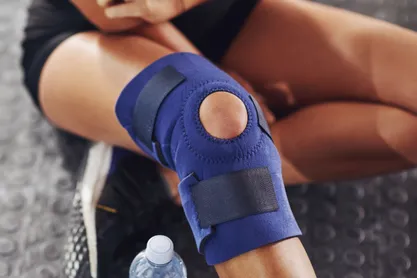

Custom Knee Braces Clinic
Support your knees with precision-fitted braces.
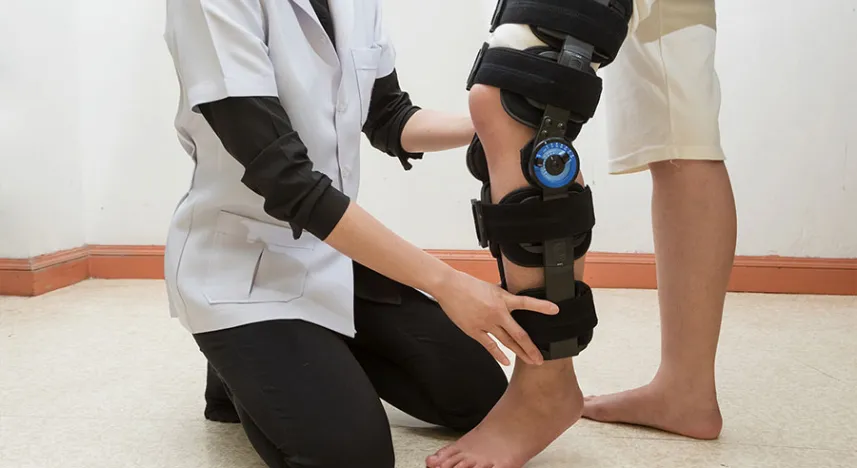
Custom Knee Braces Clinic in Etobicoke
Support Better. Move Safer. Recover Faster.
If your knee feels unstable, swollen, or painful with every step, you’re not alone — and you don’t have to manage it with guesswork. At Rapharehab in Etobicoke, our custom knee braces clinic gives you a precision-fitted, medical-grade support built around your exact joint mechanics, your injury, and your daily life.
A custom-fitted brace isn’t a one-size-fits-all elastic sleeve from the pharmacy shelf. It’s a clinically assessed, individually measured device designed by a physiotherapist to do one job well: keep your knee stable so you can keep moving. Whether you’re recovering from an ACL tear, managing arthritis pain, healing after surgery, or trying to get back on the field without your joint giving out, the right support — fitted by the right people — changes what’s possible.
This page covers what custom bracing is, which option fits your specific condition, what to expect at your fitting appointment, how insurance coverage works in Ontario, and answers to the questions we hear most often from Etobicoke patients. Use the links below to jump to what matters most to you right now.
What Is a Custom Knee Brace?
A custom knee brace is a professionally measured, orthopedic-grade support device designed to stabilize the knee joint, correct alignment, and reduce strain on injured or weakened structures — ligaments, cartilage, tendons, and the joint capsule itself.
Unlike a generic brace pulled off a store shelf, every custom brace at our Etobicoke clinic starts with a real assessment. Your physiotherapist measures your knee, evaluates how you walk and move, and identifies exactly where the instability or pain is coming from. That information is used to build a brace shaped to your leg — not an average leg.
A well-fitted custom knee brace is built to:
- Reduce knee pain and swelling by limiting harmful movement and offloading stressed tissue
- Improve stability during walking, stairs, exercise, and pivoting movements
- Support injured ligaments and cartilage while they heal
- Protect the knee through every stage of rehabilitation, from early recovery to return-to-sport
- Correct alignment so weight is distributed more evenly across the joint
- Prevent re-injury during higher-risk activities
- Restore confidence — many of our patients tell us the brace gave them back the ability to trust their knee again
The difference between a custom fit and an off-the-shelf brace comes down to precision. A brace that’s too loose won’t stabilize anything; a brace that’s too tight restricts circulation and movement. Custom bracing closes that gap.
Custom vs. Off-the-Shelf Knee Braces: Which Do You Need?
Not every knee problem requires a custom-fitted device — and part of our job is being honest with you about which option actually suits your situation.
| Off-the-Shelf Brace | Custom Knee Brace | |
|---|---|---|
| Best for | Mild strains, short-term support, general compression | Ligament tears, instability, post-surgical recovery, chronic osteoarthritis |
| Fit | Standard sizing (S/M/L) | Measured precisely to your leg |
| Support level | Light to moderate | Targeted, condition-specific |
| Typical use | Days to a few weeks | Months to long-term |
| Recommended for sport return | Sometimes, for minor issues | Yes, for ligament protection and confidence |
During your assessment, we’ll tell you plainly if an off-the-shelf option is enough — we won’t recommend a custom device you don’t need. But for ACL, MCL, PCL, or LCL injuries, post-surgical recovery, or moderate-to-severe osteoarthritis, a custom fit is almost always the better clinical choice, since the level of control a generic option offers isn’t enough to properly protect the joint.
Types of Custom Knee Braces We Offer in Etobicoke
At Rapharehab, we fit clinic-approved, medical-grade knee braces matched to your specific diagnosis. Here’s a closer look at each category and who it’s typically for.
Ligament Support Braces (ACL, MCL, PCL & LCL)
If you’ve torn or strained your anterior cruciate ligament (ACL), medial collateral ligament (MCL), posterior cruciate ligament (PCL), or lateral collateral ligament (LCL), a hinged ligament support brace is usually the recommended path. These devices control how far forward your shin bone can move relative to your thigh bone — the exact motion an injured ACL can no longer manage on its own.
For patients awaiting surgery, a functional ligament brace can provide enough stability to stay active while protecting the joint from further damage. Post-surgery, the same brace category shifts toward protecting the healing graft and controlling range of motion during early recovery.
Osteoarthritis (OA) Unloader Braces
If you’re living with knee osteoarthritis, pain usually concentrates on one side of the joint — most often the inner (medial) compartment. An unloader brace uses a three-point leverage system to shift weight away from that painful area and onto the healthier side.
This is one of the most effective non-surgical tools for managing OA pain. Many patients who’ve been told “surgery is the next step” find a properly fitted unloader option buys them months or years of comfortable, active living first.
Post-Surgical Knee Braces
After ACL reconstruction, MCL repair, meniscus surgery, or total knee replacement, your surgeon will typically want the joint protected by a rigid hinged brace with adjustable, lockable range-of-motion settings. Early on, it may be locked nearly straight; over the following weeks, range of motion opens up gradually in line with your surgeon’s protocol and your physiotherapist’s rehab plan.
Sports Performance Braces
Athletes returning to soccer, basketball, hockey, skiing, or any pivoting sport often need something built for performance, not just protection. These lighter, low-profile designs stay secure through cutting, jumping, and direction changes — giving you stability without sacrificing speed or range of motion.
Rehabilitation & Mobility Braces
For patients working through a structured rehab program, mobility-control options are designed to support gradual strengthening, allowing controlled movement that increases as your strength and confidence return rather than holding the joint completely static.
All braces fitted at Rapharehab are measured by trained professionals and selected from clinic-approved, medical-grade manufacturers — never guesswork, never generic.
Signs You May Need a Knee Brace
Not sure if bracing is right for you? These are the most common reasons Etobicoke patients book a knee brace assessment with us:
Post-Injury Instability After a ligament, tendon, or meniscus injury, your knee may feel like it could “give out” during normal movement. A brace restores external stability while the internal structures heal.
Ongoing Arthritis Pain If stairs, long walks, or standing for extended periods leave your knee aching, an unloader brace can shift pressure away from the painful side of the joint.
Recovering From Surgery Following ACL, MCL, or knee replacement surgery, a brace protects healing tissue and controls movement during the most vulnerable phase of recovery.
A Knee That Feels Weak or Unstable If your knee buckles, wobbles, or feels untrustworthy — even without a specific injury you can point to — bracing provides the external support your muscles and ligaments currently can’t.
Returning to Sport or Activity Athletes recovering from injury often need a brace to protect against re-injury and maintain confidence during high-intensity training or competition.
A History of Knee Problems If you’ve had previous knee injuries or surgeries, preventative bracing can reduce the risk of flare-ups or re-injury during physically demanding activities.
If any of this sounds familiar, the next right step is a proper assessment — not guessing with a drugstore sleeve.
Conditions We Support With Custom Knee Bracing
Custom knee braces at our Etobicoke clinic are effective for a wide range of diagnoses, including:
- ACL, MCL, PCL & LCL ligament injuries
- Meniscus tears
- Patellar instability and patellofemoral pain syndrome (runner’s knee)
- Knee osteoarthritis (OA)
- Chronic knee weakness or instability
- Post-surgical recovery (ACL reconstruction, meniscus repair, knee replacement)
- Tendon and ligament sprains or strains
- Sports-related knee injuries
- Knee hyperextension
- Joint degeneration and general overuse conditions
A properly fitted brace can meaningfully reduce pain and restore functional movement across all of these conditions — but the type of brace matters enormously. The same brace that helps an ACL patient won’t help an osteoarthritis patient, which is why assessment always comes before fitting.
If you don’t see your specific condition listed here, don’t assume bracing isn’t an option — call us. Our physiotherapists can tell you quickly whether a custom knee brace makes clinical sense for what you’re dealing with.
What to Expect: Your Knee Brace Fitting Process at Rapharehab
Getting a custom knee brace is a guided, step-by-step process — not a single transaction. Here’s what your visit to our Etobicoke clinic actually looks like.
1. Initial Consultation You’ll meet with one of our physiotherapists to talk through your knee pain, your injury history, any recent surgery, and your day-to-day goals — whether that’s getting back to running, managing arthritis comfortably, or simply walking without pain.
2. Detailed Knee Assessment We conduct a thorough evaluation of your knee mechanics: range of motion, alignment, stability testing, and a review of relevant medical history or imaging. If you’re being braced for post-surgical recovery, we’ll review your surgeon’s notes to make sure the brace selection matches their protocol exactly.
3. Precise Measurements Using clinical measuring tools, we take exact measurements of your knee, thigh, and calf. Accuracy here is everything — it’s what separates a brace that actually stabilizes your knee from one that slips, pinches, or simply doesn’t do its job.
4. Brace Selection & Fabrication Based on your diagnosis and measurements, we select the right brace category — ligament support, unloader, post-surgical, sports, or rehabilitation — and submit your custom specifications for fabrication.
5. Fitting & Adjustment Once your brace arrives, we schedule a fitting appointment. Your physiotherapist checks the fit, makes any necessary adjustments, and walks you through exactly how to put it on, take it off, and wear it correctly during daily activity.
6. Ongoing Support Your relationship with us doesn’t end at the fitting. As your knee heals, strengthens, or changes, we’re available to reassess fit, make adjustments, and integrate your brace into a broader rehabilitation plan if needed.
Benefits of Custom Knee Braces at Rapharehab
Choosing a properly fitted custom knee brace provides:
- Targeted joint stability matched to your specific injury, not a generic average
- Improved mobility for daily activities like walking, stairs, and standing
- Real pain reduction for both chronic conditions and acute injuries
- Enhanced performance and confidence for athletes returning to sport
- Greater safety during higher-risk movements like stairs, uneven ground, or exercise
- Protected healing for post-surgical tissue during the critical early recovery window
- A personalized fit that’s comfortable enough to actually wear consistently — the most effective brace is the one you don’t take off out of frustration
- Long-term joint preservation, helping to slow the progression of arthritis and reduce the risk of future injury
We measure success not just by how the brace fits on day one, but by whether it’s still doing its job — comfortably and effectively — months down the line.
Insurance & Coverage for Custom Knee Braces in Ontario
We understand that cost and coverage are often the first questions on your mind, and we want that part of the process to feel as straightforward as possible.
Extended Health Care (EHC) Benefits Most extended health insurance plans in Ontario include coverage for custom knee bracing, though the amount and conditions vary by provider and plan. Our team can help verify what your specific plan covers before you commit to anything.
Motor Vehicle Accident (MVA) Claims If your knee injury resulted from a car accident, custom bracing is often covered as part of your MVA benefits. We can help you understand how this fits into your broader accident benefits claim.
Workplace Safety and Insurance Board (WSIB) For knee injuries sustained on the job, WSIB coverage frequently includes the cost of medically necessary bracing as part of your treatment and return-to-work plan.
Ontario Disability Support Program (ODSP) Patients receiving ODSP support may be eligible for coverage toward custom knee braces as part of their health benefits.
Do You Need a Prescription? A physician’s prescription isn’t always mandatory, but some insurers require one to process a claim. If you’re unsure what your policy needs, our team will help you figure that out — and assist with obtaining a prescription if necessary.
What We Handle for You Insurance paperwork shouldn’t add stress to an already stressful situation. Our team prepares the documentation your insurer needs, helps verify your coverage ahead of your appointment, and supports you through the claims process so you can focus on your recovery, not paperwork.
If you’re unsure where to start, simply contact us with your insurance details and we’ll walk you through what’s likely covered before you book your assessment.
Caring for Your Custom Knee Brace
A well-maintained brace lasts longer and performs better. A few simple habits go a long way:
- Clean regularly with mild soap and water; avoid harsh detergents
- Air dry completely — never use direct heat, a dryer, or a radiator, which can warp the materials
- Check straps and hinges periodically for signs of wear, stretching, or loosening
- Avoid machine washing, which can damage hinges and rigid components
- Bring it back for adjustment if your weight, activity level, or symptoms change significantly
With proper care, most knee braces remain effective for 12 to 24 months, though this varies with how often you wear it and how active you are. If your brace starts to feel loose, worn, or less supportive than it used to, that’s a sign it’s time for a follow-up — not something to push through.
Why Choose Rapharehab for Custom Knee Braces in Etobicoke?
There’s no shortage of places in the GTA that sell knee braces. What you’re really choosing is who assesses your knee, who measures it, and who stands behind the fit afterward. At Rapharehab, that means:
- Expert assessment from trained, experienced physiotherapists — not a sales-floor fitting
- Accurate, hands-on measurements that translate into a brace that actually fits
- High-quality, medical-grade braces sourced from trusted manufacturers
- Clear guidance on how to wear, adjust, and care for your brace correctly
- Integrated rehab plans, so your brace works alongside physiotherapy rather than as a standalone fix
- Support with insurance documentation, including prescriptions and coverage verification
- A convenient Etobicoke location with flexible appointment times that fit around your schedule
We treat the brace as one part of a bigger picture — your full recovery — not the end of the conversation.
Get the Right Support for Your Knee
Whether you’re recovering from an injury, managing chronic knee pain, or working your way back to your sport, a properly fitted custom knee brace can make movement safer, steadier, and far less painful.
Book your knee brace assessment today and find out why Rapharehab is a trusted custom knee braces clinic in Etobicoke for accurate fitting, honest guidance, and care that doesn’t stop at the fitting appointment.
Frequently Asked Questions
-
What is a custom knee brace?
-
How is a custom knee brace different from one I can buy at the pharmacy?
Pharmacy braces come in standard sizes (small, medium, large) with general compression or light support. Custom braces are measured to your exact leg shape and built for a specific condition — far more precise control, particularly for ligament injuries, instability, and post-surgical recovery.
-
Do I need a doctor’s referral to get a custom knee brace?
Not always. You can typically book an assessment with our physiotherapists directly, though some insurers require a physician’s prescription to process a claim — our team can help confirm this for your policy.
-
How long does it take to get a custom knee brace?
After your assessment and measurements, fabrication typically takes one to two weeks depending on brace type and manufacturer. We schedule your fitting as soon as it arrives.
-
Will my insurance cover a custom knee brace?
Many Ontario extended health care (EHC) plans offer coverage, and coverage may also apply through MVA claims, WSIB, or ODSP. Coverage amounts vary by provider, so our team helps verify your specific benefits.
-
What knee conditions can a custom brace help with?
ACL, MCL, PCL, and LCL injuries, meniscus tears, patellar instability, knee osteoarthritis, post-surgical recovery, chronic weakness, and sports-related injuries.
-
What’s the difference between an ACL brace and an unloader brace?
An ACL (ligament support) brace is hinged to control forward shin movement, protecting an injured or reconstructed ligament. An unloader brace is built for osteoarthritis — it uses leverage to shift weight away from the painful side of the joint rather than controlling ligament motion.
-
Can I wear a knee brace before surgery, not just after?
Yes. Patients awaiting ACL or ligament surgery can use a functional brace to stay reasonably active and protect the knee from further damage while waiting for their surgical date.
-
Is a custom knee brace uncomfortable to wear?
A properly fitted brace should feel secure, not restrictive. Built to your exact measurements using breathable, lightweight materials, most patients find it more comfortable than a generic alternative once adjusted.
-
How long will my knee brace last?
With proper care, most braces remain effective for 12 to 24 months, depending on use and activity level. We recommend a follow-up if you notice wear, looseness, or reduced support.
-
Can I still play sports while wearing a knee brace?
Yes. Sports performance braces are designed for stability and ligament protection during pivoting, cutting, and jumping, without significantly limiting performance.
-
What happens during a knee brace fitting appointment?
A consultation about your symptoms and goals, a hands-on assessment of knee mechanics, precise measurements, and a discussion of which brace type matches your condition. A separate fitting appointment follows once fabrication is complete.
-
Can a knee brace help me avoid or delay surgery?
For certain conditions — particularly osteoarthritis — an unloader brace can meaningfully reduce pain and improve function, sometimes delaying the need for surgery. This depends on severity, which your physiotherapist can assess directly.
-
What if I’m not sure whether I need a custom or off-the-shelf brace?
That’s exactly what your assessment is for. We’ll recommend the option that genuinely fits your condition and activity level, not the more expensive choice by default.
-
How do I clean and maintain my knee brace?
Clean regularly with mild soap and water, then air dry completely. Avoid machine washing or direct heat, both of which can damage materials, straps, and hinges.
-
Can a knee brace help with knee hyperextension?
Yes. Certain hinged designs include stops that prevent the knee from bending backward past its natural range — useful for patients prone to hyperextension during sport or daily activity.
-
Do you offer knee braces for both adults and younger athletes?
Yes, across age groups — younger athletes recovering from sports injuries, adults managing chronic conditions, and older patients dealing with osteoarthritis.
-
What should I bring to my knee brace assessment?
Any relevant medical records, surgical notes, or imaging if available, along with your insurance information. Bring a physician’s prescription if you have one, though it’s not always required to begin.
-
Can I get my brace adjusted after the initial fitting?
Yes. As your knee heals, your strength changes, or activity level shifts, you can return for adjustments to keep the fit and function correct.
-
How do I book a custom knee brace assessment at Rapharehab in Etobicoke?
Call our clinic or use our online booking system. Your first visit includes a full consultation and assessment so we can recommend the right option for your specific condition.
-
Is a custom knee brace worth it compared to a cheaper drugstore option?
For mild, short-term issues, a drugstore brace may be enough. For ligament injuries, instability, post-surgical recovery, or moderate-to-severe arthritis, the precision fit of a custom device provides meaningfully better protection — often the more cost-effective choice long-term by reducing re-injury risk.