

They correct biomechanical imbalances in the feet — overpronation, flat arches, uneven weight distribution — to relieve pain in the feet, knees, hips, and lower back, and improve overall posture.

Custom Orthotics in Etobicoke
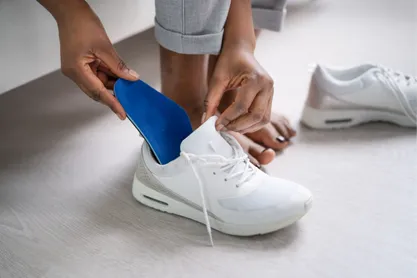

Custom Orthotics in Etobicoke
Tailored insoles for comfort and proper foot alignment.
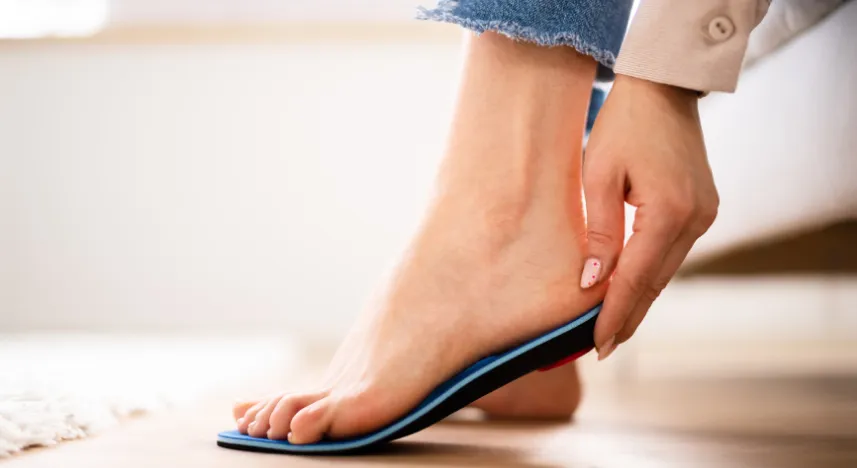
Custom Orthotics in Etobicoke
Relieve Foot Pain. Correct Your Alignment. Move Without Hesitation.
If every step reminds you that something in your feet, knees, or lower back isn’t quite right, you’re not imagining it — and you’re not alone. At Rapharehab in Etobicoke, custom orthotics are built around your feet, not a generic mould, using detailed gait and biomechanical assessments to find out exactly why you’re hurting before we design anything.
These are prescription-grade shoe inserts, shaped from a cast or scan of your own foot, designed to correct the way your foot strikes the ground. Unlike the drugstore insoles you’ve probably already tried, they address the specific imbalance behind your pain — whether that’s flat feet, plantar fasciitis, overpronation, or strain travelling up into your knees and hips.
Most people who come to us have already tried generic insoles, new shoes, or simply waiting it out. If that hasn’t worked, custom orthotics in Etobicoke from Rapharehab are the logical next step — and one most patients wish they’d taken sooner.
Book Your Foot & Gait Assessment
What Are Custom Orthotics, and How Are They Different From Insoles?
Custom orthotics are medical devices, not comfort products — a distinction worth understanding before spending money on either.
An over-the-counter insole is mass-produced to a standard shoe size. It cushions your foot, but it doesn’t know your arch height, your walking pattern, or which side of your foot is bearing too much weight. Custom orthotics are different by design: built from a 3D scan or physical cast of your own feet, shaped to correct the specific biomechanical fault identified during your assessment.
That difference shows up over time:
- Off-the-shelf insoles offer general cushioning, last 6–12 months, and don’t correct underlying foot mechanics.
- Custom orthotics are clinically prescribed, hold their shape for 2–5 years, and fix the cause of pain rather than just softening its impact.
They also do more than support your feet in isolation. Your feet are the foundation your entire body stands on. When that foundation tilts, rotates, or collapses even slightly, the strain travels upward — into your ankles, knees, hips, and lower back. Correcting alignment at the source is often the fastest way to resolve pain that seems to be coming from somewhere else entirely.
Signs You Might Need Custom Orthotics
Foot problems rarely announce themselves clearly. They show up as a dull ache you’ve started accepting as normal, or pain that seems to live in your knee but never quite resolves with knee-focused treatment. If any of the following sound familiar, a biomechanical assessment is worth booking.
- Heel pain that’s sharpest with your first steps in the morning
- Aching arches by the end of a standing or walking day
- Knee, hip, or lower back pain with no clear injury behind it
- Uneven wear on the soles or inner edges of your shoes
- Feet that tire quickly, even in supportive footwear
- A noticeable limp, waddle, or change in your normal gait
- Pain that flares specifically during running, walking, or sports
- Numbness, tingling, or burning across the ball of the foot
- Swelling around the ankle or arch after activity
- A history of ankle sprains or repeated lower-limb injuries
None of these symptoms confirm on their own that orthotics are the answer — that’s exactly what a proper gait and biomechanical assessment is for. But they’re a reliable signal that it’s time to get your feet looked at rather than waiting for the discomfort to pass on its own.
Conditions We Treat With Custom Orthotics in Etobicoke
Custom orthotics are prescribed for a wide range of foot, ankle, and lower-limb conditions. Below are the issues we see most often at our Etobicoke clinic, along with how orthotics typically help each one.
Plantar Fasciitis & Heel Pain
Plantar fasciitis — inflammation of the thick tissue band along the bottom of your foot — is one of the most common reasons people seek orthotics. Custom orthotics support the arch and reduce tension on the plantar fascia with every step, easing the sharp first-step heel pain that defines this condition.
Flat Feet, Fallen Arches & High Arches
A collapsed arch lets the foot roll inward (overpronation), straining the ankle, knee, and lower back. The opposite problem — a rigid, high arch that doesn’t absorb shock well — causes its own pain pattern along the outer foot and ankle. Orthotics rebuild missing arch support or redistribute pressure more evenly, depending on which extreme applies to you.
Knee, Hip & Lower Back Pain
Because foot mechanics change how force travels up through the entire leg, misalignment at ground level is a frequently overlooked contributor to knee, hip, and lower back pain that hasn’t responded to treatment focused on those joints alone. Correcting the foundation often resolves pain that seems to live somewhere else entirely.
Achilles Tendon Pain & Shin Splints
When the foot overpronates, the Achilles tendon, calf, and shin work harder to compensate, leading to tightness, inflammation, and the rotational stress behind shin splints. Orthotics that correct foot alignment reduce that compensatory load.
Bunions, Hammer Toes & Metatarsalgia
Orthotics won’t reverse a structural bunion, but they slow its progression and ease day-to-day discomfort by redistributing weight away from the forefoot — the same principle that relieves metatarsalgia, the painful inflammation common at the ball of the foot.
Ankle Instability & Recurring Sprains
If your ankles roll easily or you’ve sprained the same one repeatedly, orthotics improve underlying foot stability and lower your risk of re-injury.
Diabetic Foot Care
For patients managing diabetes, properly fitted orthotics reduce pressure points and friction that can lead to ulceration — an important preventive step where foot sensation may already be reduced.
Arthritis-Related Foot Pain
Soft, accommodative orthotics cushion arthritic joints and reduce the mechanical stress that worsens flare-ups during weight-bearing activity.
Overpronation & Oversupination
These two biomechanical faults sit at the root of most conditions listed above, which is why correcting them is often the first goal of any orthotic prescription.
If your symptoms don’t match the list exactly, that’s fine — book an assessment anyway. Most patients arrive with overlapping issues rather than one isolated condition.
Types of Custom Orthotics Available at Rapharehab
Not every foot needs the same solution. After your assessment, we’ll recommend one of the following based on your specific findings, lifestyle, and goals.
Custom-Made Orthotics — Precision-crafted from a 3D scan of your foot for everyday footwear; the most common starting point for most patients.
Functional Orthotics — Rigid or semi-rigid devices that actively correct foot mechanics, ideal when structural correction matters more than cushioning.
Accommodative Orthotics — Softer, cushion-forward devices suited to sensitive feet, arthritis, or diabetic conditions where pressure relief matters most.
Sports Orthotics — Built for running, court sports, or high-impact training, balancing stability with the flexibility active movement requires.
Work & Occupational Orthotics — Designed for people who stand or walk most of their shift, prioritizing durable, all-day support.
We’ll walk you through which type fits your foot type, activity level, and the footwear you actually wear — there’s no one-size-fits-all answer here.
How the Custom Orthotics Process Works at Rapharehab
Getting fitted in Etobicoke follows a clear, four-step process from your first visit to wearing your finished pair.
1. Initial Consultation We discuss your symptoms, activity level, footwear, and injury history — the conversation that shapes everything else in your assessment.
2. Gait & Biomechanical Assessment Using gait analysis and a hands-on physical exam, we observe how you walk and stand, checking alignment, range of motion, and weight distribution. This is where we identify the specific mechanical issue your orthotics will be built to correct.
3. 3D Scan or Cast We take a precise, non-weight-bearing scan or mould of your feet — the exact template your orthotics are manufactured from.
4. Fitting & Break-In Guidance Once your pair arrives (typically one to two weeks later), you’ll return for fitting. We confirm they sit correctly in your everyday shoes, make adjustments, and walk you through a gradual break-in schedule, usually starting with an hour or two of wear per day and increasing over the following two weeks.
A short follow-up visit lets us confirm everything’s working and fine-tune anything that still feels off.
Benefits of Custom Orthotics
Patients who wear their orthotics consistently typically notice improvement across several areas, not just the original complaint that brought them in:
- Reduced pain in the feet, knees, hips, and lower back
- Improved posture and full-body alignment
- Better balance and more efficient gait mechanics
- Increased comfort during long periods of standing or walking
- Lower risk of future injury and joint strain
- Better performance during sport, training, or physically demanding work
- Correction built around your foot structure, not a generic average
Custom Orthotics Cost & Insurance Coverage in Ontario
Cost is usually one of the first practical questions people have, so here’s a straightforward overview.
What they cost. Custom orthotics in Ontario typically range from roughly $400 to $600 per pair, depending on materials and correction complexity. A separate biomechanical assessment fee may apply, generally $75–$150.
OHIP doesn’t cover them. Like most of Canada, custom orthotics aren’t an OHIP-covered service in Ontario. Coverage comes through extended health insurance — employer benefits or a private policy.
Most extended health plans offer some coverage, often up to a set dollar amount per year or per multi-year cycle. Details vary significantly between insurers, so we recommend a quick call to your provider before your appointment to confirm your benefit and documentation requirements.
What your insurer will likely require: a prescription with a diagnosis, confirmation that a biomechanical assessment and gait analysis were performed, and documentation that the orthotics were custom-manufactured from a 3D scan — not assembled off a shelf. We provide the paperwork to support your claim.
They’re a multi-year investment. With proper care, most last 2 to 5 years, which is why many plans renew orthotic coverage annually or biennially.
Unsure what your plan covers? Our team can help you understand what to ask your insurer before your appointment.
Why Choose Rapharehab for Orthotics in Etobicoke?
Etobicoke has several clinics offering orthotics. Here’s what sets care at Rapharehab apart.
We assess the whole picture, not just your feet. Foot pain rarely exists in isolation. Our assessment looks at gait, posture, and full biomechanical function so your orthotics address the actual root cause, not just the symptom you noticed first.
Integrated care under one roof. Orthotic care can be combined with physiotherapy, chiropody, and other services we offer for a more complete recovery plan rather than a single isolated product.
Experienced foot and lower-limb specialists, with hands-on knowledge of the kinetic chain connecting your feet to the rest of your body.
Quality materials built to last — durable, professional-grade construction designed to hold its correction over years of daily wear, not months.
Education that goes beyond the orthotic itself, including guidance on footwear choice and daily foot care so your investment performs as well as possible for as long as possible.
A convenient Etobicoke location at 5 – 4335 Bloor Street West, with flexible appointment availability for people balancing work, family, and recovery.
Take the First Step Toward Pain-Free Movement
If foot pain, poor alignment, or discomfort during standing and walking has become part of your daily routine, it doesn’t have to stay that way. A proper biomechanical assessment is the fastest way to find out exactly what’s going on — and whether custom orthotics are the right next step for you.
Book Your Orthotics Assessment in Etobicoke
📍 5 – 4335 Bloor Street West, Etobicoke, ON M9C 2A5 📞 647-722-3434
Frequently Asked Questions
-
What are custom orthotics used for?
-
How are they different from store-bought insoles?
Insoles are mass-produced for a general shoe size and offer cushioning only. Ours are built from a 3D scan of your own feet after a clinical assessment, designed to correct your specific mechanics rather than just add padding.
-
Do I need a doctor’s referral?
No referral is required to book an assessment with us. Most insurers do require a prescription with a diagnosis for reimbursement, which we can help facilitate during your visit.
-
How long does it take to get a finished pair?
Typically one to two weeks after your scan, before your fitting appointment — slightly longer during high-demand periods.
-
How much do custom orthotics cost in Etobicoke?
Generally $400 to $600 per pair in Ontario, with assessment fees between $75 and $150. Final pricing depends on the type and materials your correction requires.
-
Are they covered by OHIP?
No. OHIP doesn’t cover custom orthotics anywhere in Ontario. Coverage comes through extended health insurance, employer-provided or private.
-
Will my insurance cover the cost?
Most extended health plans offer at least partial coverage, though amounts and requirements vary by provider. Confirm your specific benefit and documentation needs with your insurer before booking.
-
How long do they last?
Typically 2 to 5 years with normal use. High-impact activity and higher body weight tend to shorten that lifespan.
-
How do I know if I need a replacement?
Visible cracking, the topcoat separating from the base, or pain that had previously resolved returning are the main signs. A reassessment confirms whether you need full replacement or just an adjustment.
-
What’s the difference between functional and accommodative orthotics?
Functional orthotics are firmer and actively correct foot mechanics. Accommodative orthotics are softer and prioritize cushioning, better suited to sensitive feet, arthritis, or diabetic conditions.
-
Can they help with knee pain?
Often, yes. Because misaligned feet change how force travels up through the leg, correcting alignment at the foot level frequently reduces strain on the knee joint too.
-
Can they help with lower back pain?
Foot mechanics influence posture and gait, both of which affect the back. They aren’t a universal fix, but correcting an underlying foot imbalance often provides meaningful relief.
-
Do they hurt at first?
Mild discomfort during the first one to two weeks is normal as your foot adapts, which is why we recommend a gradual break-in schedule rather than full-day wear immediately.
-
How long is the break-in period?
Start with one to two hours on day one, adding roughly an hour per day until you reach full-day wear — usually one to two weeks total.
-
Can children wear custom orthotics?
Yes, particularly when there’s a hereditary foot concern or an early diagnosed condition. A pediatric-specific assessment determines suitability and type.
-
Are they worth it over cheaper insoles?
For chronic conditions like plantar fasciitis, flat feet, or recurring joint pain, custom orthotics typically provide more durable, targeted relief than insoles, which mainly offer temporary cushioning and wear out within months.
-
Can I wear them in any type of shoe?
They’re usually built for a specific footwear category — casual, athletic, work, or dress — since each has different volume and fit requirements. Tell us which shoes you wear most so they’re built to fit.
-
What conditions are most commonly treated?
Plantar fasciitis, flat feet, high arches, overpronation, metatarsalgia, shin splints, bunions, and diabetic foot complications.
-
How often should I get reassessed?
Generally every 1 to 2 years, or sooner if your symptoms change, your activity level shifts, or your current orthotics show visible wear.
-
Do I need orthotics if I don’t currently have foot pain?
Not necessarily — they’re most often prescribed for an existing issue. That said, if you have a known risk factor like diabetes or a job requiring long hours standing, a preventive assessment can still be worthwhile.
-
Can they help with diabetic foot care?
Yes. Properly fitted orthotics reduce pressure points and friction that can lead to skin breakdown, which matters especially when foot sensation may already be reduced.
-
What should I bring to my assessment?
Two to three pairs of your most commonly worn shoes, any existing prescription, and details of recent injuries or relevant imaging.
-
Is there a difference between orthotics and orthopedic shoes?
Yes. Orthotics are inserts placed inside your existing footwear; orthopedic shoes are specially constructed footwear for structural foot conditions. The two are often used together but serve different purposes.