

Surgical rehabilitation is a structured physiotherapy program that helps you recover after surgery by reducing pain, restoring movement, and rebuilding strength in a safe, progressive way.
Surgical Rehab in Etobicoke
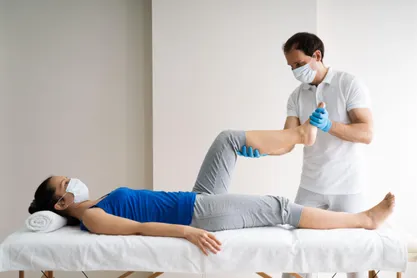

Surgical Rehab in Etobicoke
Surgical rehab in Etobicoke focused on safe recovery, restored mobility, and strength rebuilding through personalized physiotherapy.

Surgical Rehab in Etobicoke: Post-Surgery Physiotherapy for a Complete Recovery
Recover Safely. Restore Mobility. Regain Strength.
Surgery fixes the structural problem. What happens in the weeks and months after — that’s what determines whether you walk without a limp, climb stairs without wincing, or go back to the activities you love. If you’re feeling stiff, weak, anxious about moving the wrong way, or simply unsure what “normal” recovery is supposed to feel like, you’re exactly who surgical rehab in Etobicoke at Rapharehab is built for.
Our physiotherapy-led rehabilitation programs help patients recover from orthopedic, spinal, joint, and soft-tissue surgery with a structured, one-on-one plan — not generic handouts. Whether you’re two days post-op or two months in and still not “feeling right,” our Etobicoke clinic on Bloor Street West works alongside your surgeon’s protocol to get you back to daily life safely and with confidence.
Common Problems People Face After Surgery
Most patients don’t come to us because they read a brochure about physiotherapy — they come because something isn’t right. If any of this sounds familiar, post-surgical physiotherapy is likely the missing piece of your recovery:
- Stiffness that isn’t loosening up. Your joint feels “locked” weeks after surgery instead of gradually improving.
- Swelling that won’t go down. Persistent inflammation around the incision or joint, even at rest.
- Fear of movement. You’re avoiding bending, lifting, or putting weight on the area because you’re afraid of “undoing” the surgery.
- Weakness that doesn’t match your expectations. Muscles around the surgical site feel disconnected, wasted, or unreliable.
- Pain that spikes with activity. Discomfort that flares when walking, climbing stairs, or reaching overhead.
- Uneven walking or compensations. A limp, shoulder hike, or favoring one side that’s creating new aches elsewhere.
- Scar tissue tightness. Pulling, tightness, or restricted movement around the incision site.
- Not knowing what’s “safe.” Conflicting advice from friends, the internet, or general fitness content, with no clear plan for your specific procedure.
These are normal parts of the healing process — but they’re also signals that structured, hands-on rehabilitation should be part of your recovery, not an afterthought.
What Is Surgical Rehabilitation?
Surgical rehabilitation — also called post-surgical or post-operative physiotherapy — is a structured, physiotherapist-guided program designed to support healing, reduce pain, restore movement, and rebuild strength after an operation. It bridges the gap between “the surgery is done” and “I feel like myself again.”
A properly designed surgical rehab plan is built to help you:
- Recover faster and more safely, in line with your surgeon’s timeline
- Restore joint mobility and flexibility
- Reduce post-surgical swelling and pain
- Rebuild muscle strength and joint stability
- Relearn correct movement patterns (walking, bending, reaching, lifting)
- Prevent stiffness, scar tissue restrictions, and long-term complications
- Return to work, sport, and daily activities with confidence
- Achieve a full, functional, long-term recovery — not just a “good enough” one
Research and orthopedic best practice consistently show that surgical outcomes depend as much on rehabilitation as on the operation itself. Skipping or delaying physiotherapy after surgery is one of the most common reasons patients experience lingering stiffness, chronic weakness, or a slower-than-expected return to normal function.
The Phases of Post-Surgical Recovery
Recovery isn’t a single event — it’s a progression. Understanding the phases helps set realistic expectations and shows why a phased physiotherapy plan matters more than a generic exercise sheet.
Phase 1 — Protection & Pain Control (Days 1–14): Focus is on reducing swelling, protecting the surgical site, gentle range-of-motion work, and safe movement education (how to walk with crutches, get in and out of bed, manage stairs).
Phase 2 — Mobility Restoration (Weeks 2–6): Progressi+ve stretching, manual therapy, and scar tissue work to regain full range of motion while continuing to manage inflammation.
Phase 3 — Strength Rebuilding (Weeks 6–12): Targeted strengthening exercises for the muscles around the surgical site, along with core and supporting-joint work to correct compensations that developed during early recovery.
Phase 4 — Functional & Return-to-Activity Training (Month 3 onward): Balance, coordination, and activity-specific training — climbing stairs, lifting, returning to work duties, or getting back to sport — with ongoing progress tracking against measurable goals.
The exact timeline shifts depending on the procedure, your baseline fitness, and your surgeon’s protocol, but the sequence — protect, restore, strengthen, return — is consistent across almost all orthopedic and soft-tissue surgeries.
Surgeries and Procedures We Support
Our surgical rehab programs at Rapharehab in Etobicoke are tailored to the specific procedure and your surgeon’s post-op instructions. We commonly support recovery from:
Joint Replacement Surgery Rehab
Knee replacement physiotherapy (TKR) and hip replacement rehab (THR) are among the most common referrals we see. Post-replacement rehab focuses on regaining range of motion early, protecting the new joint, rebuilding surrounding muscle strength, and retraining a normal walking pattern (gait training) to avoid long-term compensations.
Ligament & Soft-Tissue Surgery Rehab
ACL, MCL, PCL, and meniscus repair rehab requires careful, staged loading of the knee — too little movement causes stiffness, too much too soon risks re-injury. Our physiotherapists follow evidence-based ACL/ligament protocols in coordination with your orthopedic surgeon.
Shoulder Surgery Rehab
Rotator cuff repair and shoulder stabilization surgery rehab focuses on protecting the repair in early weeks, then progressively restoring overhead mobility and rebuilding rotator cuff and scapular strength to prevent re-tearing.
Spinal Surgery Rehab
Post-discectomy and spinal fusion rehab emphasizes safe movement education, core stabilization, and graded return to bending, lifting, and daily activity — always respecting your surgeon’s spinal precautions.
Foot, Ankle & Lower Limb Surgery Rehab
Recovery from ankle reconstruction and foot or toe surgery centers on swelling control, regaining ankle mobility, and rebuilding balance and walking mechanics before a full return to weight-bearing activity.
Hand, Wrist & Elbow Surgery Rehab
Post-surgical rehab for wrist, hand, and elbow procedures targets fine motor control, grip strength, and scar mobility — critical for returning to work tasks and daily fine-motor activities.
Fracture Fixation & Tendon Repair Rehab
After fracture fixation surgery or tendon repair, rehab progresses from protected movement to strengthening once bone or tendon healing allows, guided by your surgeon’s imaging and clearance timeline.
If your procedure isn’t listed here, don’t worry — reach out. Our physiotherapists build individualized programs for nearly any orthopedic, spinal, or soft-tissue surgery.
Surgical Rehab Techniques and Treatment Methods We Use
Every surgical rehab plan at Rapharehab combines evidence-based techniques, adjusted to your recovery phase:
- Manual Therapy: Hands-on joint mobilization and soft-tissue work to reduce stiffness, improve circulation, and support tissue healing.
- Targeted Strengthening: Progressive, graded exercises that rebuild muscle around the surgical site without overloading healing tissue.
- Mobility & Flexibility Training: Restores natural joint movement while respecting surgical precautions.
- Scar Tissue Management: Manual techniques that prevent adhesions and restore normal soft-tissue glide around the incision.
- Gait Training: Corrects walking patterns after hip, knee, or ankle surgery to prevent compensatory pain elsewhere in the body.
- Laser Therapy & Electrical Modalities: Reduces inflammation, manages pain, and supports faster tissue healing.
- Balance & Stabilization Training: Rebuilds proprioception and control to reduce fall risk, especially important after lower-limb surgery.
- Pain Management Strategies: Movement-based and manual techniques that reduce discomfort without over-reliance on medication.
- Functional Movement Training: Practices real-world tasks — stairs, bending, lifting, getting in and out of a car — so recovery translates to daily life, not just the treatment room.
Benefits of Structured Surgical Rehabilitation
Choosing a dedicated, physiotherapist-led surgical rehab program (instead of general exercises or no rehab at all) offers measurable advantages:
- Faster healing and improved strength outcomes
- Reduced risk of stiffness, scar adhesion, and post-op complications
- Better joint stability and long-term function
- Improved confidence in daily movement and independence
- A personalized plan that adapts as you progress
- Professional oversight through every recovery phase
- Reduced reliance on pain medication over time
- Clear, measurable progress tracking against your goals
Without structured rehab, many patients plateau — regaining “enough” function to get by, but not the full strength, mobility, or confidence they had before surgery. Post-surgical physiotherapy is what closes that gap.
What Happens If You Skip Post-Surgical Physiotherapy?
It’s a fair question: is rehab really necessary, or will the body just heal on its own? For minor procedures, some recovery does happen naturally. But for most orthopedic, joint, and spinal surgeries, skipping structured rehab increases the risk of:
- Long-term joint stiffness that becomes harder to reverse over time
- Muscle weakness that leads to compensatory pain in other joints
- Scar tissue restrictions that limit range of motion permanently
- Poor walking or movement mechanics that persist for years
- A higher chance of re-injury or needing revision surgery
- Slower, less complete return to work, sport, or daily life
Early, guided physiotherapy after surgery is one of the most well-supported ways to protect your surgical investment and avoid these long-term setbacks.
Why Choose Rapharehab for Surgical Rehab in Etobicoke?
At Rapharehab, post-surgical patients receive:
- Care from physiotherapists experienced specifically in post-operative rehabilitation
- Customized treatment plans built around your procedure and surgeon’s timeline
- One-on-one sessions focused on proper technique, not rushed group settings
- Integrated care combining manual therapy, exercise therapy, and modalities under one roof
- Education on movement precautions to prevent re-injury or complications
- A supportive, patient-centered environment for what can be a stressful recovery
- A convenient Etobicoke location on Bloor Street West with flexible scheduling
- Direct communication and coordination with your surgeon’s post-op protocol
We don’t hand you a generic exercise sheet and send you home. Your program is reassessed and adjusted at every stage of recovery.
Start Your Post-Surgery Recovery Today
The surgery restored the structure — rehabilitation restores the function. Proper physiotherapy is the difference between a recovery that stalls and one that gets you fully back to your life.
Book your surgical rehab appointment in Etobicoke today and work with a physiotherapy team that understands what post-operative recovery really requires — safe, effective, and personalized care from day one.
Frequently Asked Questions
-
What is surgical rehabilitation?
-
How soon after surgery can I start physiotherapy?
It depends on the procedure and your surgeon’s protocol. Some patients begin gentle movement within days of surgery, while others start a few weeks later once initial healing has progressed. We always follow your surgeon’s specific timeline.
-
Do I need a doctor’s referral for surgical rehab in Etobicoke?
In most cases, a referral isn’t required to see a physiotherapist in Ontario, though your surgeon may provide specific post-op protocols we’ll follow. Some insurance plans do require a referral for reimbursement — check with your provider.
-
What types of surgery does Rapharehab’s surgical rehab program support?
We support recovery from knee and hip replacements, ACL/MCL/ligament repairs, meniscus surgery, rotator cuff and shoulder stabilization surgery, spinal surgeries, ankle reconstruction, foot and toe surgery, wrist/hand/elbow procedures, tendon repairs, and fracture fixation.
-
How long does post-surgical physiotherapy usually take?
Timelines vary widely — minor soft-tissue procedures may need 6–8 weeks of rehab, while joint replacements or spinal surgeries can require 3–6 months or longer for full functional recovery.
-
Is post-surgical physiotherapy painful?
Some discomfort during mobility and strengthening work is normal, especially early on, but treatment should never cause sharp or severe pain. Your physiotherapist adjusts intensity based on your tolerance and healing stage.
-
What happens during my first surgical rehab appointment?
We review your surgical history and surgeon’s notes, assess your current mobility, strength, and pain levels, and build a personalized, phase-based treatment plan tailored to your procedure.
-
Can physiotherapy help with swelling after surgery?
Yes. Manual therapy, movement, and modalities like laser therapy and electrical stimulation are commonly used to help manage post-surgical swelling and inflammation.
-
What is scar tissue management, and why does it matter?
Scar tissue management uses hands-on techniques to prevent adhesions and restore normal movement of the skin and soft tissue around your incision, which can otherwise limit range of motion long-term.
-
Will physiotherapy help me avoid needing pain medication?
For many patients, structured rehab reduces reliance on pain medication over time by addressing the underlying stiffness, weakness, and movement dysfunction that contribute to ongoing pain.
-
What is gait training and do I need it?
Gait training corrects abnormal walking patterns that often develop after hip, knee, or ankle surgery. It’s commonly recommended to prevent secondary pain in the back, opposite hip, or knees from compensatory walking.
-
How is rehab different after a knee replacement versus an ACL repair?
Knee replacement rehab focuses on regaining range of motion in an artificial joint and rebuilding surrounding muscle strength quickly to support daily function. ACL rehab follows a more cautious, staged loading protocol to protect the healing graft while restoring strength and stability for return to activity or sport.
-
Can surgical rehab help prevent re-injury?
Yes. A key goal of post-surgical physiotherapy is rebuilding strength, balance, and proper movement mechanics — all of which reduce the risk of re-injury or needing a revision surgery.
-
What should I wear or bring to a surgical rehab appointment?
Loose, comfortable clothing that allows access to the surgical area (e.g., shorts for knee/hip surgery, a sleeveless top for shoulder surgery), along with any mobility aids like crutches, a cane, or a brace.
-
Does Rapharehab coordinate with my surgeon?
Yes. We work with your surgeon’s post-operative protocol and precautions to ensure your rehab program aligns with the clearances and restrictions specific to your procedure.
-
Is surgical rehab covered by insurance in Ontario?
Many extended health benefits plans cover physiotherapy, including post-surgical rehab. Coverage amounts vary by provider and plan, so we recommend checking your policy details or contacting our clinic for guidance.
-
What if I’m still in pain months after surgery?
Persistent pain months after surgery is a common reason patients seek us out. It often reflects unresolved stiffness, weakness, or compensatory movement patterns — all of which a tailored rehab program can address, even later in recovery.
-
Can I start rehab if I haven’t had surgery yet, but one is scheduled?
Yes — this is called pre-operative (pre-hab) physiotherapy. Building strength and mobility before surgery is associated with smoother, faster post-operative recovery.
-
How often will I need physiotherapy sessions during recovery?
Frequency depends on your surgery and recovery phase — often 1–2 times per week initially, tapering as you progress and take on more independent home exercise.
-
What areas does Rapharehab’s Etobicoke clinic serve for surgical rehab?
We’re located at 5–4335 Bloor Street West, Etobicoke, serving patients throughout Etobicoke, Bloor West Village, The Kingsway, and the surrounding Toronto west-end community.
-
What’s the difference between surgical rehab and general physiotherapy?
Surgical rehab follows procedure-specific protocols, surgeon precautions, and staged healing timelines that differ from general injury physiotherapy, which typically isn’t governed by post-operative surgical restrictions.
-
Can surgical rehab help with balance and fall prevention after surgery?
Yes. Balance and stabilization training is a core part of our surgical rehab programs, particularly important after hip, knee, or ankle surgery where fall risk is temporarily elevated.