

A gait assessment is a physiotherapy evaluation that analyzes how you walk — including posture, joint motion, muscle strength, balance, and foot mechanics — to identify the cause of pain, instability, or inefficient movement.

Gait Assessment
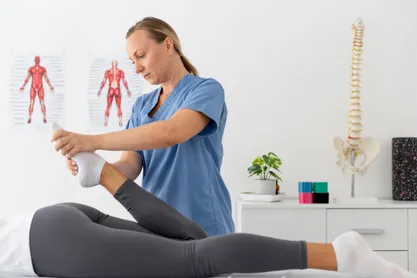

Gait Assessment
Gait assessment in Etobicoke to analyze walking patterns, correct imbalances, and improve movement efficiency with expert care.
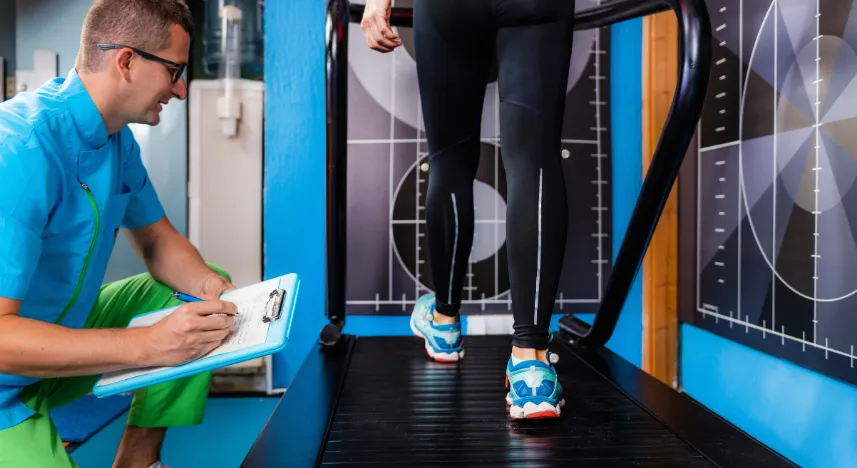
Gait Assessment in Etobicoke
Walk Without Pain. Move With Confidence. Get Answers About the Way You Walk.
If every step brings a nagging ache in your knee, a pull in your lower back, or a wobble that makes you nervous on stairs, the problem usually isn’t your shoes — it’s your gait. A gait assessment in Etobicoke at Rapharehab is a hands-on physiotherapy evaluation that pinpoints exactly why your walking pattern hurts, feels unstable, or slows you down, so we can fix the cause instead of just calming the symptom.
Our physiotherapists watch, measure, and test how your feet, knees, hips, and spine work together while you walk. From there, you get a clear explanation of what’s going wrong and a personalized plan to correct it — whether that means targeted exercises, custom orthotics, manual therapy, or a combination of all three.
Book a gait assessment in Etobicoke today and stop guessing why walking doesn’t feel the way it used to.
📍 5–4335 Bloor Street West, Etobicoke, ON M9C 2A5 📞 647-722-3434
What Is a Gait Assessment?
A gait assessment is a clinical evaluation of how you walk — from the moment your heel strikes the ground to the moment your toes push off. Physiotherapists call this the gait cycle, and it’s made up of two main phases:
- Stance phase – the roughly 60% of each step when your foot is in contact with the ground, absorbing shock and supporting your body weight.
- Swing phase – the remaining 40%, when your leg moves forward through the air to take the next step.
A healthy gait cycle relies on dozens of muscles, joints, and nerves firing in the right order, at the right time, with the right amount of force. When even one part of that chain is weak, stiff, misaligned, or compensating for an old injury, it changes the way you walk — often in ways you can’t see or feel yourself, but that a trained eye picks up immediately.
That’s the purpose of a professional gait assessment: to catch these compensations early, before they turn into chronic pain, repeat injuries, or a fall.
Signs You May Need a Gait Assessment
You don’t need to be an athlete or a senior to benefit from a walking assessment. Consider booking one if you notice:
- Pain in your knees, hips, ankles, or lower back that shows up (or worsens) specifically when you walk
- A visible limp, or family members telling you that you “walk differently” lately
- One shoe wearing out faster or in a different spot than the other
- Feeling unsteady, wobbly, or afraid of falling — especially on stairs or uneven ground
- Ongoing foot pain, arch pain, or heel pain that flares up during or after walking
- Difficulty walking normally after a hip, knee, or ankle surgery
- Fatigue or heaviness in your legs after walking distances that used to feel easy
- A child who walks on their toes, turns their feet in or out, or trips frequently
If any of this sounds familiar, your walking pattern is likely trying to tell you something — a gait assessment translates that into a clear, actionable answer.
Common Walking & Movement Problems We Assess in Etobicoke
People come to Rapharehab for a gait assessment for many different reasons. Below are the most common problems we see and how a walking analysis helps address each one.
Knee, Hip, or Ankle Pain When Walking
Joint pain that appears or intensifies with walking is often a mechanical issue — the joint is absorbing more load than it should because of a compensation elsewhere in the chain. A gait assessment identifies exactly where that extra load is coming from, whether it’s poor foot alignment, hip weakness, or restricted ankle motion.
Flat Feet, Plantar Fasciitis, and Foot Pain
Over-pronation (rolling inward) or supination (rolling outward) changes how force travels up your leg with every step. This is one of the most common causes of arch pain, heel pain, and plantar fasciitis. A foot mechanics review during your gait assessment shows whether orthotics, footwear changes, or strengthening will help most.
Lower Back and Neck Pain Linked to Walking Mechanics
Your spine reacts to every step you take. An uneven or asymmetrical gait pattern can quietly load one side of your back more than the other, contributing to recurring low back or neck pain that doesn’t fully resolve with rest alone.
Balance Problems, Frequent Tripping, and Fall Risk (Seniors)
Balance and gait are closely linked. Weakness, slowed reflexes, poor coordination, or inner-ear issues can all show up as unsteadiness while walking. A gait and balance assessment is one of the most effective ways to identify fall risk early and build a targeted fall-prevention plan — especially important for older adults in Etobicoke who want to stay independent and confident on their feet.
Post-Surgical Recovery (Hip, Knee, or Ankle)
After surgery, it’s completely normal to develop compensatory walking habits — favoring one side, shortening your stride, or avoiding certain movements. Left uncorrected, these habits can become permanent. A structured gait assessment during rehabilitation ensures you’re relearning a proper walking pattern, not reinforcing a limp.
Neurological Conditions Affecting Movement
Conditions such as stroke, Parkinson’s disease, multiple sclerosis, or peripheral neuropathy commonly affect coordination, muscle tone, and walking pattern. A detailed gait analysis helps our physiotherapists design safe, condition-specific strategies to improve mobility and reduce fall risk.
Running and Sports Performance Issues
Runners and athletes often develop overuse injuries — shin splints, IT band syndrome, runner’s knee, Achilles tendinopathy — because of small, repetitive mechanical inefficiencies in their gait. A running gait analysis breaks down foot strike pattern, cadence, and stride mechanics to correct these issues before they sideline you.
Leg Length Discrepancy and Postural Imbalances
Even a small difference in leg length can throw off your entire walking pattern, leading to compensations at the hip, knee, and spine. A gait assessment can flag this early so it can be managed with orthotics, exercises, or footwear adjustments.
Children’s Gait Concerns
Toe walking, in-toeing, out-toeing, and frequent tripping in children are common reasons parents seek a pediatric gait assessment. Early evaluation helps determine whether a walking pattern will resolve naturally with growth or benefits from guided intervention.
How Our Gait Assessment Works: The Rapharehab Process
At Rapharehab, gait assessment is never a single quick glance at how you walk across a room. It’s a structured, multi-part evaluation designed to find the true root cause of your movement issue — not just the symptom.
- History & Goal Discussion – We start by understanding your pain, injury history, medical background, and what you want to achieve, whether that’s pain-free walking, returning to running, or preventing a fall.
- Postural Evaluation – We assess your alignment in standing and walking positions, checking for asymmetries at the shoulders, pelvis, and spine.
- Walking Pattern Observation – We analyze your step length, stride symmetry, foot strike pattern, cadence, and weight distribution as you walk.
- Joint Motion Analysis – We evaluate how your ankles, knees, hips, and spine move (or fail to move) through each phase of your gait cycle.
- Strength & Mobility Testing – Muscle imbalances are one of the leading causes of abnormal gait, so we test key muscle groups for weakness, tightness, and control.
- Balance & Coordination Testing – Especially important for fall-risk patients, this identifies stability issues that may not be obvious during a simple walk.
- Foot Mechanics Review – We check your arches, pronation/supination pattern, and how load is distributed across your feet.
- Functional Movement Assessment – We observe how your gait holds up during real-world tasks like stairs, turning, or uneven surfaces.
You’ll leave your appointment with a clear explanation of what’s causing your walking issue, in plain language — plus a personalized correction plan that may include gait retraining exercises, custom orthotics, manual therapy, or exercise therapy.
Who Should Get a Gait Assessment in Etobicoke?
A gait assessment isn’t only for people already in pain. It’s genuinely useful for:
- Runners and athletes wanting to improve efficiency and prevent overuse injuries
- Seniors concerned about balance, stability, or fall risk
- Post-surgical patients relearning how to walk correctly after hip, knee, or ankle procedures
- People with chronic pain in the back, hips, knees, or feet that worsens with walking
- Parents of children with unusual walking patterns
- Anyone considering orthotics, who wants an objective assessment before investing in them
- Workers whose jobs involve long hours of standing or walking
- Active adults simply wanting to move more efficiently and comfortably day to day
Benefits of Gait Assessment and Correction
Investing in a proper gait assessment pays off well beyond the appointment itself:
- Reduced pain in the feet, knees, hips, and lower back
- Improved balance, coordination, and confidence on your feet
- Lower risk of falls, sprains, and repetitive strain injuries
- Identification of muscle and joint imbalances before they cause bigger problems
- Personalized, targeted correction strategies — not generic advice
- Better recovery outcomes after injury or surgery
- Improved running and athletic performance
- A clearer, more efficient, more comfortable way of moving through daily life
What Happens After Your Assessment?
Every gait assessment at Rapharehab ends with a written explanation of our findings and a treatment roadmap tailored to you. Depending on what we find, your plan may combine:
- Gait retraining exercises to rebuild proper walking mechanics
- Custom orthotics to correct foot mechanics and improve alignment
- Exercise therapy to strengthen weak muscle groups contributing to your gait pattern
- Manual therapy or chiropractic care to release restrictions affecting joint motion
- Custom knee bracing where added joint support is needed
- Ongoing progress check-ins to track improvement and adjust your plan
We focus on long-term correction, not a temporary fix that leaves the root cause untreated.
Why Choose Rapharehab for Gait Assessment in Etobicoke?
- Assessment by experienced, licensed physiotherapists who specialize in movement analysis
- Detailed, whole-body biomechanical evaluation — not a rushed, five-minute observation
- Personalized gait correction plans, combining exercise, manual therapy, and orthotics where needed
- Clear reports and explanations so you actually understand what’s happening in your own body
- A patient-focused, educational approach to every appointment
- Convenient Etobicoke location on Bloor Street West with flexible appointment times
- Direct billing available for most major insurance providers
Take the First Step Toward Pain-Free, Confident Walking
Whether you’re dealing with joint pain, recovering from surgery, worried about balance, or simply want to move more efficiently, a professional gait assessment in Etobicoke is the clearest way to understand what’s really happening when you walk — and what to do about it.
Book your gait assessment at Rapharehab today and take the first step toward moving safer, stronger, and pain-free.
📞 Call 647-722-3434 | 📍 5–4335 Bloor Street West, Etobicoke, ON M9C 2A5
Frequently Asked Questions
-
What is a gait assessment?
-
How long does a gait assessment take?
Most gait assessments at Rapharehab take between 45 and 60 minutes, depending on the complexity of your movement concerns and medical history.
-
Do I need a doctor’s referral for a gait assessment in Etobicoke?
In most cases, no referral is required to see a physiotherapist in Ontario. However, some insurance plans may require one for direct billing, so it’s worth checking with your provider.
-
What should I wear to a gait assessment?
Wear comfortable, form-fitting clothing that allows your physiotherapist to clearly observe your leg, hip, and spine movement, along with the athletic or walking shoes you use most often.
-
Is a gait assessment painful?
No. A gait assessment is a non-invasive evaluation involving observation, movement testing, and simple physical assessments — it should not cause pain.
-
What conditions can a gait assessment help identify?
Gait assessments can help identify causes of knee, hip, back, and foot pain, balance and fall risk, post-surgical compensation patterns, leg length discrepancies, and abnormal walking patterns in both adults and children.
-
Can a gait assessment help with knee pain?
Yes. Many cases of knee pain are linked to how the foot, hip, and pelvis move during walking. A gait assessment identifies whether your knee pain is being driven by a mechanical issue elsewhere in the chain.
-
Can a gait assessment help with lower back pain?
Yes. Asymmetrical or inefficient walking patterns can place uneven stress on the spine over time, contributing to recurring lower back pain that a gait assessment can help uncover.
-
Is gait assessment useful for seniors?
Absolutely. Gait and balance assessments are one of the most effective tools for identifying fall risk in older adults and building a personalized plan to improve stability and independence.
-
Do you offer gait assessments for children?
Yes. We assess common pediatric gait concerns such as toe walking, in-toeing, out-toeing, and frequent tripping, and advise whether the pattern is likely to self-resolve or needs guided treatment.
-
Can a gait assessment help runners?
Yes. A running-specific gait analysis looks at foot strike pattern, stride length, and cadence to identify inefficiencies that contribute to common running injuries like shin splints, runner’s knee, and IT band syndrome.
-
Will I need orthotics after my gait assessment?
Not necessarily. Orthotics are only recommended if your foot mechanics review shows a clear benefit. Many gait issues are corrected through targeted exercises and manual therapy alone.
-
How is a gait assessment different from a regular physiotherapy assessment?
A general physiotherapy assessment looks broadly at pain and function, while a gait assessment focuses specifically on your walking mechanics — the postural, joint, and muscular factors influencing every step you take.
-
Can a gait assessment help after hip or knee replacement surgery?
Yes. Post-surgical patients often develop compensatory walking habits during recovery. A gait assessment helps retrain proper mechanics early, before those habits become long-term patterns.
-
What causes an abnormal walking pattern?
Common causes include muscle weakness or imbalance, joint stiffness, old injuries, poor footwear, leg length discrepancy, neurological conditions, and pain-driven compensation.
-
How many sessions will I need after a gait assessment?
This depends entirely on your findings. Some patients need only a home exercise program and a follow-up check-in, while others benefit from a longer structured gait retraining plan.
-
Is gait assessment covered by insurance?
Gait assessments are typically billed under physiotherapy services, which are covered by most extended health insurance plans. Rapharehab offers direct billing for many major providers — contact us to confirm your coverage.
-
Can gait assessment prevent future injuries?
Yes. By identifying and correcting mechanical inefficiencies before they cause pain or compensation injuries, a gait assessment is one of the most effective preventive tools in physiotherapy.
-
What is the difference between gait assessment and gait training?
A gait assessment is the evaluation that identifies the problem. Gait training is the treatment phase — the specific exercises and techniques used to correct the walking pattern identified during the assessment.
-
Where can I get a gait assessment in Etobicoke?
Rapharehab, located at 5–4335 Bloor Street West in Etobicoke, offers comprehensive gait assessments performed by experienced physiotherapists, combined with personalized correction plans.
-
How often should I get a gait assessment?
For most people, a gait assessment is done once to identify and correct an issue, with progress reviews built into follow-up sessions. Athletes or those with chronic conditions may benefit from periodic reassessment.
-
Can I get a gait assessment without having pain?
Yes. Many people book a gait assessment proactively — to improve running performance, catch imbalances early, or simply understand their movement better before pain develops.