

Laser therapy uses light energy absorbed by cells to support tissue repair and reduce inflammation. Electrotherapy (TENS, IFC, NMES, ultrasound) uses electrical current or sound waves to influence nerves, muscles, or tissue directly. They work through different mechanisms and are often used together for complementary effects.
Laser Therapy & Electrical Modalities
- Home
- Laser Therapy & Electrical Modalities
Services
- Osteopathy in Etobicoke
- Massage Therapy Clinic in Etobicoke
- Acupuncture Clinic in Etobicoke
- Chiropodist Clinic in Etobicoke
- Chiropractic Clinic in Etobicoke
- Custom Orthotics in Etobicoke
- Foot Reflexology in Etobicoke
- Custom Knee Braces Clinic
- Laser Therapy & Electrical Modalities
- Virtual Care Physiotherapy in Etobicoke
- Naturopathy Clinic
- Spinal Decompression Therapy
- Concussion Management
- Chronic Pain Management
- Pre & Post Operative Management
- Exercise Therapy in Etobicoke
- Workplace Injury Management
- Pelvic Floor Physiotherapy in Etobicoke
- Home Care Physiotherapy
- Sports Injury Physiotherapy Clinic in Etobicoke
- Gait Assessment
- Kids Physiotherapy
- Surgical Rehab in Etobicoke
- Physiotherapy
- Fascial Stretch Therapy
- Cupping Therapy
- Shiatsu Therapy
- Deep Tissue Massage
- Neuro Fascial Therapy in Etobicoke
- Cranio Sacral Therapy
- MVA Rehabilitation in Etobicoke
- Compression Stockings
- Cardiac Rehabilitation
- IMS Therapy in Etobicoke
- Psychotherapy
- Shockwave Therapy
- Refugee Physiotherapy in Etobicoke

Laser Therapy & Electrical Modalities
Advanced laser therapy and electrotherapy to reduce pain, ease inflammation, and accelerate healing with evidence-based care.
Laser Therapy & Electrical Modalities in Etobicoke
Pain relief. Faster healing. Evidence-based physiotherapy care.
Maybe it’s a knee that aches every time you take the stairs, a shoulder that hasn’t moved right in weeks, or sciatica that flares up every time you sit too long. Pain like this tends to follow a pattern: it improves slightly with rest, then a normal activity sets it back again. Laser therapy and electrical modalities in Etobicoke at Rapharehab are built to interrupt that cycle – calming inflammation and pain signals at the tissue level while the rest of your physiotherapy program rebuilds strength and mobility underneath. They’re never used as stand-alone gimmicks here; every session is guided by a registered physiotherapist who decides when and how each tool fits your specific diagnosis.
Below, you’ll find what these treatments actually are, which conditions they help with, what a session feels like, and how to know if they’re the right starting point for your recovery. Use the contents list to jump to what matters most to you.
What Is Laser Therapy?
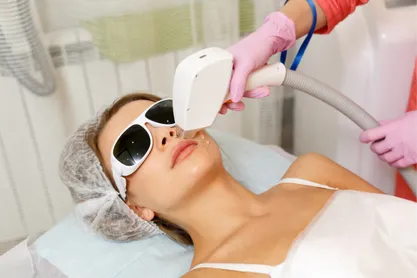
Laser therapy (also called photobiomodulation, or “cold laser” in its low-level form) uses specific wavelengths of light, delivered through a handheld device placed directly on the skin, to stimulate activity inside injured or inflamed cells. The light is absorbed by the mitochondria – the energy-producing structures inside cells – which is believed to increase ATP production and support the processes involved in tissue repair, while also helping calm pain signals and reduce local inflammation.
In Canada, therapeutic lasers used in physiotherapy clinics are regulated medical devices overseen by Health Canada, and cold laser treatment falls within the recognized scope of practice for registered physiotherapists. That oversight is part of why this approach has become a standard, evidence-informed option in rehabilitation rather than a fringe treatment.
Types We Use
The right device depends on your condition, how deep the affected tissue is, and how long you’ve had symptoms.
- Low-Level Laser Therapy (LLLT): Lower-powered light well suited to surface-level inflammation, smaller joints, and earlier-stage injuries, where the goal is to calm tissue without generating heat.
- High-Intensity Laser Therapy (HILT): A more powerful option designed to reach deeper structures – useful for chronic, stubborn conditions or larger muscle groups.
- Trigger Point Laser Treatment: A focused application aimed at tight, knotted muscle bands that contribute to referred pain and restricted movement, often paired with manual therapy.
What It’s Generally Used to Support
- Reducing pain and localized inflammation
- Supporting circulation and tissue repair
- Calming nerve-related pain and hypersensitivity
- Improving mobility and reducing stiffness around an injured area
- Supporting recovery after soft tissue injury or surgery
Most patients describe sessions as comfortable, with at most a mild warmth at the treatment site – no needles, no cutting, no downtime. As with any clinical treatment, your physiotherapist confirms candidacy first; we cover who should be cautious in the FAQ section below.
What Are Electrical Modalities (Electrotherapy)?
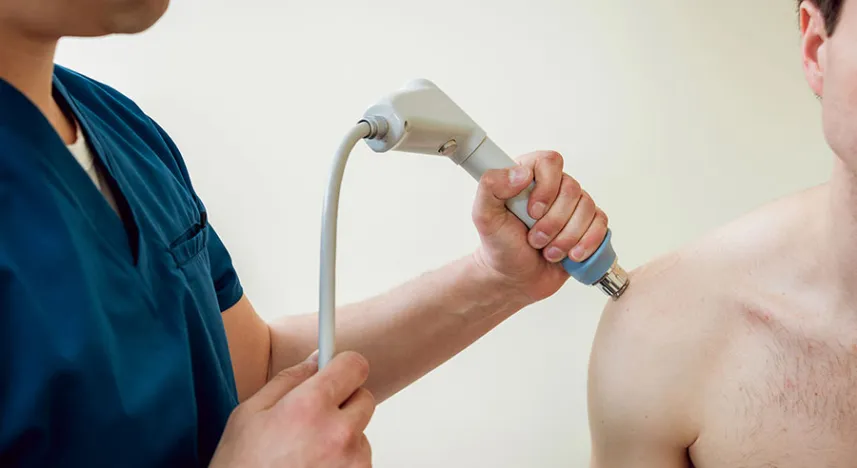
Electrical modalities, also called electrotherapy, use mild electrical currents or sound waves delivered through electrode pads or a handheld applicator to influence nerves, muscles, and soft tissue. Unlike laser therapy, which works through light, this approach works through controlled stimulation – calming overactive pain signals, encouraging a muscle to contract, or generating gentle deep heat in tissue. TENS, IFC, ultrasound, and NMES are not interchangeable; choosing the right one (or combination) for your presentation is part of the physiotherapist’s job.
TENS (Transcutaneous Electrical Nerve Stimulation)
TENS delivers a low-voltage current through adhesive pads placed over or near the painful area. It’s thought to work by stimulating sensory nerves, interrupting pain signals on their way to the brain (related to what’s known as the gate control theory of pain) and possibly encouraging release of the body’s natural pain-relieving chemicals. It’s commonly used for arthritis, lower back pain, and general musculoskeletal discomfort, and is well tolerated by most patients.
IFC (Interferential Current Therapy)
IFC uses a higher carrier frequency than standard TENS, allowing current to travel deeper into tissue while typically feeling more comfortable on the skin. By crossing two medium-frequency currents at the treatment site, it’s often selected when deeper pain relief is the goal – for example, with deeper joint pain or larger muscle groups a standard signal may not reach.
Ultrasound Therapy
Therapeutic ultrasound uses high-frequency sound waves, rather than electrical current, to generate gentle heat deep within soft tissue. This encourages blood flow, supports healing, helps reduce swelling, and in some cases assists with softening scar tissue or adhesions built up around a healing injury.
NMES (Neuromuscular Electrical Stimulation)
NMES targets motor nerves rather than sensory nerves, producing a visible muscle contraction. This is particularly valuable after surgery or injury, when a muscle has weakened or “switched off” due to pain or immobilization – it helps re-educate the muscle and rebuild activation while you regain strength through active exercise.
EMS (Electrical Muscle Stimulation)
Closely related to NMES, EMS supports muscle function and recruitment, often as part of a broader strengthening program after injury or surgery, when consistent active contraction is difficult to achieve on its own.
How These Work Together
In practice, electrical modalities are rarely used alone. A physiotherapist might combine IFC for early pain relief with NMES once swelling has reduced enough to begin rebuilding strength, while ultrasound is layered in for a stubborn area of scar tissue. That’s the core of how Rapharehab approaches this category – not a single fixed protocol, but a flexible toolkit guided by your ongoing assessment.
Conditions We Treat With Laser Therapy & Electrical Modalities
These tools support recovery across a wide range of acute injuries, chronic conditions, and post-surgical needs. Don’t see your exact condition listed? It doesn’t mean we can’t help – call our Etobicoke clinic and we’ll talk through your options.
Muscle, Tendon & Soft Tissue Injuries
- Muscle strains and ligament sprains
- Tendonitis and bursitis
- Tennis elbow and golfer’s elbow
- Rotator cuff injuries
- Plantar fasciitis
Joint & Chronic Pain Conditions
- Osteoarthritis and joint pain
- Chronic inflammation
- Knee pain and patellofemoral issues
- Sciatica and nerve-related leg pain
- Carpal tunnel syndrome
Back, Neck & Nerve Pain
- Lower back pain and stiffness
- Neck pain and tension
- Sciatic nerve irritation
- General nerve-related pain and hypersensitivity
Post-Surgical & Recovery Support
- Post-operative swelling and stiffness
- Muscle weakness following immobilization
- Scar tissue management
- General soft tissue recovery after injury
If your pain falls into one of these categories, our physiotherapy team in Etobicoke will assess the underlying cause first, then determine the right combination for your recovery plan.
What to Expect During a Session
Knowing what actually happens in the treatment room takes a lot of the uncertainty out of booking your first appointment.
Assessment and diagnosis. Every plan starts with a one-on-one assessment by a registered physiotherapist – reviewing your history, how and when your pain started, and your movement, strength, and range of motion. This determines whether laser therapy, electrotherapy, or another approach is the right starting point; nothing here is applied as a blanket, one-size-fits-all treatment.
Treatment. For laser therapy, the handheld device is placed directly on clean, exposed skin over the area (clothing typically needs to be moved aside, since light doesn’t penetrate fabric effectively) and held there for a few minutes per area, with most patients feeling nothing more than mild warmth. For electrotherapy, small electrode pads are positioned on or near the painful area, or an ultrasound applicator is moved gently across the skin – you may feel a light tingling, pulsing, or gentle muscle twitch depending on the technique. Most individual sessions run five to twenty minutes.
Integration with your broader plan. These tools work best layered into a complete physiotherapy program rather than used alone. Your therapist typically combines them with manual therapy, targeted exercise therapy, and movement coaching, so the pain relief translates into lasting functional improvement rather than short-term comfort.
Progress tracking. Your therapist monitors your response across sessions and adjusts frequency, intensity, or technique accordingly. Acute, recent injuries often respond within a handful of sessions; chronic conditions generally need a more extended course, which we’ll outline clearly before you commit to a plan.
Is This Treatment Right for You?
Laser therapy and electrical modalities tend to be a strong fit if you:
- Have ongoing pain or inflammation that hasn’t fully resolved with rest
- Are recovering from a sprain, strain, tendon injury, or soft tissue damage
- Are managing a chronic condition like arthritis or recurring joint pain
- Are rebuilding strength after surgery or an extended period of immobilization
- Want a drug-free, non-invasive option to use alongside hands-on physiotherapy
They’re generally considered safe and well tolerated, but not appropriate for every situation – pacemakers and implanted electrical devices, active cancer in the treatment area, pregnancy (for some applications), or certain skin conditions require caution or an alternative approach. This is why the assessment step matters: your physiotherapist confirms candidacy before any device is used.
When the fit is right, the benefits tend to compound: a non-invasive, drug-free way to manage pain and inflammation; support for the body’s own healing process; improved mobility and muscle re-activation; and a strategic role alongside manual therapy and exercise, rather than a stand-alone fix, delivered by registered, trained physiotherapists in a clinical setting.
Why Choose Rapharehab for Laser Therapy & Electrical Modalities in Etobicoke?
There’s no shortage of clinics offering some version of this technology across the GTA. Here’s what sets the experience at Rapharehab apart:
- Treatment performed by registered physiotherapists, not technicians running a fixed protocol – every session is informed by an ongoing clinical assessment of how you’re progressing.
- Tools integrated, not standalone. We use laser therapy and electrotherapy strategically within a broader treatment plan that includes manual therapy and exercise, because the research consistently shows this combination works better than either alone.
- Personalized programs based on your diagnosis – your specific tissue, timeline, and goals, not a generic session package.
- Convenient Etobicoke location at 5 – 4335 Bloor Street West, easy to reach from Bloor West Village, the Kingsway, and Islington, with flexible scheduling.
- Transparent, supportive care that explains what we’re doing and why at every step.
If you’re also dealing with discomfort beyond the original injury, it’s worth a conversation about our chronic pain management program, which often incorporates these same tools as part of a longer-term strategy.
Start Your Recovery Today
Pain that lingers doesn’t have to become your new normal. Whether you’re dealing with a recent sprain, a stubborn case of tendonitis, or pain that’s followed you for months, laser therapy and electrical modalities at Rapharehab support faster, more comfortable healing – built around your diagnosis, not a one-size-fits-all routine.
Book your assessment today and find out whether this is the right next step for your recovery.
Frequently Asked Questions
-
What is the difference between laser therapy and electrotherapy?
-
Does laser therapy hurt?
No. It’s non-invasive, and most patients feel nothing more than mild warmth at the treatment site – no cutting, no needles, and typically no downtime.
-
Is electrical stimulation (TENS) painful?
It’s generally described as a tingling or pulsing sensation rather than pain, with intensity controlled by your physiotherapist and adjusted to your comfort. Higher-intensity NMES contractions are more noticeable but shouldn’t be sharply painful – tell your therapist immediately if it is.
-
How many sessions will I need?
This depends entirely on your condition. Acute, recent injuries often respond within a handful of visits, while chronic or longer-standing issues typically need a more extended course. Your physiotherapist outlines an expected timeline after your initial assessment.
-
Can laser therapy help with sciatica?
It can be part of a broader plan for sciatica, often reducing nerve-related pain and inflammation while manual therapy and targeted exercise address the underlying cause of the irritation. Sciatica usually responds best to a combined approach rather than any single tool alone.
-
Is electrotherapy effective for chronic lower back pain?
TENS and IFC commonly help manage chronic lower back pain by reducing pain signals and supporting comfort during movement and exercise – often the harder part of recovery. They work best as one part of a complete rehabilitation plan, not a stand-alone solution.
-
What conditions can electrical modalities help with?
Arthritis, chronic and acute pain, muscle weakness after surgery or injury, swelling, sciatica, and soft tissue conditions like tendonitis and sprains. The specific technique chosen depends on whether the goal is pain relief, deeper tissue healing, or muscle re-activation.
-
Does laser therapy actually work, or is it just placebo?
It’s been studied across a range of musculoskeletal and soft tissue conditions, with research generally supporting its use for reducing pain and inflammation and supporting tissue repair – particularly as part of a broader treatment plan rather than in isolation. Individual response varies, which is why ongoing assessment matters.
-
Is laser therapy safe?
It’s considered safe when administered by a trained physiotherapist using a properly regulated device. Mild, temporary redness at the site is possible, and certain individuals (see below) need to avoid or modify treatment, which your physiotherapist screens for beforehand.
-
Who should not receive laser therapy or electrotherapy?
Caution or avoidance is generally recommended for anyone with a pacemaker or implanted electrical device (for electrotherapy), active cancer in the treatment area, certain skin conditions, photosensitivity, or in some cases pregnancy. This is exactly why a clinical assessment happens before treatment begins.
-
Can laser therapy help with arthritis pain?
It’s frequently used to help manage arthritis-related joint pain and inflammation, often alongside ultrasound or TENS depending on which joints are affected and how severe symptoms are – typically one part of a broader management plan that may also include exercise therapy and manual treatment.
-
What does ultrasound therapy do, exactly?
It uses sound waves (not electrical current) to generate gentle deep heat in soft tissue, supporting blood flow, assisting with swelling reduction, and helping soften adhesions or scar tissue that built up during healing.
-
Is NMES the same as TENS?
No. NMES targets motor nerves to produce a visible muscle contraction, useful for rebuilding activation and strength, while TENS targets sensory nerves primarily for pain relief. Different purposes, though both use electrical current.
-
Can electrotherapy help after knee or shoulder surgery?
Yes – tools like NMES are often used post-surgically to help re-activate muscles weakened by immobilization, swelling, or pain, supporting the strength-building phase of rehab alongside guided exercise.
-
How soon will I notice results?
Some patients notice less pain or stiffness within the first few sessions; others, particularly with chronic conditions, need a longer course before changes become noticeable. Your physiotherapist tracks progress and adjusts the plan accordingly.
-
Do I need a doctor’s referral?
In most cases, no – a referral isn’t required to book a physiotherapy assessment in Ontario. If your insurance plan requires one, our team can help confirm that before your visit.
-
Is this covered by insurance?
Many extended health benefit plans cover laser therapy and electrotherapy when delivered as part of a physiotherapy treatment plan. Coverage varies by provider, so our team can help you understand your specific benefits beforehand.
-
Can laser therapy be combined with massage or chiropractic care?
Yes – frequently combined with massage therapy, chiropractic care, and exercise-based rehabilitation as part of an integrated plan, particularly for complex or longstanding conditions.
-
What’s the difference between low-level and high-intensity laser therapy?
LLLT uses lower power and suits surface-level or earlier-stage conditions, while HILT uses more power to reach deeper tissue, often selected for chronic or stubborn conditions affecting larger muscle groups.
-
How do I book an appointment in Etobicoke?
You can book an assessment directly with our clinic by phone or through our contact page. Your first visit includes a thorough assessment to determine the right fit for your condition.