

It’s a non-surgical treatment that uses controlled, computerized traction to stretch the spine, reduce pressure on spinal discs and nerves, and support natural healing.

Spinal Decompression Therapy


Spinal Decompression Therapy
Non-surgical spinal decompression in Etobicoke to relieve disc pressure, reduce sciatica pain, and restore comfortable movement.
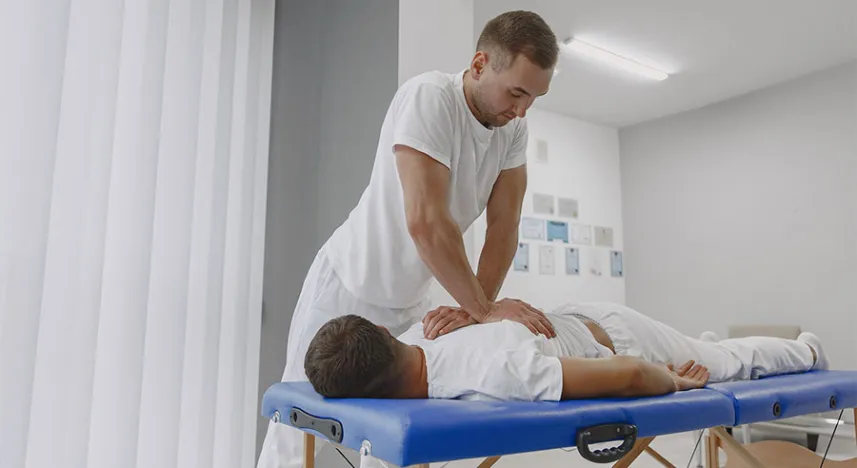
Spinal Decompression Therapy in Etobicoke
Relieve Disc Pressure. Calm Sciatica. Move Without Pain.
If you’ve been living with back pain that won’t let go — a herniated disc, shooting sciatic pain down your leg, or stiffness that’s slowly taken over your daily life — you’ve probably already tried rest, painkillers, and maybe even a few rounds of generic stretching. When none of that holds, spinal decompression therapy in Etobicoke at Rapharehab offers a non-surgical, drug-free way to take pressure off the spine and give your body the space it needs to actually heal.
Spinal decompression therapy uses a computer-controlled traction system to gently stretch the spine, reduce pressure inside the disc, and ease the nerve compression that’s causing your pain. It’s not a quick fix or a one-session miracle — it’s a structured, clinically guided treatment plan built around your specific diagnosis, paired with physiotherapy to keep results lasting.
Below, we’ll walk you through exactly what spinal decompression is, who it helps, what a session feels like, what conditions it treats, and how to know if it’s the right next step for you.
What Is Spinal Decompression Therapy?
Spinal decompression therapy is a non-surgical treatment that uses controlled, motorized traction to gently separate the vertebrae and create negative pressure inside the spinal discs. That negative pressure — sometimes called a vacuum effect — can help pull bulging or herniated disc material back toward the centre of the disc, take pressure off pinched nerves, and draw in oxygen, water, and nutrients that the disc needs to repair itself.
Unlike old-style manual traction, modern spinal decompression equipment is computer-guided. It alternates between gentle pulling and releasing phases (a cycle, not a constant pull), which keeps the surrounding muscles from tightening up defensively — the same “guarding response” that makes basic traction less effective.
Is Spinal Decompression Therapy Painful?
No. Most patients describe a mild, comfortable stretching sensation, and many relax or even doze off during a session. You stay fully clothed, lying face-up or face-down on the treatment table, depending on which part of your spine is being treated. Some people feel mild muscle soreness for a day or two afterward as the spine adjusts — that’s a normal response, not a setback.
Spinal Decompression vs. Regular Traction
| Traditional Traction | Spinal Decompression Therapy | |
|---|---|---|
| Control | Fixed, constant pull | Computer-controlled, cycling pull-and-release |
| Targeting | General | Targeted to specific spinal level |
| Muscle guarding | Common | Minimized by cycling pattern |
| Customization | Limited | Adjusted to your condition, pain level, and comfort |
Signs You May Be a Candidate for Spinal Decompression Therapy
You don’t need to wait until pain becomes unbearable to ask about treatment. Spinal decompression is often considered when you’re dealing with:
- Lower back pain that’s lasted more than a few weeks despite rest
- Sciatica — burning, shooting, or numbing pain that travels from your lower back into your buttock or leg
- A herniated or bulging disc confirmed (or suspected) after imaging or assessment
- Neck pain or arm pain linked to a cervical disc issue
- A diagnosis of degenerative disc disease
- Pain that worsens with sitting, standing, or certain movements
- Numbness, tingling, or weakness radiating into your arms or legs
- Back pain that hasn’t responded fully to physiotherapy, chiropractic care, or medication alone
- A desire to avoid spinal surgery or injections if a non-invasive option exists
If any of this sounds familiar, a proper assessment at Rapharehab can tell you whether spinal decompression therapy is the right fit — and what results you can realistically expect.
How Spinal Decompression Therapy Works at Rapharehab
Every spinal decompression program at our Etobicoke clinic follows the same five-part process, so you always know what’s happening and why.
1. Thorough Assessment First
Before any decompression session, our physiotherapists assess your posture, movement patterns, pain triggers, and medical history. This step also rules out anyone for whom decompression isn’t appropriate (see contraindications below), so treatment is both effective and safe.
2. Controlled Spinal Stretching
You’re positioned comfortably on the decompression table, and a harness is fitted around your pelvis (for lower back treatment) or head/neck (for cervical treatment). The system then creates measured space between the targeted vertebrae.
3. Gentle Traction Cycles
Rather than one constant pull, the table alternates between a stretch phase and a relaxation phase over the course of the session — typically 20 to 30 minutes. This cycling is what allows the disc to actually decompress instead of triggering muscles to clamp down and resist.
4. Settings Customized to You
Pull force, angle, and session length are all set based on your diagnosis, body type, pain tolerance, and how you respond session to session. No two treatment plans look exactly the same.
5. Integrated Physiotherapy & Home Exercise
Decompression opens up space in the spine — physiotherapy is what helps your body keep it. After each session (or as part of your broader plan), our team layers in core stabilization, posture correction, and targeted mobility exercises so the relief holds beyond the table.
How many sessions will I need? Most spinal decompression programs run 12–20 sessions over 4–6 weeks, often starting with 2–3 visits per week and tapering as symptoms improve. Your physiotherapist will reassess progress every few sessions and adjust the plan accordingly.
Conditions Spinal Decompression Therapy Treats
Spinal decompression isn’t a one-condition treatment — it’s used across a range of spinal and disc-related issues. Here’s how it applies to the most common conditions we see at our Etobicoke clinic.
Herniated and Bulging Discs
When the outer layer of a spinal disc tears or weakens, the inner material can press outward onto nearby nerves. Spinal decompression creates the negative pressure needed to help draw that material back in, easing the irritation at its source.
Sciatica and Nerve Compression
Sciatica happens when a disc or surrounding structure presses on the sciatic nerve, sending pain down the leg. By reducing the pressure causing the compression, decompression therapy can calm the nerve irritation that’s driving your symptoms.
Degenerative Disc Disease (DDD)
As discs lose height and hydration with age or wear, the space between vertebrae narrows, increasing pressure on nerves and joints. Decompression helps restore disc space and encourages nutrient flow back into the worn tissue.
Chronic Lower Back Pain
When standard rest, stretching, or medication hasn’t resolved persistent low back pain, decompression offers a structured, targeted alternative aimed at the underlying disc pressure rather than just the surface symptoms.
Neck Pain and Cervical Disc Issues
Cervical decompression follows the same principle as lumbar treatment, just applied to the neck — relieving pressure on cervical discs and nerves that may be causing neck pain, stiffness, or radiating arm pain.
Spinal Stenosis (Mild to Moderate)
In cases of mild to moderate narrowing of the spinal canal, gentle decompression can help create additional space, easing nerve-related symptoms like numbness or leg fatigue.
Facet Joint Dysfunction
Decompression reduces the load on facet joints — the small joints connecting your vertebrae — which can ease pain caused by wear, irritation, or mechanical dysfunction in these joints.
Radicular Arm or Leg Pain
Pain that radiates from the spine into a limb (radicular pain) is often nerve-root related. By relieving the compression at the source, decompression can reduce the radiating symptoms, not just the local back or neck pain.
Postural Back Pain and Limited Mobility
For pain linked to prolonged sitting, poor posture, or general stiffness rather than a structural diagnosis, decompression combined with physiotherapy can restore mobility and ease day-to-day discomfort.
Who Should Avoid Spinal Decompression Therapy
Spinal decompression is safe for most people, but it isn’t appropriate for everyone. Your physiotherapist will screen for these before recommending treatment:
- Spinal fractures or recent spinal surgery involving hardware (screws, rods, plates)
- Severe osteoporosis or significant bone loss
- Spinal tumours or active infection in or near the spine
- Pregnancy
- Severe, uncontrolled nerve damage
- Certain cases of severe obesity, depending on equipment limitations
This is exactly why a proper assessment comes first at Rapharehab — decompression should only ever be recommended after your condition has been properly evaluated.
Benefits of Spinal Decompression Therapy
- Reduced pressure on compressed discs and irritated nerves
- Noticeable pain relief, often within the first several sessions
- Improved spinal mobility and flexibility
- Better disc hydration and a healthier healing environment
- A non-invasive, drug-free alternative to injections or surgery
- Support for long-standing or recurring back and neck conditions
- Treatment sessions that are safe, controlled, and comfortable
- Longer-lasting results when paired with physiotherapy and home exercise
Spinal Decompression Therapy vs. Other Treatment Options
People often ask how decompression compares to the other treatments they’ve already tried. Here’s a straightforward breakdown.
Spinal decompression vs. spinal surgery: Surgery is typically reserved for severe or progressive cases that haven’t responded to conservative care. Decompression is non-invasive, has no incision, recovery time, or anesthesia risk, and is usually tried first for eligible patients.
Spinal decompression vs. chiropractic adjustments: Chiropractic care focuses on joint alignment through manual adjustments. Decompression instead uses sustained, controlled traction to address disc pressure directly. Many patients use both as part of a combined plan.
Spinal decompression vs. physiotherapy alone: Physiotherapy builds strength, mobility, and movement patterns over time. Decompression adds a direct mechanical effect on the disc itself. Used together — which is how care is structured at Rapharehab — they address both the immediate pressure and the long-term stability of your spine.
Spinal decompression vs. medication: Pain medication manages symptoms temporarily but doesn’t address the disc pressure or nerve compression causing them. Decompression targets the mechanical source of the pain.
What to Expect at Your First Visit
1. Initial consultation and assessment — a review of your pain history, imaging (if available), posture, and movement.
2. A clear explanation of your diagnosis and whether spinal decompression is appropriate for you.
3. A personalized treatment plan, including expected session frequency and what physiotherapy will be paired with your decompression sessions.
4. Your first decompression session, with settings calibrated specifically to your comfort and condition.
5. A home program to support your progress between visits.
Most sessions take 20–30 minutes, and you’ll remain fully clothed throughout.
Why Choose Rapharehab for Spinal Decompression Therapy in Etobicoke?
- Treatment delivered by experienced, licensed physiotherapists
- Modern, computer-controlled spinal decompression equipment
- Individually calibrated settings for safety, comfort, and effectiveness
- Decompression integrated with manual therapy, exercise therapy, and rehab — not offered as a stand-alone gimmick
- Thorough assessment before any treatment begins
- Guidance on preventing reinjury and maintaining long-term spinal health
- A convenient Etobicoke location at 5–4335 Bloor Street West, with flexible appointment times
- Direct billing and insurance support to make treatment accessible
Spinal Decompression Therapy and Insurance Coverage in Etobicoke
Spinal decompression is typically delivered as part of a physiotherapy treatment plan, which means it’s often covered under extended health benefits, motor vehicle accident (MVA) insurance, and WSIB claims, depending on your provider and policy. Our team can help verify your coverage and walk you through direct billing before your first session — just bring your insurance details when you book.
Start Your Path to a Healthier Spine
Chronic back pain, a stubborn herniated disc, or sciatica that won’t quit can take over far more than just your physical comfort — it affects work, sleep, and the activities you love. Spinal decompression therapy in Etobicoke at Rapharehab is built to relieve that pressure safely, without surgery, and with a plan designed around your specific spine.
Book your spinal decompression assessment today and find out why Rapharehab is a trusted spinal decompression therapy clinic in Etobicoke for safe, effective, non-surgical spine care.
�� 5 – 4335 Bloor Street West, Etobicoke, ON M9C 2A5
�� 647-722-3434
Frequently Asked Questions
-
What is spinal decompression therapy?
-
How does spinal decompression therapy work?
The table gently and gradually separates the vertebrae in cycles of pull and release, creating negative pressure within the disc that helps relieve nerve compression and encourages nutrient flow into the disc.
-
Is spinal decompression therapy painful?
No. Most patients feel a mild stretching sensation and find it relaxing. Some experience mild soreness for a day or two afterward as the body adjusts.
-
How long does a spinal decompression session take?
Most sessions last between 20 and 30 minutes, depending on your treatment plan.
-
How many spinal decompression sessions will I need?
Most programs involve 12–20 sessions over 4–6 weeks, though this varies based on your condition, severity, and how you respond to treatment.
-
Is spinal decompression therapy safe?
Yes, for most people. It’s a controlled, low-risk treatment, though it isn’t recommended for pregnant patients or those with spinal fractures, certain spinal surgeries, severe osteoporosis, tumours, or active infection.
-
Can spinal decompression therapy help a herniated disc?
Yes. By reducing pressure within the disc, decompression can help retract herniated material away from the nerve it’s compressing, easing pain and irritation.
-
Can spinal decompression therapy treat sciatica?
Yes. Sciatica is often caused by nerve compression from a disc issue. Decompression reduces that pressure, which can ease the radiating leg pain associated with sciatica.
-
Does spinal decompression help degenerative disc disease?
It can help manage symptoms by restoring disc space and encouraging fluid and nutrient exchange, though it doesn’t reverse degeneration itself.
-
Is spinal decompression therapy the same as chiropractic traction?
They’re related but not identical. Spinal decompression uses computer-controlled, targeted cycling traction, while basic chiropractic traction is typically more general and less precisely calibrated.
-
Can spinal decompression therapy help me avoid surgery?
For many patients with disc-related back or neck pain, decompression is tried as a non-surgical alternative before considering surgical options. Whether it can help you avoid surgery depends on your specific diagnosis.
-
What does spinal decompression therapy feel like?
A gentle, rhythmic stretching sensation in the treated area of your spine. You remain fully clothed and relaxed throughout the session.
-
Will I need to do anything between sessions?
Yes — most treatment plans include a home exercise program to support posture, core stability, and mobility, which helps maintain the results from each session.
-
How soon will I notice pain relief from spinal decompression therapy?
Some patients notice improvement within the first few sessions, while others see gradual relief over several weeks. Your physiotherapist will track your progress and adjust your plan accordingly.
-
Who is a good candidate for spinal decompression therapy?
People with herniated or bulging discs, sciatica, degenerative disc disease, chronic back or neck pain, or limited mobility from disc-related issues are typically good candidates, pending a proper assessment.
-
Who should not get spinal decompression therapy?
Spinal decompression is generally not recommended for pregnant patients, those with spinal fractures, certain spinal hardware, severe osteoporosis, spinal tumours, or active infections.
-
Is spinal decompression therapy covered by insurance in Ontario?
It’s often covered as part of a physiotherapy plan under extended health benefits, MVA insurance, or WSIB, depending on your provider. Our team can help confirm your coverage before you begin.
-
Do I need a doctor’s referral for spinal decompression therapy?
In most cases, you can book an assessment directly with our physiotherapists without a referral, though some insurance plans may require one for reimbursement — we can help you check.
-
What’s the difference between spinal decompression and regular physiotherapy?
Physiotherapy builds strength, mobility, and movement patterns through exercise and manual therapy. Spinal decompression adds a direct mechanical treatment targeting disc pressure. At Rapharehab, the two are combined for more complete care.
-
Can spinal decompression therapy treat neck pain?
Yes. Cervical spinal decompression applies the same gentle traction principles to the neck to relieve pressure on cervical discs and nerves.
-
What should I wear to a spinal decompression session?
Comfortable, loose-fitting clothing is recommended, since you remain fully dressed throughout treatment.
-
Where can I get spinal decompression therapy in Etobicoke?
Rapharehab offers spinal decompression therapy at our clinic at 5–4335 Bloor Street West, Etobicoke, combined with physiotherapy for a complete recovery plan.