


Best Physiotherapy Clinic Near Markland Wood: What Residents Should Know

Best Physiotherapy Clinic Near Markland Wood: What Residents Should Know
Living with pain, stiffness, weakness, or reduced mobility can affect nearly every part of daily life. Simple activities such as walking, working, exercising, climbing stairs, driving, or sleeping comfortably may become difficult. For residents of Markland Wood, choosing a nearby physiotherapy clinic can provide practical access to professional assessment, individualized rehabilitation, and ongoing support throughout recovery.
However, the clinic located closest to your home is not automatically the best clinic for your needs. Quality physiotherapy should be based on a careful evaluation, measurable treatment goals, clear communication, and a plan tailored to the patient’s condition, lifestyle, age, and functional priorities.
Rapha Rehab serves patients from Markland Wood and surrounding Etobicoke communities with a patient-focused rehabilitation approach. Whether the concern involves a recent injury, persistent pain, post-surgical weakness, workplace strain, sports-related symptoms, or age-related mobility changes, the goal is to help patients move more comfortably and confidently.
Key Points for Markland Wood Residents
- Choose a clinic that performs a detailed initial assessment before recommending treatment.
- Look for individualized rehabilitation rather than the same routine for every patient.
- Confirm that the clinic regularly treats your type of injury or physical condition.
- Consider accessibility, appointment availability, communication, and continuity of care.
- Ask how progress will be measured and when the treatment plan will be reviewed.
- Select a clinic that combines symptom management with strength, mobility, and injury-prevention strategies.
Why Physiotherapy Can Be Important for Long-Term Recovery
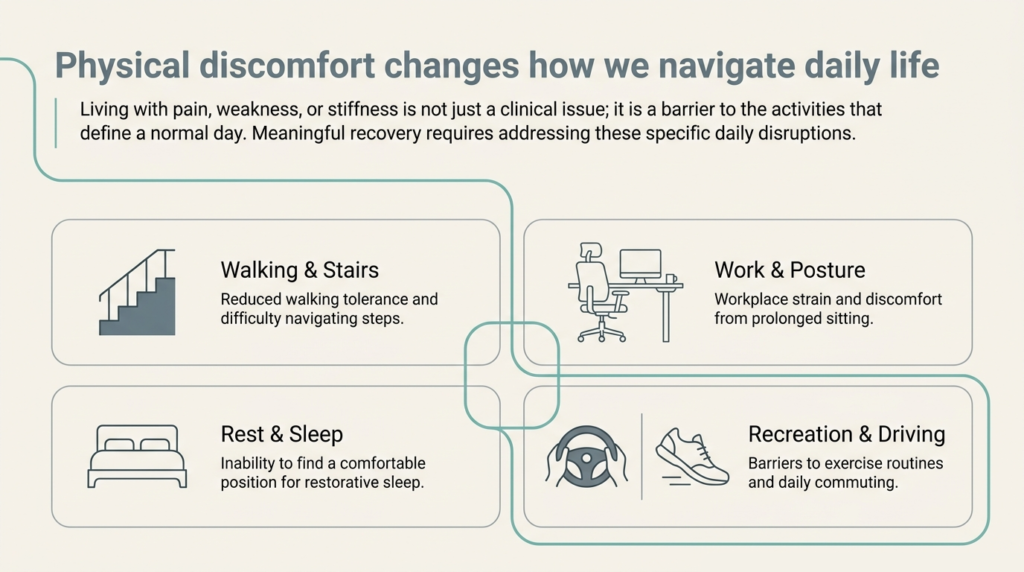
Physiotherapy is a regulated healthcare profession focused on improving movement, physical function, strength, balance, mobility, and participation in everyday activities. It may involve education, therapeutic exercise, manual techniques, movement retraining, and activity modification. Readers who would like a general definition can review this overview of physical therapy.
A physiotherapy assessment looks beyond the location where pain is felt. For example, recurring knee discomfort may be influenced by reduced hip strength, restricted ankle mobility, altered walking mechanics, training errors, or previous injury. Similarly, neck discomfort may be connected to workstation positioning, prolonged sitting, reduced upper-back mobility, muscle endurance, or repetitive daily tasks.
For Markland Wood residents, working with a local Physiotherapy clinic in Etobicoke can make regular care easier to maintain. Convenient access may reduce missed appointments and help patients follow a structured rehabilitation schedule. Consistency is often important because meaningful improvement usually develops through repeated exercise, progressive loading, education, and appropriate changes to daily activity.
Physiotherapy may support people experiencing back pain, neck pain, shoulder limitations, sprains, strains, joint stiffness, post-operative weakness, sports injuries, workplace discomfort, balance problems, and reduced mobility. However, treatment should never be based only on a diagnosis label. Two patients with similar symptoms may require different approaches because their medical history, physical capacity, occupation, goals, and symptom behaviour are different.
A strong rehabilitation program should address both current limitations and future function. Reducing pain is important, but the broader objective may include restoring walking tolerance, improving lifting capacity, returning to work, rebuilding confidence after surgery, or returning safely to recreational activity. These functional goals help make treatment more relevant and measurable.
Patients should also understand that physiotherapy is generally an active process. Hands-on care may be helpful when clinically appropriate, but long-term recovery often depends on patient participation. Completing prescribed exercises, modifying aggravating activities, attending follow-up appointments, and communicating changes in symptoms can all influence progress.
What to Look for in a Physiotherapy Clinic Near Markland Wood
The initial assessment is one of the most important parts of physiotherapy care. A physiotherapist should ask about when the problem began, which movements increase or reduce symptoms, previous injuries, relevant medical conditions, work demands, exercise habits, medications, and personal recovery goals. This discussion helps create a clinical picture before physical testing begins.
The physical examination may include observation of posture or movement, joint mobility testing, muscle strength assessment, flexibility, balance, walking mechanics, neurological screening, and functional tasks. The exact tests should depend on the patient’s presentation. A person recovering from knee surgery will require a different assessment from someone experiencing headaches, shoulder discomfort, or recurring lower-back pain.
Following the assessment, the physiotherapist should explain the findings in understandable language. Patients should know what may be contributing to the problem, what the treatment plan involves, how often appointments may be recommended, what they can do between visits, and how improvement will be measured. Clear explanations help patients participate more confidently in their care.
Personalization is another essential quality. Treatment should reflect the patient’s goals and daily life rather than relying on a standard routine. An older adult seeking greater stability while walking may require balance and lower-limb strengthening. An office worker may benefit from movement breaks, workstation adjustments, endurance training, and exercises targeting areas affected by prolonged sitting.
An athlete or active adult may require progressive strength, coordination, power, and sport-specific movement training before returning to full activity. A post-surgical patient may need treatment that respects healing timelines and medical precautions. The best physiotherapy clinic is therefore not defined by one technique but by its ability to select and adapt care appropriately.
Patients should also evaluate communication and continuity. The physiotherapist should listen to concerns, explain expected responses to treatment, and modify the plan when progress is slower or faster than expected. Regular reassessment is important because treatment decisions should be based on how the patient is responding, not simply on the number of appointments completed.
Conditions and Recovery Goals Physiotherapy May Address
Musculoskeletal pain is one of the most common reasons people seek physiotherapy. This category can include discomfort affecting the neck, back, shoulder, elbow, wrist, hip, knee, ankle, or foot. Symptoms may develop suddenly after an injury or gradually through repetitive movement, occupational demands, reduced activity, training changes, or age-related physical changes.
Physiotherapy may also be included in recovery after certain surgeries. Depending on the procedure and the surgeon’s instructions, rehabilitation may focus on restoring joint movement, reducing stiffness, rebuilding strength, improving walking, and gradually returning to normal activities. Treatment progression should respect tissue healing, surgical precautions, and the patient’s overall health.
Sports rehabilitation requires more than achieving temporary pain relief. The physiotherapist may assess strength differences, mobility restrictions, landing mechanics, running tolerance, change-of-direction ability, or sport-specific movements. The purpose is to identify limitations that may affect performance or increase the possibility of symptoms returning when training intensity rises.
Work-related physical problems may involve prolonged computer use, repetitive lifting, awkward postures, standing for extended periods, or physically demanding tasks. Rehabilitation may combine symptom management with ergonomic advice, pacing strategies, mobility work, strengthening, and gradual exposure to job-related activities. The objective is to improve capacity while reducing unnecessary strain.
Older adults may use physiotherapy to address weakness, reduced balance, joint stiffness, difficulty walking, or fear of falling. A program may include lower-body strengthening, balance activities, gait training, mobility exercises, and practical strategies for moving safely at home. Treatment should match the patient’s current ability and progress at an appropriate pace.
Persistent pain may require a broader approach because symptoms can be influenced by movement habits, sleep, stress, physical conditioning, fear of activity, and previous experiences. Education and graded activity can help patients understand what their bodies can safely tolerate. Progress may be gradual, but even modest improvements in mobility, confidence, and daily function can be meaningful.
Why Markland Wood Residents May Choose Rapha Rehab
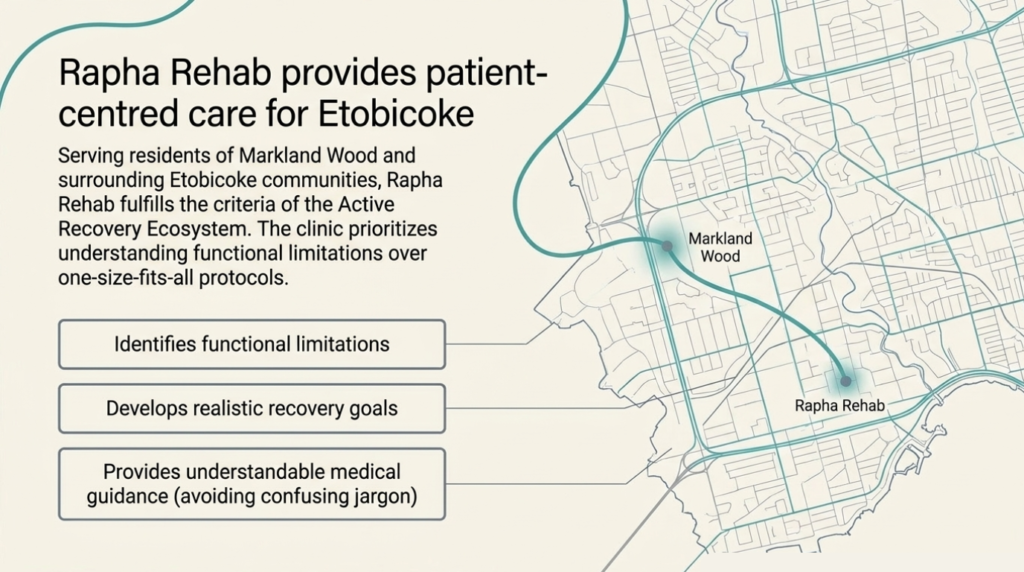
Rapha Rehab provides rehabilitation services for patients from Markland Wood and other Etobicoke neighbourhoods. The clinic’s approach is centred on understanding the patient’s concerns, identifying functional limitations, and developing a plan aligned with realistic recovery goals. Treatment is intended to be specific to the individual rather than based on a one-size-fits-all protocol.
A patient may arrive wanting to reduce pain, but the assessment may reveal additional priorities such as improving joint movement, correcting compensatory patterns, increasing strength, or rebuilding tolerance for work and exercise. Addressing these contributing factors can support more complete recovery and reduce the likelihood of returning too quickly to demanding activities.
The clinic also recognizes that patients need understandable guidance. Medical terminology can be confusing when it is not clearly explained. Patients should understand why an exercise has been prescribed, what sensations may be expected, which symptoms should be reported, and how the activity relates to their personal goals.
Rapha Rehab’s broader rehabilitation environment can also be helpful for patients whose needs extend beyond one form of care. Depending on clinical appropriateness and availability, rehabilitation planning may involve physiotherapy alongside other services provided within the clinic. Coordination can be valuable when the patient requires a more comprehensive approach.
Choosing a nearby clinic can make ongoing treatment more manageable. Markland Wood residents may find it easier to attend before work, after work, or around family responsibilities when the clinic is located within Etobicoke. Accessibility supports treatment consistency, particularly for rehabilitation programs requiring several weeks of guided progression.
Residents searching for a trusted Physiotherapy clinic in Etobicoke can contact Rapha Rehab to learn more about assessment, available services, and appointment scheduling. A clinical evaluation is the appropriate first step because treatment recommendations should be based on the patient’s symptoms, medical history, physical findings, and recovery objectives.
What to Expect During Your First Physiotherapy Appointment
The first appointment normally begins with a detailed conversation. Be prepared to describe where symptoms are located, how they started, what activities make them better or worse, and how they affect daily life. Bringing relevant medical reports, imaging results, surgical instructions, medication information, or insurance details may help the clinic understand your situation.
The physiotherapist may then perform movement and physical tests relevant to the concern. These tests should be explained before they are completed. Patients are encouraged to communicate openly if a movement feels uncomfortable, if they are nervous about a test, or if they have experienced unusual symptoms such as numbness, weakness, dizziness, or changes in balance.
After the assessment, the physiotherapist may discuss a proposed treatment plan and begin appropriate care. This may include education, exercises, movement correction, or hands-on techniques. Patients may also receive a home program. The plan should be reviewed over time and adjusted according to symptom response, functional improvement, and progress toward agreed goals.
Questions to Ask Before Beginning Treatment
Before committing to a rehabilitation plan, ask whether the clinic regularly treats your condition and what the initial assessment will involve. You may also ask how progress is monitored, how often reassessments occur, and what you will be expected to do at home. These questions help clarify the treatment process.
It is also reasonable to ask about appointment duration, cancellation policies, insurance documentation, direct billing availability, and whether a physician’s referral is required by your insurer. Although physiotherapy may be accessed directly in many circumstances, individual insurance policies can have different reimbursement requirements.
Finally, ask what signs would indicate that medical follow-up is needed. Physiotherapists are trained to screen for concerns that may require referral, but patients should report changes honestly. Severe or rapidly worsening symptoms, unexplained weakness, significant trauma, chest pain, breathing difficulty, or changes in bladder or bowel control require appropriate medical attention.
Conclusion
Finding the best physiotherapy clinic near Markland Wood involves more than choosing the nearest address. Residents should look for comprehensive assessment, individualized treatment, qualified professionals, clear explanations, measurable goals, and regular progress reviews. A good clinic should help patients understand both their symptoms and the steps required to improve function.
Rapha Rehab offers a convenient Etobicoke location for Markland Wood residents seeking physiotherapy and rehabilitation support. Its patient-centred approach emphasizes personalized assessment, active recovery, education, and treatment planning based on each person’s condition and daily needs.
Whether you are recovering from an injury, managing persistent discomfort, rebuilding strength after surgery, or trying to move more confidently, a professional physiotherapy assessment can help determine the most appropriate next step.
Frequently Asked Questions
1. How do I choose the best physiotherapy clinic near Markland Wood?
Look for qualified physiotherapists, individualized assessments, clear treatment explanations, convenient access, and positive communication. The clinic should regularly review your progress and adjust treatment according to measurable changes in mobility, strength, pain, and function.
2. Do I need a physician’s referral for physiotherapy in Ontario?
Many patients can book physiotherapy without a physician’s referral. However, some extended health insurance plans may require a referral before reimbursing treatment costs. Contact your insurer directly to confirm the requirements of your specific policy.
3. What conditions can physiotherapy help manage?
Physiotherapy may assist with back pain, neck pain, joint stiffness, sports injuries, sprains, strains, post-surgical weakness, balance difficulties, workplace discomfort, mobility limitations, and several other physical conditions. Suitability should be determined through an assessment.
4. What happens during the first appointment?
The physiotherapist reviews your symptoms, health history, daily activities, and recovery goals. A physical examination may assess movement, strength, flexibility, balance, joint mobility, and functional ability. The findings are then used to develop a treatment plan.
5. How long is a physiotherapy appointment?
Appointment length varies according to the clinic, treatment stage, and complexity of the condition. Initial assessments may require more time than follow-up visits. Patients should confirm appointment duration directly with the clinic when booking.
6. How many physiotherapy sessions will I need?
The number of sessions depends on the condition, symptom duration, overall health, treatment goals, and response to rehabilitation. After completing the assessment, the physiotherapist can provide a more individualized recommendation and review it as treatment progresses.
7. Is physiotherapy helpful for chronic pain?
Physiotherapy may help people with persistent pain improve movement, strength, physical tolerance, and confidence. Care may include education, graded exercise, activity modification, and strategies for returning to meaningful daily activities without unnecessary fear or avoidance.
8. Can physiotherapy help prevent recurring injuries?
A rehabilitation program may reduce recurrence risk by addressing weakness, limited mobility, poor movement control, training errors, and inadequate recovery. No treatment can guarantee that an injury will never return, but appropriate rehabilitation can improve physical preparedness.
9. What should I wear to a physiotherapy appointment?
Wear comfortable clothing that allows the physiotherapist to observe and assess the affected area. Shorts may be helpful for a knee, hip, or lower-leg concern, while a sleeveless or loose-fitting top may be appropriate for shoulder assessment.
10. When should I seek medical care instead of physiotherapy?
Seek urgent medical attention for severe trauma, chest pain, breathing difficulty, sudden neurological changes, rapidly worsening weakness, loss of bladder or bowel control, or other serious symptoms. A physiotherapist can also recommend medical follow-up when assessment findings require further investigation.