


Can Physiotherapy Help Lower Back Pain, and Which Treatments Might Work for You?
Can Physiotherapy Help Lower Back Pain, and Which Treatments Might Work for You?
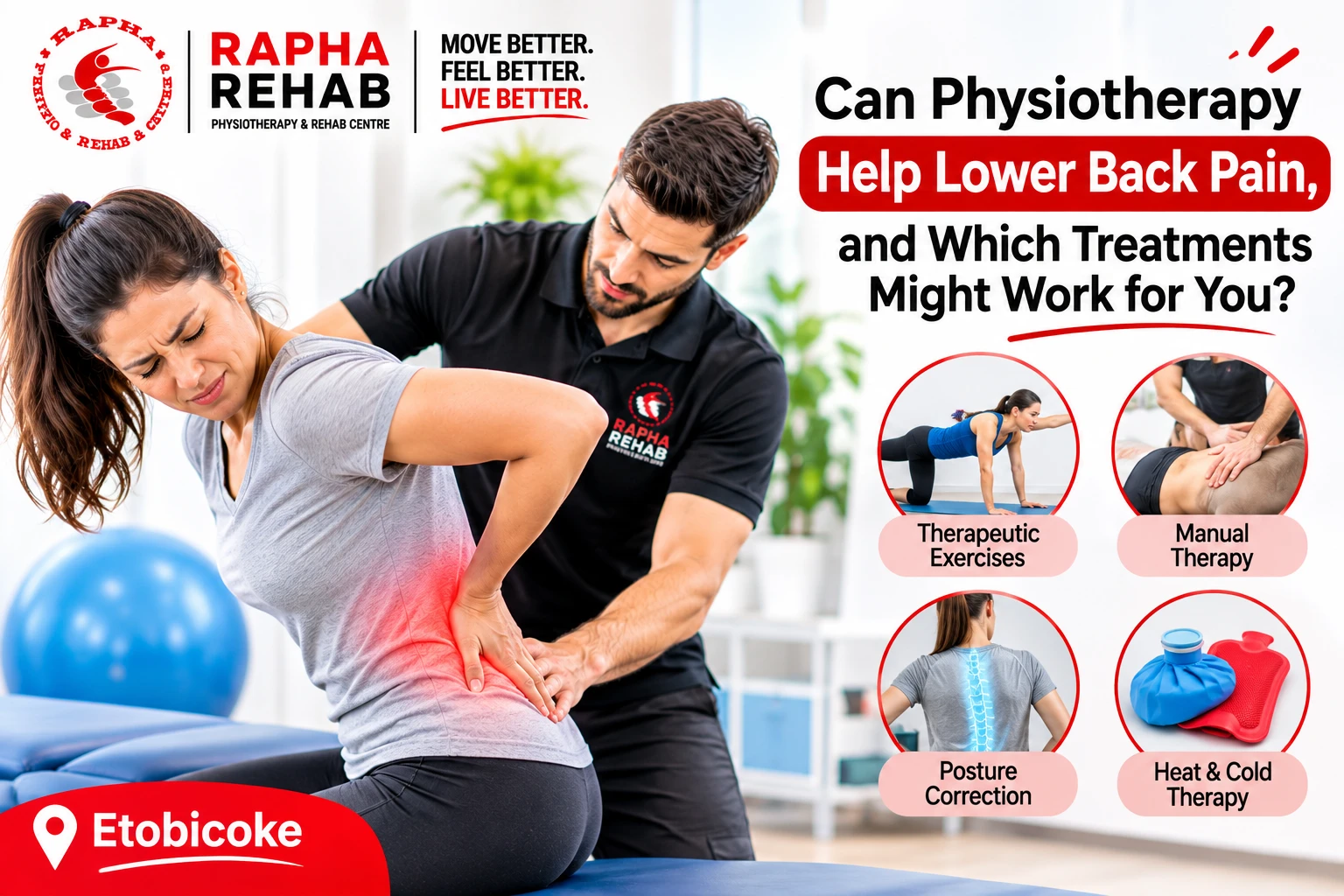
 When you are sitting at your desk to work or picking up groceries, it is more difficult because your lower back hurts; you need something that works, not another magic stretch. At Rapharehab, Etobicoke, personal physiotherapy and rehabilitation start with evaluating your symptoms and your daily requirements. Many people can get help from physiotherapy for their lower back pain, but it will depend on the circumstances. No single treatment is the best for everybody, and a good plan will outline the goals of each treatment.
How can physiotherapy help with back pain?
If back pain is affecting your ability to move, move physically or feel confident when moving, physiotherapy can help. Typically treatment is education and an appropriate exercise programme, and other options are considered if suitable. Instead of a single exercise for everyone, are considered based on the needs, preferences and capabilities of the individual.
That distinction matters. If a person is feeling a bit achy after going back to the gym, it is not the same. If someone is sore after returning to the gym, this is not the same as someone having symptoms that have been interfering with their sleep and work for months. Physiotherapy should take into account the symptoms as well as the person that experiences them. Improvements don't happen overnight and aren't always guaranteed.
Start by understanding your back pain pattern
Your physiotherapist will ask you about the onset of back pain, where it is, and how it affects your everyday activity at an assessment. They might enquire regarding the symptoms spreading down the leg, earlier episodes, your health record, your employment duties, and what you have actually tried. These details will lead to an examination and are helpful in determining if a different type of assessment type is required.
That picture can be enhanced by movement, strength and appropriate nerve checks. It doesn't matter if the problem is a disc or a muscle or something else before booking. Don't assume that one online description conveys the meaning of your symptoms.
Exercising doesn't have to be a punishment for back pain
The exercise plan may involve small strengthening, mobility, walking or other appropriate exercise. The decision should be based on what type of symptoms you have, what level of ability you are at, your preferences and your goals. It's good to begin with something you can do that is simple, and you can agree on what to do if it fails after you do it.
Enquire into the most relevant movements, how much to move, and when to modify movements. With back pain, it's quality and progression are more important than proving that you can handle a great workout. If this is not the correct starting level, your physiotherapist can adjust this.
Where hands-on treatment fits in back pain care
Others may find hands-on care helpful for short-term symptom relief or to facilitate mobility. Manual therapy is recommended for use in packages of therapy for lower back pain, in conjunction with exercise, and with psychological support, as appropriate. It is not intended as a substitute for a rehabilitative programme.
If a technique is recommended, enquire what they think it will help with and how the impact will be checked. Rapharehab physiotherapy doesn't just involve a single technique that fits all but rather a tailored assessment, exercise, education and rehabilitation for each patient.
Managing back pain between appointments
Normal movements can be uncertain with back pain. Education should enable you to learn what an appropriate level of activity is and how you can modify your activity without giving it up. This could mean taking the long session of work and dividing it into shorter chunks or scheduling a reasonable amount of time back into something that is now challenging.
Instead, talk about comfort, variation and work requirements. Consider your commute, caregiving, exercise schedule and time. Your physio should make clear recommendations without making the movement sound more threatening.
What about passive treatments for back pain?
A treatment that feels good does not necessarily mean that it will be the most helpful long-term solution. Question if a suggested treatment has a clear purpose in your recovery and if it helps you to move or practise your programme. Waiting for things to be done to you – each appointment is different than developing skills that you can do on your own.
NICE is not recommending several treatments that are advertised widely such as traction, ultrasound and TENS as treatments for low back pain with or without sciatica. Being available at a clinic does not mean it is suitable for you and your condition. When considering alternatives, ask your clinician to explain the evidence and the alternatives.
Does back pain mean you need an MRI?
Usually, imaging is not routinely recommended in a non-specialist setting for low back pain with or without sciatica. A clinician can provide a rationale for when additional testing might modify management.
If you have any pertinent reports, please bring them along, but don't wait to get the proper advice since you haven't scheduled an imaging appointment. Report new symptoms or changes in health to the clinician. They assist in deciding if another health care worker needs to evaluate you before them.
When back pain needs urgent medical attention
If back pain is accompanied by new bladder and bowel symptoms, numbness around the genitals or anus, or symptoms in both legs (weakness, numbness), don't wait for the next physiotherapy appointment. Seek emergency assessment. If you experience chest pain or symptoms following a serious accident, that's also a sign of an emergency. When you need emergency help in Canada, dial 911.
If you feel a fever or ill, your pain becomes more intense, or you lose weight rapidly without a clear cause, get immediate medical help. These features do not indicate the diagnosis but should not be treated with an alternate stretch. Physiotherapy should not replace immediate evaluation.
What does back pain progress look like?
We'd all like it to be less painful, but it's not the only thing. You may find walking to be more comfortable, sitting longer, sleeping better, or being more confident in lifting everyday objects.
No guarantee that every person will recover in a set period of appointments. If progress is not achieved or the plan is not suitable for your lifestyle, tell your physiotherapist. For context, you can read some of the posts on Rapharehab's rehabilitation services and physiotherapy blog, but keep the decision of individual treatments with your clinician.
Schedule an evaluation of your lower back with Rapharehab.
If you are having back pain issues and have no emergency symptoms, give Rapharehab a call to get an assessment.
The clinic is located at 4335 Bloor Street West Unit 5 in Etobicoke, ON M9C 2A5.
Call 647-722-3434 or email bloor@rapharehab.ca.
Enquire about costs, appointment duration, schedule and insurance coverage prior to scheduling.
Frequently asked questions
What is the best physiotherapy treatment for low back pain?
No one treatment fits all. Assessment, education, and appropriate exercise typically help to guide care; other options are possible based on your needs and preferences.
What's the benefit of physiotherapy for chronic back pain?
It can enhance function, activity and symptom management. If the symptoms persist, then a wider plan may be required, and no clinician can give a guarantee of total relief.
If you have back pain, should you stop exercising?
Not necessarily. Your clinician can work with you to make changes to activities and select appropriate quantities. It is not advised to remain in bed for long periods when an individual has a simple back injury.
What exercise is best to help with back pain?
An evaluation can be used to determine a starting point. Don't repeat a challenging routine just because it worked for someone else online.
Does massage help back pain?
While it feels like it can help, guidance is not a complete plan for lower back pain; it's the manual therapy that's added to the exercises.
Does physiotherapy work for the sufferers of sciatica?
May be included in care following assessment. If symptoms of the legs do occur, they should be properly evaluated, especially if weakness, numbness or other concerning changes occur.
Should I have an MRI beforehand, or should I book?
Imaging is NOT routinely recommended for non-specialist care of uncomplicated low back pain. A clinician can provide information as to whether investigation will change the management.
How long will it take for my back pain to improve?
Timelines vary. Be realistic about goals and discuss the points to be reviewed, but do not expect a particular date of recovery or a definite outcome after one appointment.
Does pain with exercise always mean it is bad?
Not always, but answers should be tailored to the specific question(s). Stop and ask for guidance if symptoms worsen significantly, if there are new symptoms or if the exercise is not as agreed.
Is there any chance that sitting would help my symptoms?
For a few, symptoms occur after long periods of sitting. Explain position changes that are comfortable, movement breaks, and work demands, rather than taking one posture for granted.
Do I need to build up my core muscles?
While it can be helpful to strengthen, back pain does not mean that your core is weak. Assessment plays an important role in identifying the relevant exercises and priorities.
What if the previous physiotherapy was not effective?
Describe what you did, how long it took, and how you reacted. A reassessment can help clarify if the approach should change or a referral is indicated.
Is there any way to use heat for temporary comfort?
Some people may find that heat while being wrapped helps to relieve stiffness or muscle spasms. Do not get burnt, and consult if your feelings or skin condition changes.
Should I have surgery for my back pain?
Not necessarily. Most cases do not require any surgery. A medical clinician is able to evaluate situations that need specialist input if there is an underlying health condition or symptoms are ongoing.
When is it appropriate to avoid physiotherapy and instead go in for emergency treatment?
Get urgent medical attention if there are any changes in bladder or bowel function, numbness over the saddle or if there are worrying symptoms in both legs. Avoid a scheduled visit.