


What Happens at Your First Physiotherapy Appointment in Etobicoke?
What Happens at Your First Physiotherapy Appointment in Etobicoke?
 When you make your first appointment to physiotherapy in Etobicoke, you may find you have some questions before you even leave home. Will the assessment hurt? Would you need to pack shorts? Is treatment going to be provided to you? Rapharehab's starting point is to understand what you're coming in for and what you want to be doing when you leave. It is not necessary to come with medical jargon or an explanation. It's a good start to begin by being honest about what is hard.
You don’t need to have physiotherapy figured out
Perhaps your shoulder aches when you reach up to a cupboard. Maybe your back won't bend back after the long ride, or the knees just don't seem to want to go up the steps. Physiotherapy should begin with a dialogue, not assumptions about your body and mind, whatever got you there!
One or two simple objectives that happen day-to-day can be helpful to consider. It may be time to take the dog for a walk without making it too much of a hustle, go back to a preferred exercise or activity, or go back to sleep without interruptions. Those data provide a purpose for the assessment beyond just reporting a pain score. They also make it easier for you and your physiotherapist to see if you're making progress later.
What to bring and wear for physiotherapy
Select clothes that will allow you to move easily and have the affected area reasonably accessible. Shorts can be worn for knee problems, and a comfortable top for shoulder problems. If you are concerned about privacy or changing clothes, you can enquire from the physiotherapy clinic about them in advance.
To bring for physiotherapy: Bring medical information related to the concern, medication list and any previous reports related to the concern. There’s no need to arrange new imaging just because you have booked physiotherapy. If you are using benefits, bring your insurance information with you, and see what your benefits plan will require before arriving.
Rapharehab's direct billing guide makes it easy to understand why coverage, deductibles, referral needs, and benefits that may be due should be checked. Eligible claims can be submitted, but not every visit will be paid 100%. When scheduling an appointment, enquire about the assessment fee and the approximate time of the appointment.
Your first physiotherapy conversation: your story is important
Your physiotherapist will typically ask about onset of symptoms, the way they feel and what movements or activities are challenging. They might ask you about past injuries, surgery, overall health, work demands, sleep and treatments you have tried already. Say whatever you feel is relevant – even if you think it may not be part of the conversation.
It can assist in explaining patterns rather than diagnosis. “After 20 minutes at my desk” is more than a statement of terrible posture. Similarly, describe how symptoms change throughout the day, whether or not they spread, and whether symptoms impact confidence. Physiotherapy is more effective if the therapist who is assessing you is aware of your actual routine.
What happens in a physiotherapy examination?
The exam is based on your symptoms and medical history. Your physiotherapist might notice how you walk, request that you bend or reach, see how your joints move or assess your strength and balance. Other scenarios require sensation or nerve checks. Not all tests are necessary, and you can ask that each test is used to give more information about it.
There are no marks for flexibility or fitness. The purpose is to get to know how you're doing now and what's causing your symptoms to change. Let your physio know if the movement is sharp, frightening or different from your normal pain. The assessment should be tailored to you and not turned into an endurance test.
Your consent remains with physiotherapy
When you are about to have an examination or treatment, you have the right to know what is being proposed and then ask questions. Let your physiotherapist know of any preferences, cultural needs or requirements for communication that need to be taken into account for a more comfortable appointment. You may request that any technique or techniques be stopped, refused or discussed as an alternative.
Don't hesitate to say, “I'm nervous about that movement,” or “Could you explain before you start?” Feeling heard matters. Physiotherapy is a collaborative process, and your agreement is not something that can be taken for granted once you start the assessment. Continue talking as the session goes on.
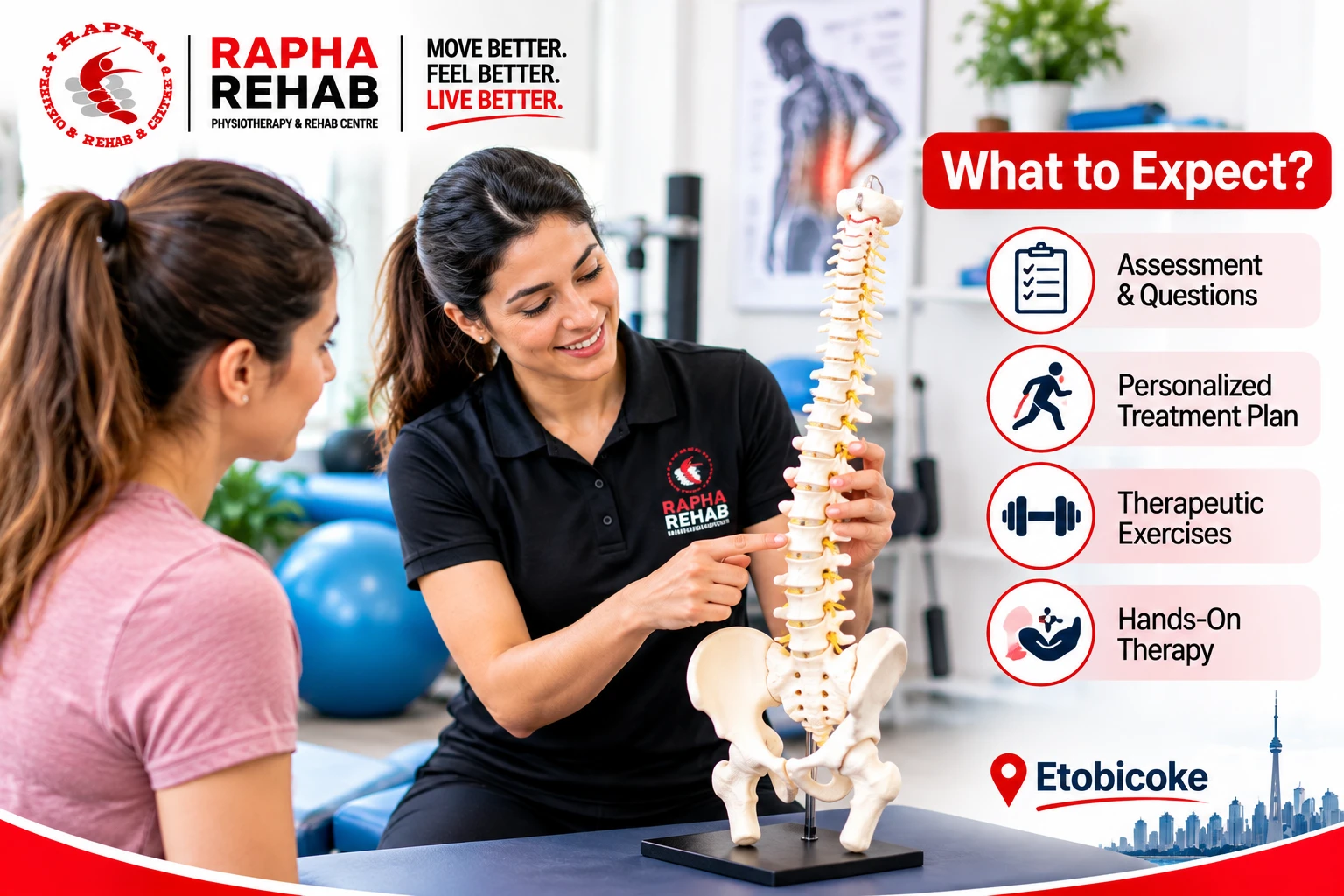
Does Physiotherapy Treatment Begin on the First Visit?
Treatment can be started following the assessment, but depending on the appropriateness of the treatment and the time available. The first physiotherapy appointment may involve an exercise that needs to be practised, movement advice, discussion about changes to activities and/or an appropriate hands-on technique. Sometimes, additional medical evaluation is the better next course of action.
In personalised care, assessment, exercise, education and rehabilitation are explained in the physiotherapy service page on rapharehab. Not all appointments are the same, so not all of the techniques are performed in each appointment. Enquire about the "why" and what to expect from a recommendation. It's better to know the plan than to pick up treatments blindly.
Your physiotherapy home plan should fit real life
Working out to music may be comforting to leave with, but an extended list of new exercises can be hard to follow. Have your physiotherapist show you your starting programme and watch you do your exercises. Make sure they understand how much, how often and what symptoms to watch for. Inform them of equipment/space and time restrictions.
Don't be unrealistic about your week. It is easier to talk about and make changes to a short routine than a long one you don't know. If symptoms are changing or instructions are unclear, don't guess; contact the clinic. Physiotherapy is not just about going to the next physiotherapy session; it's about how you can react between sessions.
How will you be able to tell if physiotherapy is working?
Progress can be achieved by sitting to stand more easily, walking greater distances, improving sleep and reducing fear of movement. Your physiotherapist will be able to help you select measures that will resonate with your objectives. When will those measures be re-evaluated, and what would trigger a change in your plan?
The number of visits required is not standardised. Recovery will be determined by the concern, health history, response to treatment and what is feasible in between sessions. Beware of promises that are guaranteed. If you need reading preparation and recovery, visit the Rapharehab blog, and then come with any queries, if they have a relation to your situation.
Book your first appointment at Rapharehab
Are you ready to take the next step? Contact Rapharehab to request an appointment at
Unit 5, 4335 Bloor Street West, Etobicoke, ON M9C 2A5.
Call 647-722-3434
email bloor@rapharehab.ca
Ask the team to confirm availability, the assessment length, fees, and insurance arrangements before your visit. Booking is a chance to get practical details settled, not a commitment to a preset treatment package.
Frequently asked questions about physiotherapy
Do I need a doctor’s referral for physiotherapy?
Rapharehab says a referral is generally unnecessary to book. Your insurance plan may still require one for reimbursement, so check your benefits.
What should I wear for physiotherapy?
Wear comfortable clothing that allows movement. Ask the clinic whether shorts or a particular top would help for your assessment.
Should I bring my scan results?
Bring relevant existing reports if you have them. Your physiotherapist can explain whether they are useful alongside your history and examination.
How long does the first physiotherapy appointment take?
Confirm the scheduled assessment length with reception. Allow enough time for registration and questions rather than assuming every clinic uses the same format.
Will the physiotherapy assessment hurt?
Some movements may reproduce familiar symptoms. Tell your physiotherapist what you feel, and ask to pause if something feels too uncomfortable.
Will I get treatment immediately?
You may start treatment after assessment when appropriate. Your needs, findings, consent, and available appointment time determine what happens that day.
Is physiotherapy just massage?
No. Physiotherapy can include assessment, education, exercise, and other suitable approaches. Hands-on care is one possible part, not the entire process.
Can I decline a physiotherapy technique?
Yes. Ask for an explanation, discuss alternatives, or decline. Your comfort and informed consent should remain central throughout the appointment.
What if I don’t know what caused my pain?
That is okay. Describe when you notice symptoms, what changes them, and how they affect you. You do not need a self-diagnosis.
How many physiotherapy sessions will I need?
There is no universal number. Discuss an initial plan, review points, and how appointments may change according to your progress and goals.
Should I exercise before my physiotherapy appointment?
Ask the clinic for individual guidance if you are unsure. Avoid doing a demanding workout simply to demonstrate how painful the problem becomes.
What should I tell my physiotherapist?
Mention symptom changes, relevant health conditions, medications, past treatment, and goals. Include any worries about exercise or hands-on care.
What if an exercise makes me feel worse?
Do not push through a substantial increase in symptoms. Contact your physiotherapist for guidance; new concerning symptoms may need medical assessment.
Does direct billing cover the whole physiotherapy fee?
Not necessarily. Your insurer decides eligible payment under your plan, and you may owe a deductible, percentage, or amount beyond your coverage.
What should I do after physiotherapy?
Follow the agreed instructions, note questions or unexpected responses, and confirm your next review. Ask for clarification before changing exercise amounts yourself.