


Can Breathing Exercises Help Stress & Chronic Pain?
Can Breathing Exercises Help Stress & Chronic Pain?
Living with pain can have consequences beyond the affected tissues and joints – it can disrupt sleep, strain emotional wellbeing and concentration, lower the quality and range of motion, and impair work performance. Similarly, stress can contribute to muscle tension, disrupt rest, and make pain seem challenging to cope with. Modern-day chronic pain management recognizes the connections between physical activity and mental health.
Simple breathing exercises are an excellent way to minimize the impact of stress on the body. Controlled breathing will not undo torn ligaments or cure degenerative diseases but help shift the focus from stress to actionable techniques, promote relaxation, allow the patient to identify unnecessary muscle tension, and offer a tool to work with during flare-ups.
Chronic pain is generally defined as pain that lasts or recurs for more than three months. It has a complex set of causes and may require a combination of treatments, including medication, psychotherapy, specific exercises, and rehabilitation.
Key Points About Breathing for Pain and Stress
- Slow breathing is designed to promote relaxation, not large inhales.
- Sitting, lying, and standing are all acceptable positions.
- Five minutes of slow breathing is better than nothing when stress occurs.
- Breathing exercises should not be painful, induce vomiting, or cause shortness of breath
- Dizziness-prone individuals should avoid rapid and deep breathing.
- Chronic pain is not managed by breathing exercises alone; it requires a complex multidisciplinary approach.
- Rehabilitation typically includes exercise, mobility drills, strength training, patient education, pacing, and other supportive treatments.
- Chronic, debilitating pain must be investigated by a professional.
- Sudden new pain and severe shortness of breath or fainting need emergency care.
- Controlling breathing does not mean attempting to reach specific rates; it is healthier to prioritize slow, comfortable motion.
Why Stress and Chronic Pain Affect Each Other
Stress and tension can have physical effects like rapid heart rate and shallow breathing, altered pain reception, increased muscular tension, and impaired sleep, among others. The purpose of such responses is to prepare the body for danger, which is beneficial in situations where the threat is genuine and immediate. However, constantly staying in this heightened state will damage the body regardless of the circumstances since relaxation is necessary for healthy sleep, muscle recovery, and the ability to engage in regular activities without pain.
The stress response, heart rate, and breathing are primarily controlled by the autonomic nervous system, which manages involuntary bodily functions. Relaxation techniques target this system, encouraging it to recognize when the body is in a dangerous state and transition to a calm “resting” mode. NCCIH explains that relaxation techniques are intentional procedures that want the practitioner to experience slowed breathing and a decreased heart rate.
It is essential to understand that stress does not “cause” pain to occur, rather it affects how the body receives and deals with it. Pain is a symptom with multiple potential reasons, ranging from physical diseases and injuries to nerve damage, mental disorders, or combinations of the above, and it must be addressed in the context of its causes. Specifically, The International Association for the Study of Pain highlights that chronic pain is multifactorial and involves complex biological, psychological, and social interactions.
Stress, on the other hand, can be an independent variable that affects how pain is perceived. A person with poor sleep due to tension may experience their usual discomfort as sharper and easier to notice compared to a rested day. Similarly, a person may unconsciously tense their muscles when worrying about an impending movement, resulting in additional soreness.
This is where breathing exercises can help, as they promote relaxation, reduce stress, relieve unnecessary tension, and assist in managing flare-ups and pain during rehabilitation. It is essential to remember that while breathing techniques can be an integral part of pain management, they are only one of the many tools.
4 Simple Breathing Exercises for Chronic Pain Patients at Home
Exercise 1: Gentle Belly Breathing
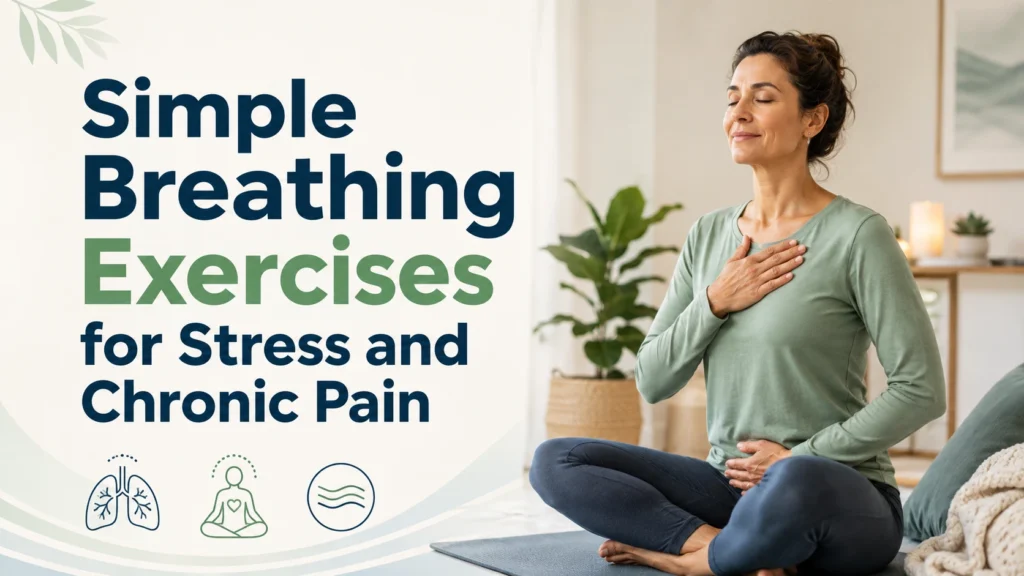
Begin while lying on your back with knees bent or sitting in a comfortable position. Place one hand gently on the upper chest and another on the abdomen. Allow the jaw and shoulders to relax. The breathing pattern should be slow and steady throughout the exercise.
Breathe gently through the nose, allowing the lower abdomen and ribs to move. Avoid expanding the stomach upwards, as well as forcing large inhales. The movement of the upper chest will be subtle but noticeable on each breath. Exhale slowly and steadily, and consider using a slightly open mouth if it feels uncomfortable to breathe through the nose. The NHS recommends concentrating on slow and regular breathing and gently focusing on the sensation of the breath moving in and out of the abdomen for about two to five minutes. This is a good opportunity to practice slow breathing regularly, as the NHS states it is helpful to do so every day.
When to Practice
Belly breathing can be used before going to bed, morning exercises, or when the person notices that their shoulders, jaw, or another part of the body is tense. It can also be used as preparation for more active exercises if the patient unconsciously holds their breath when attempting movement.
When a person attempts an activity they fear, they may experience a sudden flare-up. Using slow breathing as a calming technique before exercise can help prevent this, but it should not be used to attempt to control severe, sudden pain. If stretches or movements that previously did not cause any issues begin hurting, it is critical to investigate the cause.
Exercise 2: Equal Count Breathing
Equal-count breathing gives a chance to practice controlled breathing. Sit down and allow yourself to breathe freely for several seconds before beginning the exercise.
Breathe gently and steadily while focusing on the equal time spent on inhaling and exhaling. Begin with a count that is comfortable for you, such as four seconds for each phase. The goal is a steady and comfortable pattern rather than a specific number of seconds per breath. Some people may be able to manage a four-count while others will need a slower pace.
Continue for three to five minutes, ensuring the shoulders are not tense. If paying attention to the counts makes you anxious, simply focus on gentle breathing. Another approach, suggested by the NHS, is to count slowly while inhaling and then while exhaling. Let your breath control your voice when saying the numbers.
Exercise 3: Longer Exhalation
Many patients report that slowing their exhalation while continuing gentle inhales provides a chance to relax. Begin by practicing longer exhalation breathing for about one minute.
Inhale gently through the nose for around three seconds, and then exhale slowly through the mouth for about four or five. Do not force the breath out at the end of the exhale, as it can cause discomfort. Repeat this pattern for about two to three minutes, or up to five minutes if it is comfortable.
This breathing pattern is not about trying to reach specific numbers; rather, it is about focusing on slowing down the exhalation while keeping the breath steady and comfortable. If the person has lung conditions, heart disease, dizziness, pregnancy, or other physiological reasons for avoiding deep controlled breathing, they should speak to their doctor about the most suitable options.
As with any breathing technique, it is crucial to avoid holding the breath for too long or attempting to make it deeper or faster than it is comfortable. Holding the breath can cause dizziness, and fast and deep breathing causes light-headedness, which is the opposite of relaxation.
Exercise 4: Breathing Exercises With a Body Scan
Body scans help promote relaxation, reduce tension, and identify problem areas without attempting to actively address them. The NHS recommends practicing it while lying down or sitting comfortably.
Begin the breathing scan with a few gentle belly breaths to relax. Once the breathing slows down, shift the attention to the muscles in the body, starting from the top and working downwards. Pay attention to tension, but do not attempt to actively release it while breathing.
Move from the forehead and jaw down to the shoulders, arms, the upper and lower back, abdominals, hips, legs, and feet, releasing tension in each part if possible. If the person has chronic back pain, they should avoid trying to move or stretch their spine during the scan; instead, they can focus on making their movements comfortable.
The body scan can also help the patient identify patterns in their pain. For instance, a person may notice that they clench their hands and shoulders whenever they feel anxious about an upcoming movement. By practicing gentle breathing, they can consciously avoid these harmful patterns and prepare for the activity.
Using Breathing Exercises During A Chronic Pain Flare
Pain flares are always unpleasant, especially when they occur despite the patient’s attempts to prevent them. The flare itself is not necessarily a sign of a serious problem, but it is always a good idea to consult with a physician to prevent complications. When a flare occurs, the best thing the person can do for themselves is to find a comfortable position and slow their breathing to calm the body.
The NHS recommends using belly breathing for about three to five minutes before attempting to move or adjust the position. Once the breathing slows down and becomes steady, the person can attempt to change postures or gently move around if it is safe to do so. For some patients, this might mean getting up from bed, taking a short walk, or simply stretching.
It is important to avoid two extremes during the flare: trying to push through the discomfort and stop the flare immediately and doing nothing out of fear of additional pain. Chronic pain rehabilitation focuses on finding the right balance and determining what the body is capable of without putting it at risk. This process usually takes time and is personal, which is why it is best to work on it with a professional rather than attempting to determine it on one’s own.
It is important to keep in mind that relaxation techniques only provide mild and temporary pain relief. NCCIH notes that mind-body interventions only have limited and inconsistent evidence about their ability to manage day-to-day discomfort, though they may help with stress and general wellbeing.
Pair Breathing Exercises With Movement
Controlled breathing can also be used with rehabilitation exercises to reduce tension. For instance, a person can exhale gently as they move their body, allowing themselves to slow down. Controlled breathing can be used during squats, bridges, shoulder rotations, or other strengthening and range-of-motion activities, but it is imperative to listen to the body’s signals during them. Only perform movements recommended by the healthcare provider, and avoid holding the breath during them.
If the person has chronic musculoskeletal pain and discomfort, they may need a comprehensive assessment from a professional to develop individualized rehabilitation. Physiotherapy Etobicoke may be helpful for patients with chronic back, neck, joint, or muscle pain. Physiotherapy Etobicoke focuses on examining movement, mobility, functionality, and other vital signs and designing a personalized treatment plan if chronic pain interferes with the patient’s life or quality of movement.
A physiotherapy session can include advice, stretching, strength training, and even hands-on treatment and education about the condition, depending on the individual needs and diagnosis.
Practice Breathing Before Going To Bed
Sleep and pain often have a bidirectional relationship, meaning that pain can disrupt sleep and insufficient rest can make pain harder to handle. The NHS recommends that patients who have chronic discomfort invest time and effort into improving their sleep schedules and conditions. One simple way to do it is to spend five minutes practicing slow breathing after settling down in bed. Put away the phone and other stimulating objects and focus on gentle breathing without trying to fall asleep immediately. If pain prevents sleep, it is important to address it, but breathing techniques may help alleviate it on their own. On the other hand, new, severe, or persistent discomfort should always be reviewed by a medical professional.
Additional Resources: Chronic Pain Management Beyond Breathing Exercises
Chronic pain management is not one-size-fits-all, as there are multiple reasons for it, and everyone responds to treatment differently. There is also no one-size-fits-all treatment, but there are standard recommendations for most musculoskeletal conditions. Physiotherapy Etobicoke often suggests a combination of strength training, exercises, mobility work, and education about the condition, along with advice about sleep, lifestyle modifications, and mental health support if needed. Patients are also encouraged to take a proactive role in managing their symptoms and discuss pharmacological and non-pharmacological options with their physician.
When it comes to relaxation techniques, NCCIH warns against relying on them as a sole method of chronic pain management and advises against ignoring conventional medical treatment in search of alternative options.
When Massages Are Useful For Chronic Pain
Some patients with chronic musculoskeletal pain find that massage therapy helps them reduce discomfort and be more active during their rehabilitation. Massage can be considered for many conditions, but the effectiveness varies, and patients should be aware of the limitations of treatment.
When searching for Massage Therapy Etobicoke, keep in mind that it is part of the treatment, rather than the entire solution for chronic pain. RMT can assess the areas of concern within their scope of practice and discuss additional recommendations, such as individualized movement and range-of-motion exercises.
Many patients can benefit from a combination of gentle treatment and active rehabilitation to maintain their functionality, such as stretching, strengthening, and ergonomic adjustments. Other people may look into massage therapy near me, massage therapy Toronto, osteopathy near me, osteopathy Etobicoke, neurofascial therapy Toronto, craniosacral therapy Toronto, or similar treatments, but they should always discuss their needs and goals with the healthcare provider since each case is unique.
Chronic Pain After An Accident
Chronic pain can also develop after an injury, such as a car accident, and it often requires a multidisciplinary approach for effective management. In case of an automobile injury, the patient should always receive an appropriate assessment since each tissue, joint, and functionality issue is handled differently, depending on the diagnosis and the patient’s requirements.
Breathing exercises can help with the stress and tension that develops after the accident, but they are by no means a substitute for motor-vehicle-accident physiotherapy. They can be used as a complementary method for the rehabilitation or [motor-vehicle-accident massage therapy] if a person has ongoing pain that interferes with their quality of life, but they should not be relied on exclusively in the case of a severe injury. Sudden loss of motor control or strength, new neurological symptoms, inability to move or control bladder and bowels, severe headache, light-headedness or loss of consciousness, significant worsening of balance or coordination, and sudden chest discomfort or breathing difficulty require emergency care.
A Five-Minute Morning Breathing Exercise
Begin sitting comfortably with your feet shoulder-width apart or lying in a comfortable position. Spend the first minute simply observing your natural breathing pattern without trying to change it.
For the next two minutes, focus on slowing the breathing down and allowing the belly and lower ribs to rise with each inhale. When comfortable breathing through the nose, avoid taking large breaths.
During the next minute, scan your muscles for tension, starting from the jaw, shoulders, and hands, and down the abdomen and legs, allowing them to relax with each exhale.
Finally, during the last minute, bring the focus back to regular breathing and observe how your body feels after the exercise. There is no ideal result for the breathing practice; it is important to observe how the body feels without trying to force dramatic changes.
By spending five minutes a day on such a simple breathing exercise, the person can build a foundation that will allow them to use slow breathing for stress relief when the time comes.
When To Stop Practicing Breathing Exercises
It is essential to stop breathing exercises when they trigger significant dizziness, fainting, unusual or uncomfortable sensations in the chest, worsening shortness of breath, or inability to breathe comfortably. In some cases, relaxation techniques can even exacerbate the stress response, making the person feel anxious or agitated. People who experience such side effects should speak to their doctor instead of continuing the exercises. NCCIH notes that while relaxation techniques are generally safe, there are reports of uncomfortable mental sensations occurring in rare cases.
Summary
Simple breathing exercises are helpful relaxation techniques for chronic pain patients and those with stress-related discomfort since they are accessible, do not require equipment, and are easy to practice. Gentle belly breathing, equal-count breathing, slightly longer exhales, and body scans are all things that can be attempted at home. The point of such exercises is not to try to eliminate discomfort but slow down the breathing pattern and reduce tension, which helps the body relax and prepares for deeper rest and healing. Chronic pain management is multifaceted and typically requires a combination of medication, physical treatments, and lifestyle adjustments, and breathing exercises can be a helpful addition to the established plan.
FAQs
1. Can breathing exercises help reduce chronic pain?
Yes, they can be an important tool in stress reduction and management of discomfort, but they are not an ultimate solution. The effectiveness of breathing techniques for chronic pain varies depending on the cause of discomfort and should be evaluated on an individual basis.
2. What is the easiest breathing exercise for beginners?
Gentle belly breathing is the easiest type of controlled breathing to practice. Sit or lie comfortably, breathe gently through the nose if possible, and allow your abdomen to move, keeping the breathing pattern slow and steady.
3. How long should I practice breathing exercises?
Five minutes is a good target for most breathing exercises to see some benefits. According to the NHS, it is essential to build a habit of calming and controlled breathing, and they practice it for at least five minutes.
4. Should I take the deepest breath possible when doing breathing exercises?
No, taking the deepest breath possible is not necessary and can actually be counterproductive. Simply breathe gently and steadily without forcing the breath.
5. Can I do breathing exercises when I have a back pain flare-up?
For a simple and common flare, slow breathing can help reduce tension before moving or adjusting your position, but for new pain, it is best to consult with your therapist. A flare is typically not a sign of a serious problem but should still be reviewed to prevent chronic issues.
6. Can stress make my chronic pain worse?
Stress does not make chronic pain “better” or “worse,” but it can affect the perception of discomfort. The physical effects of stress, such as increased tension, disrupted sleep patterns, and altered pain sensitivity, can combine with existing pain and be particularly uncomfortable for the patient. Pain, in turn, can also contribute to emotional distress, making it essential to address both issues. Chronic pain is multifactorial, with physical, social, and psychological contributors.
7. Should I breathe through my nose or mouth while doing breathing exercises?
Nasal breathing is preferable for controlled breathing exercises when possible, but exhaling through the mouth can also be an option. According to the NHS, one of the simplest breathing techniques is to breathe in through the nose and out through the mouth.
8. Why do I get dizzy when trying to do breathing exercises?
Exhaling too quickly, holding your breath for too long, or simply breathing too rapidly and deeply can cause dizziness. Stop the exercise and return to normal breathing. If the symptoms persist or are severe, consult your physician to rule out other causes.
9. Can breathing exercises replace physiotherapy or massage?
No, they cannot replace physiotherapy or other medical treatments but can be used as a complementary tool. Physiotherapy Etobicoke will help develop an extensive treatment plan for chronic musculoskeletal pain based on your needs.
10. How often should I practice breathing exercises to reduce stress?
Several minutes of slow breathing exercises every day will do more good than harm. You can practice such exercises once a day for five minutes. Once you become comfortable with the technique, you can do them before sleeping, exercising, or any other activity that may induce stress.